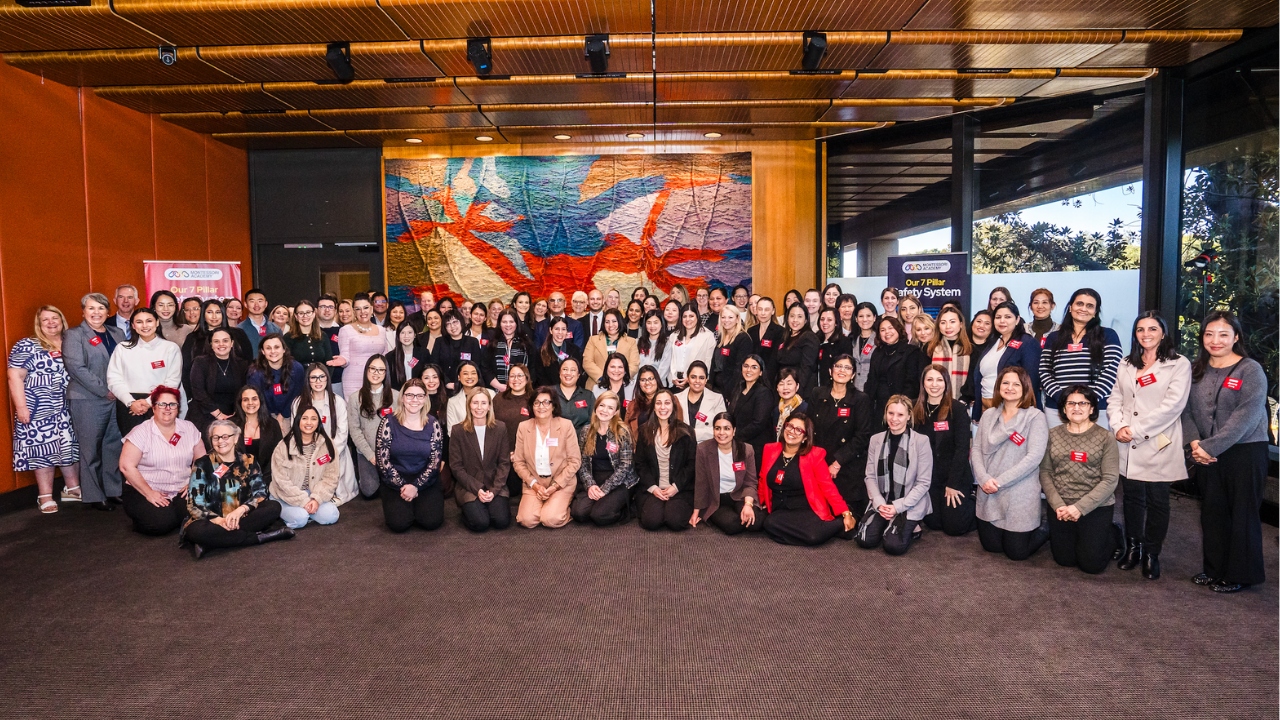
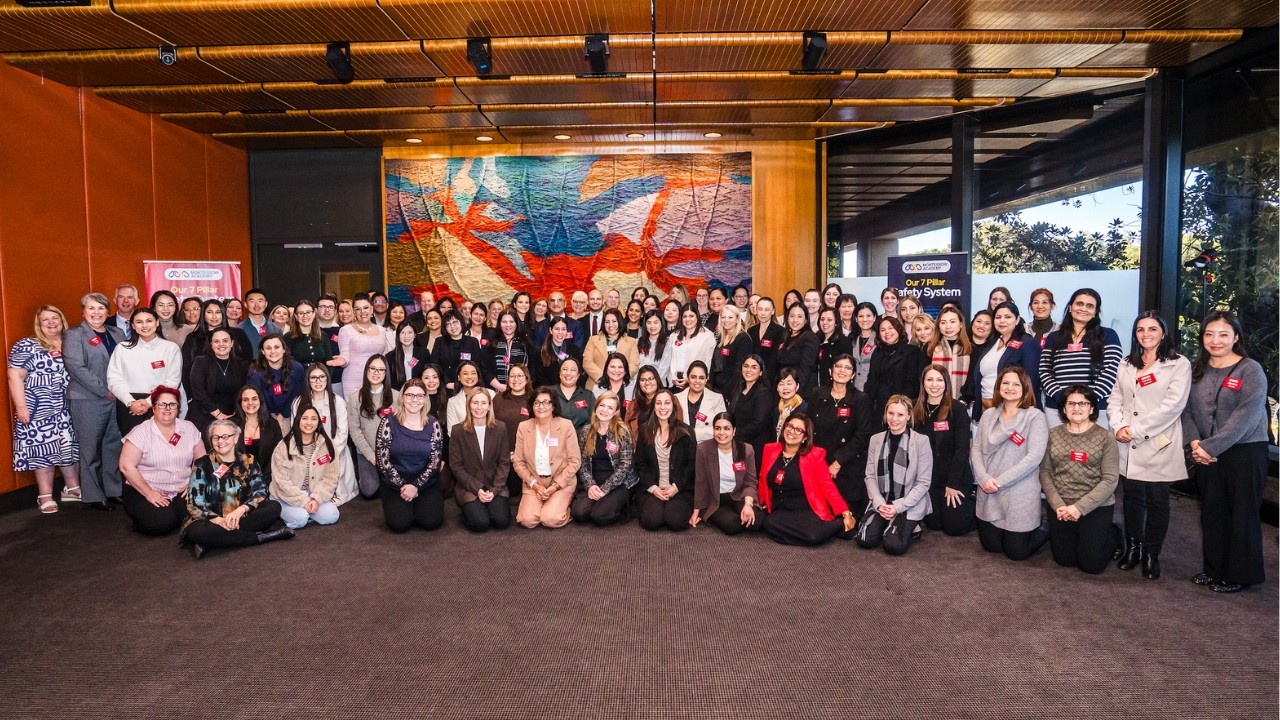
More than 100 early childhood leaders, government representatives, regulators, child protection experts and advocates have come together at NSW Parliament House to strengthen the sector’s approach to child safety with a shared message: protecting children is not a compliance exercise, it is a leadership responsibility.
Hosted by Montessori Academy during Early Learning Matters Week, the 2026 Leadership and Safety Conference brought together senior representatives from government, regulation, law enforcement, child protection, parent advocacy and academia to examine how early learning organisations can embed child safety into leadership, professional judgement and everyday practice.
The conference centred on one key question: how can early learning organisations move beyond policies and procedures to create cultures where child safety is reflected in every decision, every interaction and every service?
The message across the day was clear: leadership and safety are not separate responsibilities. They are the same job, and the best interests of every child must remain at the centre of every decision.
Speakers and distinguished guests included the Hon. Prue Car MP, Deputy Premier and Minister for Education and Early Learning; Felicity Wilson MP, Shadow Minister for Early Education; the Hon. Frank Sartor AO; NSW Early Learning Commissioner Darryl Currie; NSW Children’s Guardian Rachael Ward; Detective Sergeant Maxwell Kral from the NSW Police Force Child Abuse Squad; The Parenthood CEO Georgie Dent; Safe4Kids Managing Director Holly-ann Martin OAM; and Tisha Beasley from Flinders University.
Dr David Saliba MP, Monica Tudehope MP and Tim James MP also attended to share their perspectives on why early learning matters.
Opening the conference, Deputy Premier Prue Car reinforced the connection between strong leadership, organisational culture and children’s everyday experiences.
“Strong leadership shapes good culture. And good culture shapes the daily experiences of children in care. Thank you to Montessori Academy for showing such leadership in this important space of child safety,” Ms Car said.
Montessori Academy Head of Government Relations Nicolle Nasr said child safety was a shared responsibility that transcended politics.
“Ensuring every child has the best possible start in life is bipartisan, apolitical and indivisible,” Ms Nasr said. “It is a responsibility we all share, and one that is both achievable and worthy of our very best efforts.”
That message set the tone for a conference focused not simply on what child-safe organisations say, but on what leaders do when expectations need to be reinforced, professional judgement is required or a concern needs to be raised.
Montessori Academy CEO and Co-Founder Charles Assaf said strong child safety outcomes depend on building systems, capability and accountability across an organisation.
“Leadership and safety are not separate responsibilities. They are the same job,” Mr Assaf said.
“Safety that depends on one person paying attention is not safety. It is luck with a roster attached. That is why we build layers: checks that happen whether or not anything is wrong, and judgement trained into thousands of people, not held by a few at head office.”
Mr Assaf said increased scrutiny of the early childhood sector should drive higher standards and continued investment in leadership capability.
“When the sector is under pressure, that is exactly when standards must rise. Calm, disciplined, and never waiting to be told,” he said.
“We will keep funding the training, the trainers and the systems that make safe practice possible in real, busy centres.
“We will keep investing in your leadership and in our governance, so that expectations are clear and no leader is ever left improvising alone.”
That focus on strong systems supported by strong professional judgement continued throughout the day.
NSW Children’s Guardian Rachael Ward reinforced that child safety must be embedded at the highest levels of organisational governance.
“Good governance starts with leaders treating child safety as a core organisational responsibility, rather than a compliance requirement,” Ms Ward said.
NSW Early Learning Commissioner Darryl Currie challenged leaders to reflect on how decisions are made and how systems can continue to improve.
“Decision-making is about diagnostic mapping. It’s about going back, looking at what has actually occurred in the past, seeing and thinking how you could have done something better,” Commissioner Currie said.
Detective Sergeant Maxwell Kral provided insight into the practical realities of child protection, reporting obligations and the importance of strong systems to support investigations and protect children.
The discussion then shifted from systems and governance to the people those systems exist to serve: children and families.
The Parenthood CEO Georgie Dent said putting children at the centre must shape how the sector defines quality, safety and the purpose of early childhood education.
“Early childhood education and care ultimately needs to be delivering for children,” Ms Dent said.
“If we put children at the centre, I think the picture that we would paint of early childhood education and care would be slightly different. And I’m here for painting that new picture.”
Flinders University’s Tisha Beasley highlighted the responsibility carried by the early childhood workforce during the most formative years of children’s development.
“We are trusted with children during the most rapid and formative period of brain development a human being will ever experience,” Ms Beasley said. “Ninety per cent of brain architecture is built before a child turns five.”
Montessori Academy Co-Founder Colette Assaf drew a direct line between the decisions made in Parliament and the decisions made in every early learning centre across the country.
“Decisions made in this building shape the future of our State,” Ms Assaf said.
“The decisions you make in your centres shape the future of our children.”
For Montessori Academy, the conference forms part of a broader commitment to strengthening child safety across its more than 70 early learning services through leadership development, educator capability, governance, protective education, technology and organisational systems.
Throughout the day, Montessori Academy leaders were challenged to consider not only how standards are understood, but how those standards are translated into everyday decisions, team culture, family trust and children’s experiences.
The conference concluded by shifting the focus firmly from discussion to implementation.
Closing the conference, Montessori Academy Chief Operating Officer Rami Nassif said the success of the day would be measured by action.
“The value of today will not be measured by how many presentations we hear. It will be measured by what we put into practice afterwards,” Mr Nassif said.
“In the standards we reinforce. In the culture we shape. And in the leadership we demonstrate. For every child. In every room. Every single day.”
Montessori Academy is a leading provider of Montessori early childhood education, operating more than 70 services across New South Wales, Victoria and the Australian Capital Territory.
For more than 26 years, its commitment has remained centred on one promise:
Children first, always. Safety without compromise.