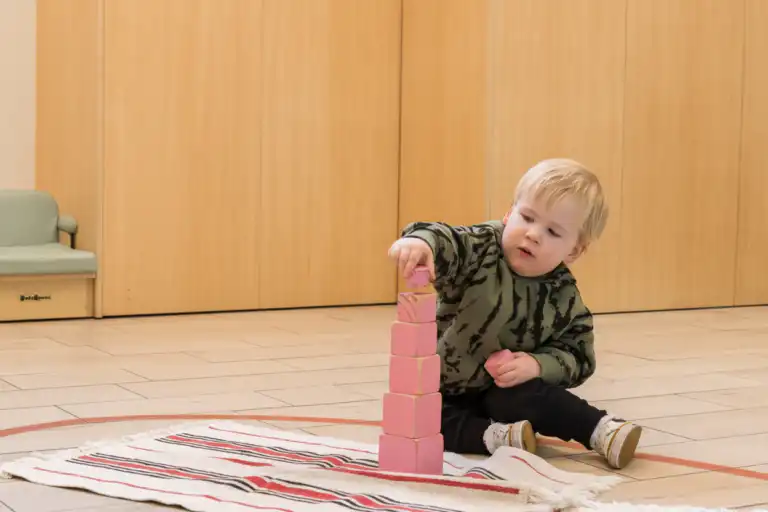
The Pink Tower is the iconic Montessori material. Often called the ‘symbol of Montessori’, it is a welcoming sign in any Montessori environment, and a favourite with educators globally.
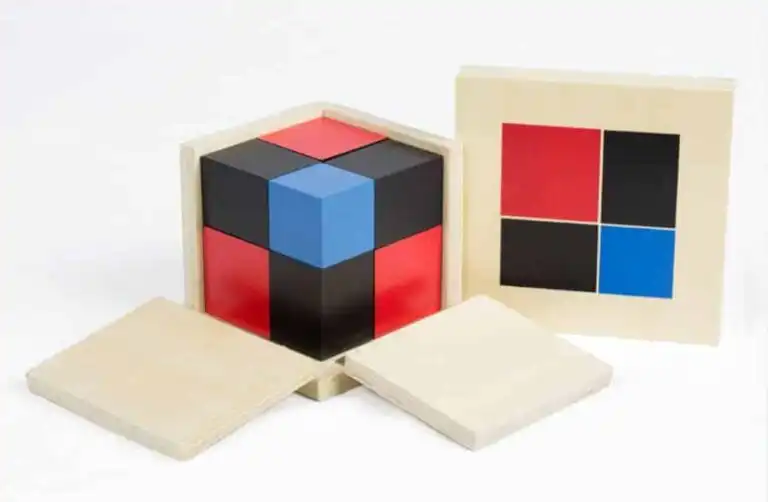
This first thing that draws the eye in a Montessori classroom is the materials. Neatly ordered from left to right, and organised into curriculum areas, Montessori materials are specifically designed for little minds and little hands!
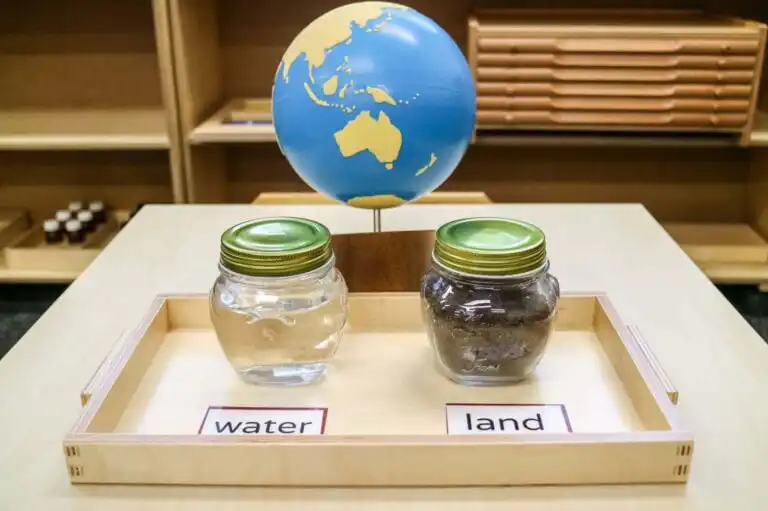
The Sandpaper Globe, also known as the land and water globe, is an introductory geography material from the Sensorial Curriculum.
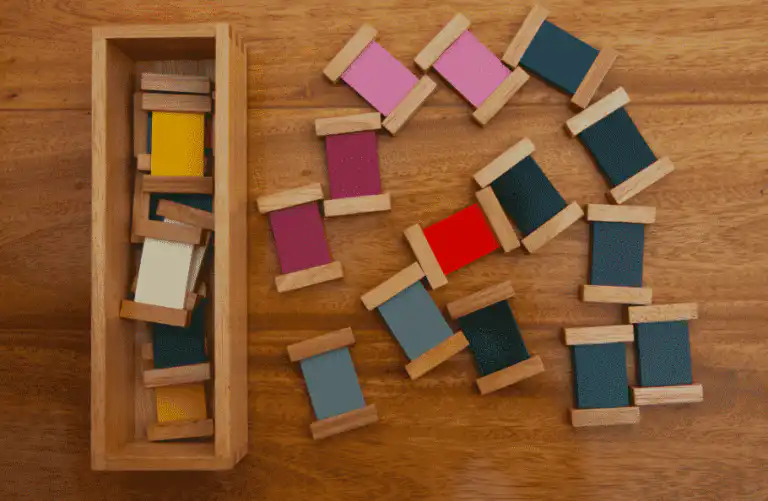
Colour Boxes are one of the most visually appealing Montessori materials. Created to be introduced to children in three stages, Colour Boxes 1, 2 and 3 contain a different amount of matching coloured tablets, which are rectangular with handles on the side.
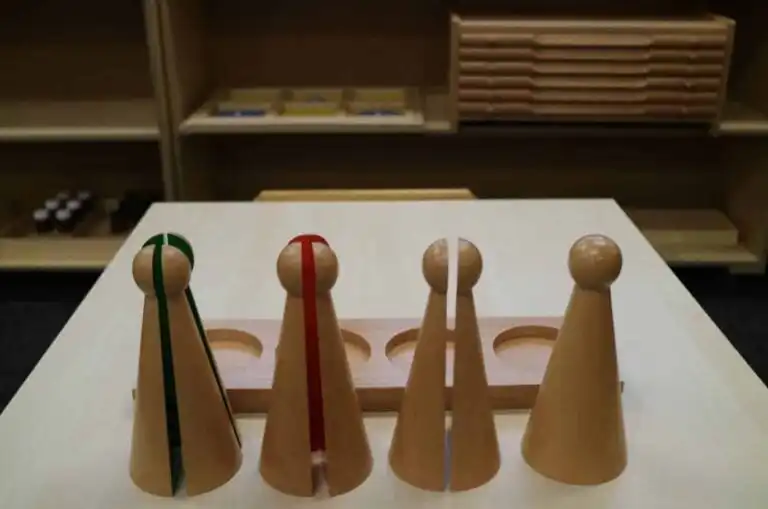
The Fraction Skittles are part of the Mathematics curriculum and provide children with an excellent visual example of fractions from an early age.
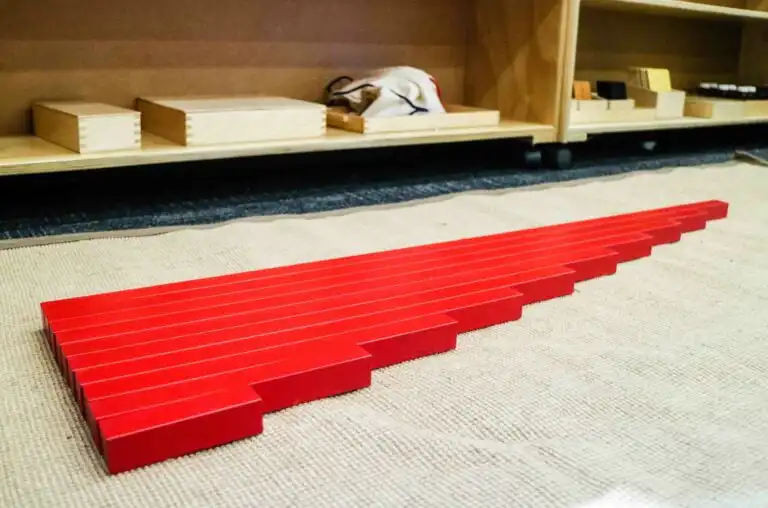
The Red Rods are part of the Montessori Sensorial Curriculum. It is common for sensorial materials to isolate one quality, such as weight, to assist the child in better understanding their environment.
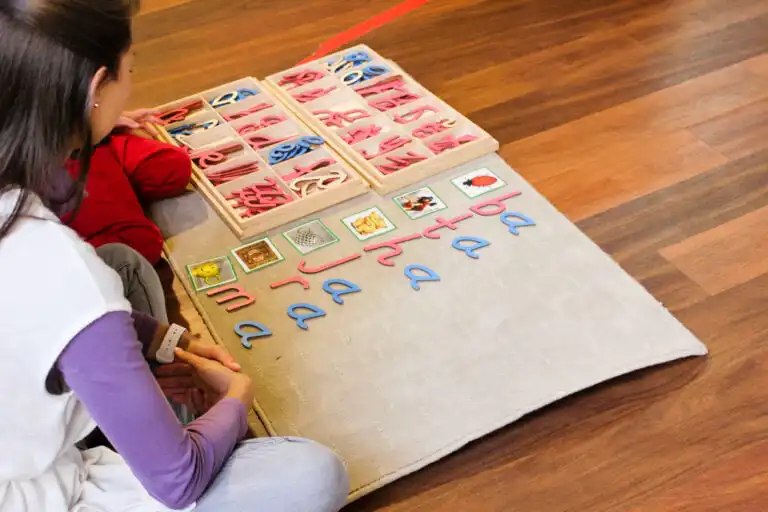
The Moveable Alphabet is a key part of the Montessori Language Curriculum. The material primarily teaches children how to develop their knowledge of the alphabet, and thus written language skills.
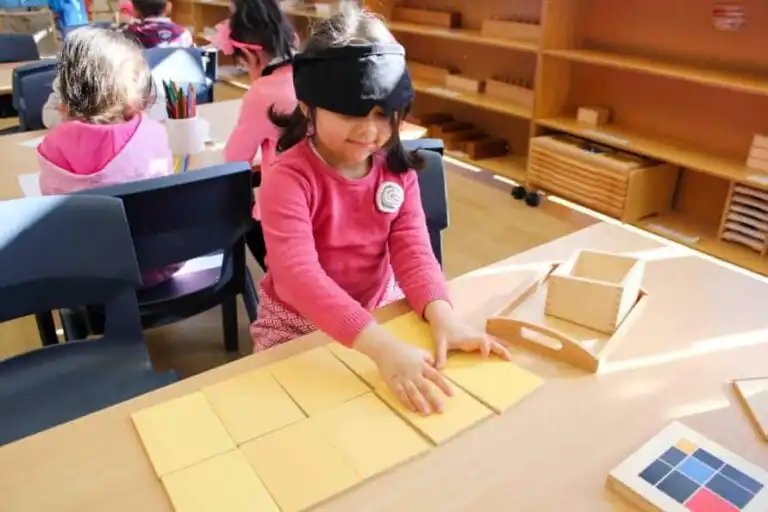
The Touch Tablets form part of the Montessori Sensorial Curriculum, which aims to teach children how to classify items within their environment using the five senses. The Touch Tablets focus on the tactile sense of touch, and isolate the concepts of rough and smooth.
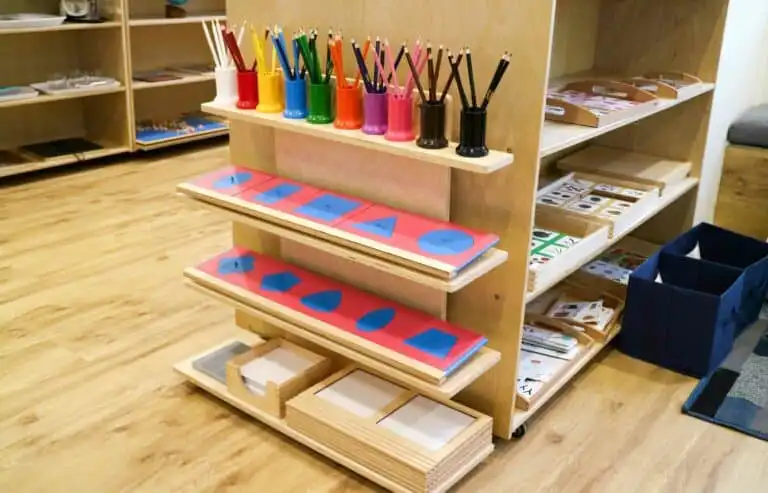
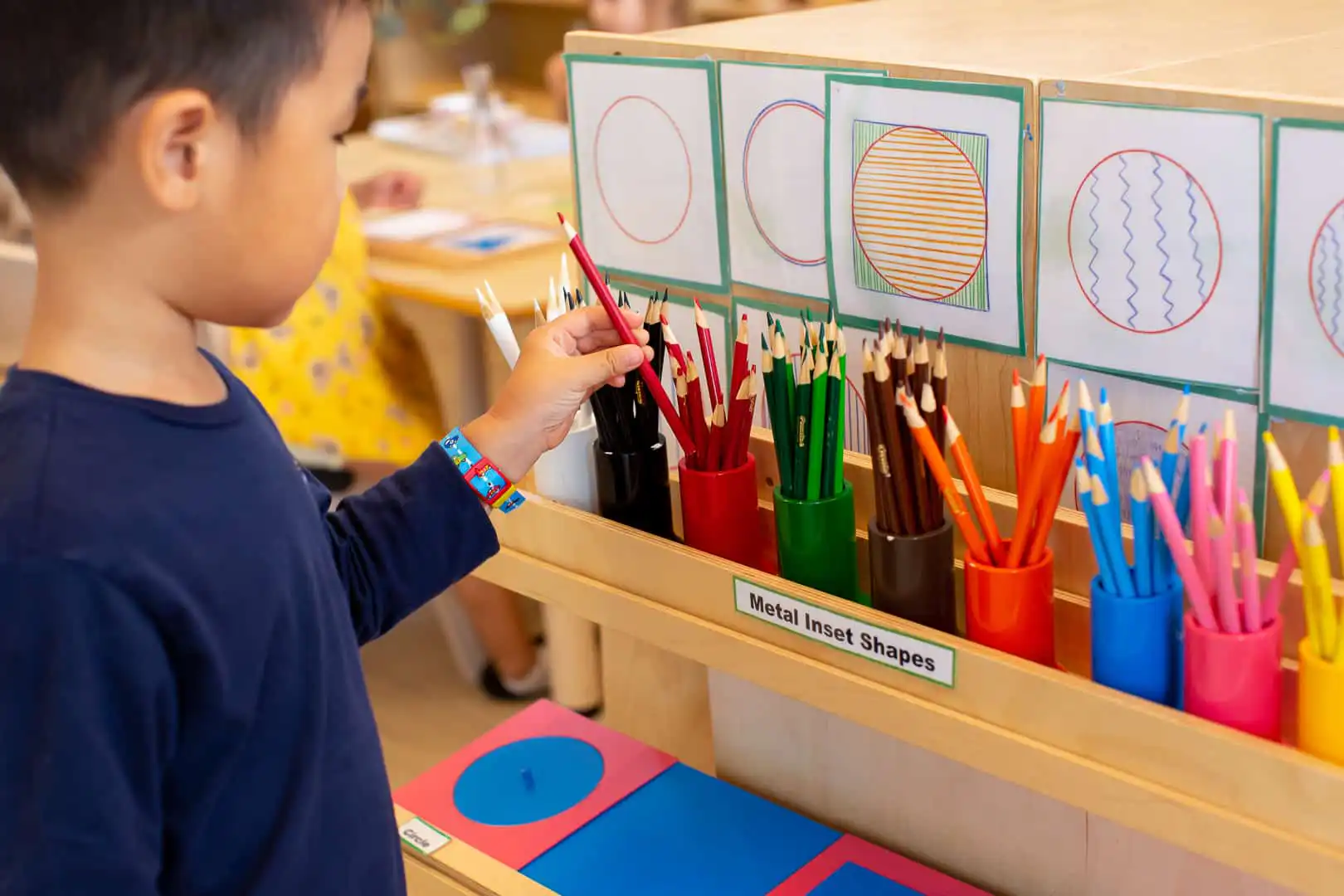
The Metal Insets are part of the Montessori Language Curriculum. They are a learning tool used to prepare children for writing.
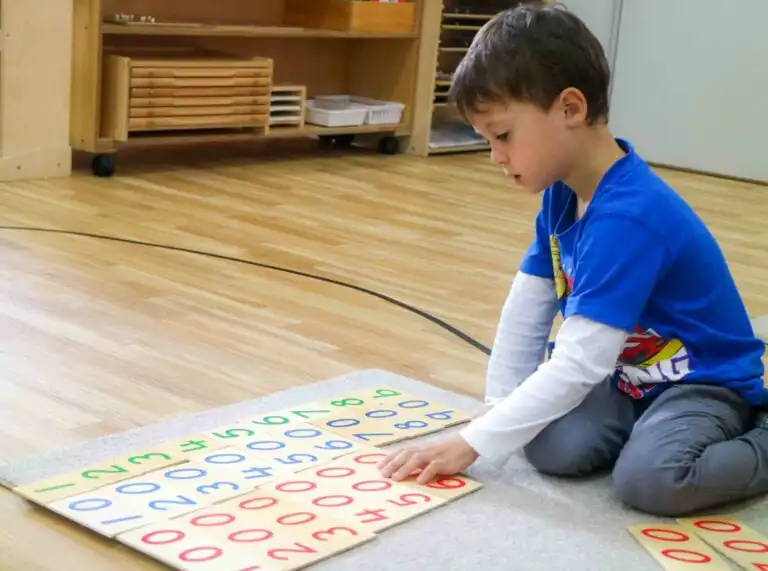
The Large Number Cards are a Montessori Mathematics material which are used to introduce young children to the decimal system.
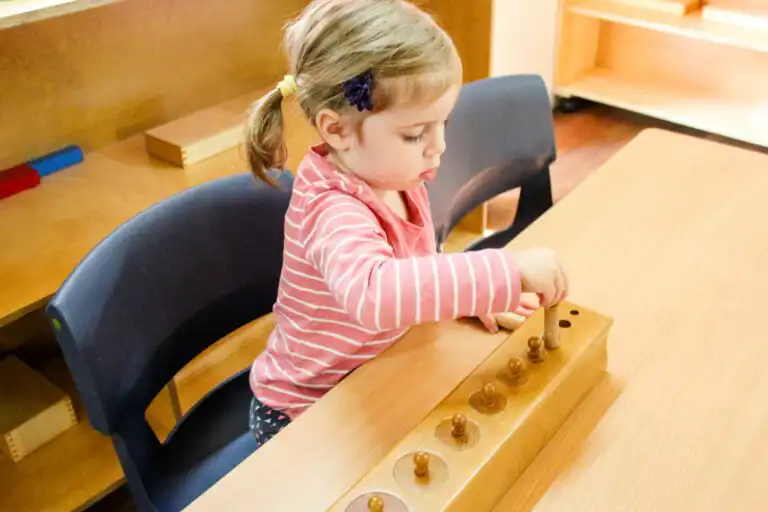
The Knobbed Cylinders are a Montessori Sensorial material, designed to assist children in making distinctions in their immediate environment. This material primarily engages the senses of touch and sight.
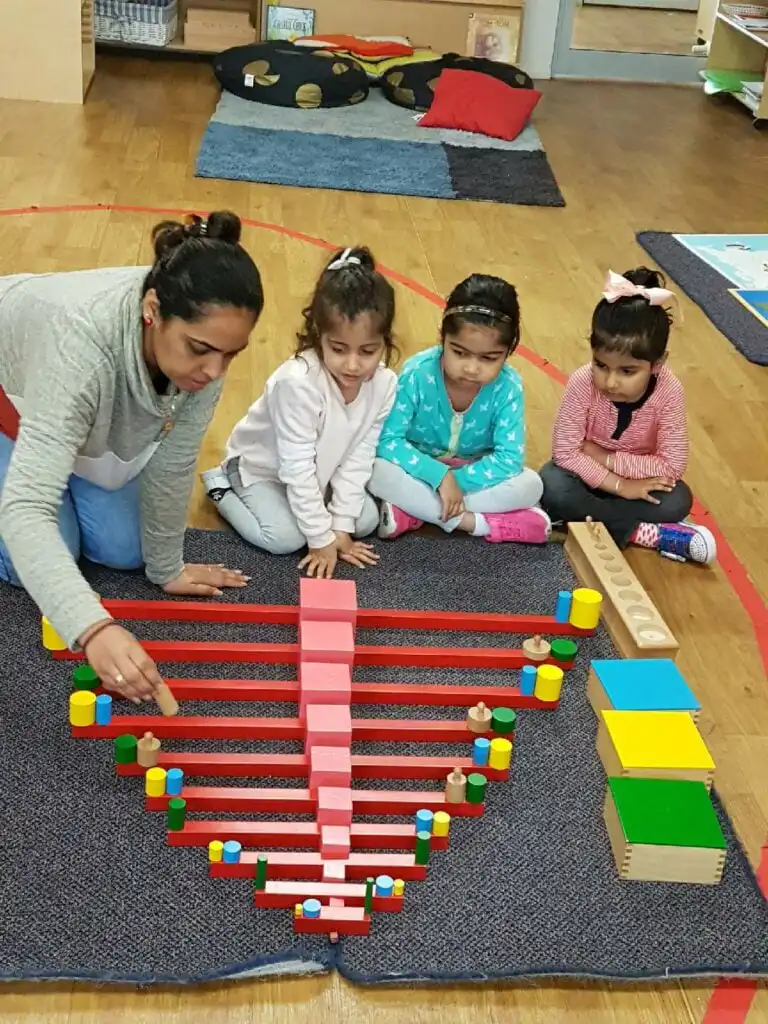
Each Montessori material isolates one particular skill, and the material’s purpose often correlates with other Montessori activities. This means that there are endless extensions students can embrace once they have mastered the original concept!
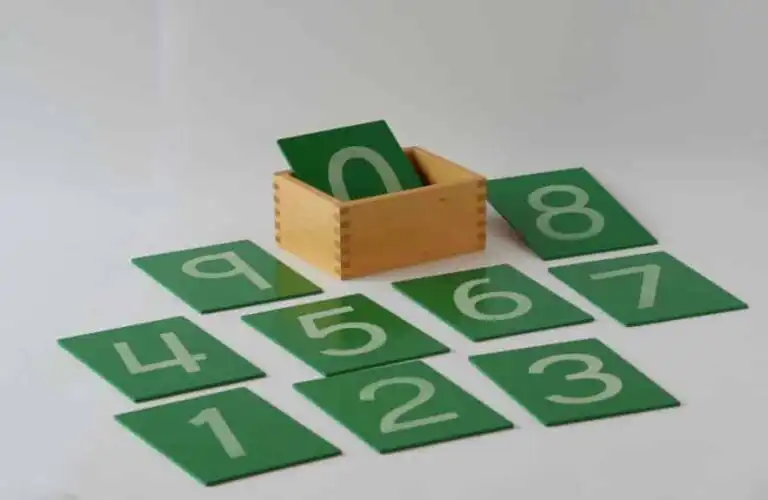
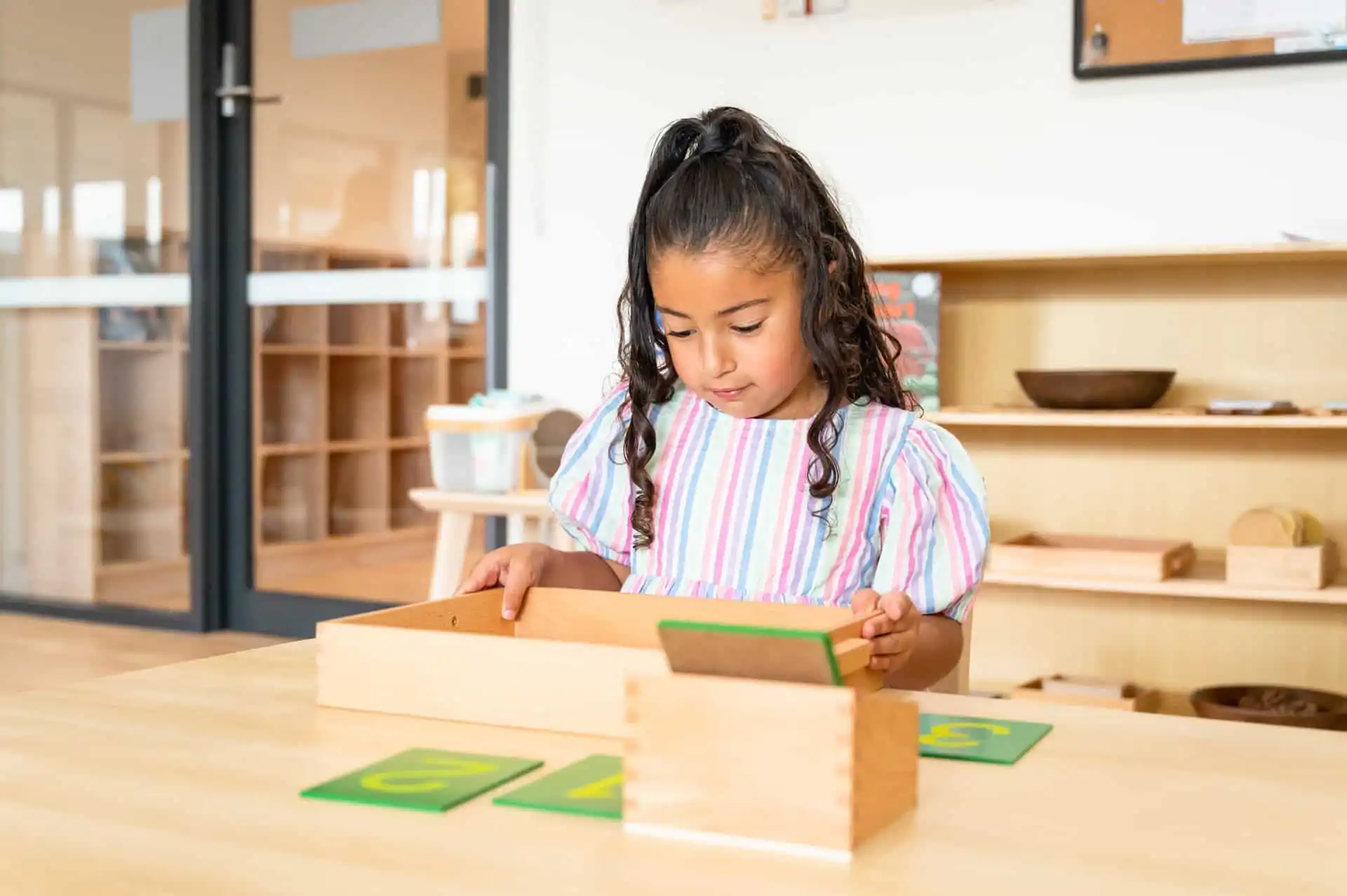
The Sandpaper Numbers are an important foundational Montessori mathematics material that introduce numerals 0 – 9 to young children.
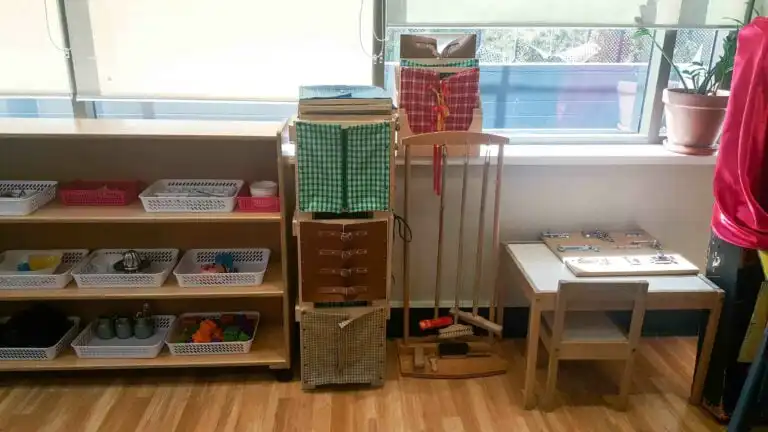
The Dressing Frame is a key Montessori Practical Life material which helps children to develop independence and care of self as they learn to fasten different clothing implements.
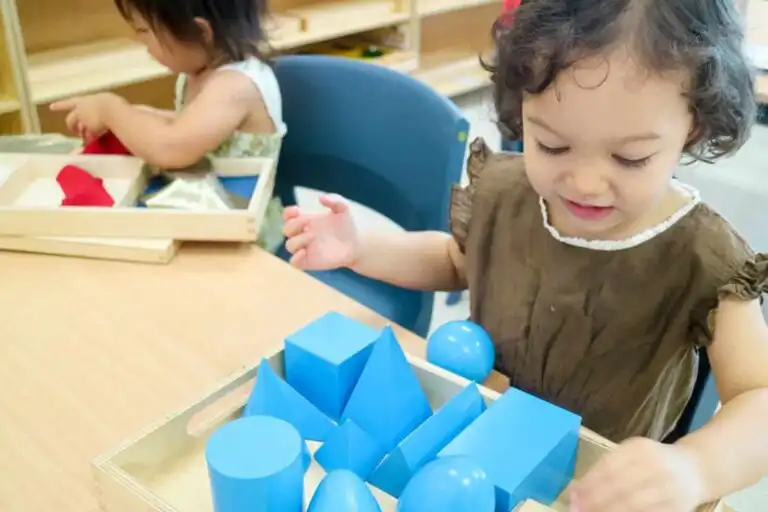
The sensorial curriculum area is unique to Montessori education, encouraging children to engage all five senses in their learning, forming concreate ideas from the abstract in their environments. The Geometric Solids are a key part of the sensorial curriculum area, allowing children to understand 3D shapes by making them tangible objects.
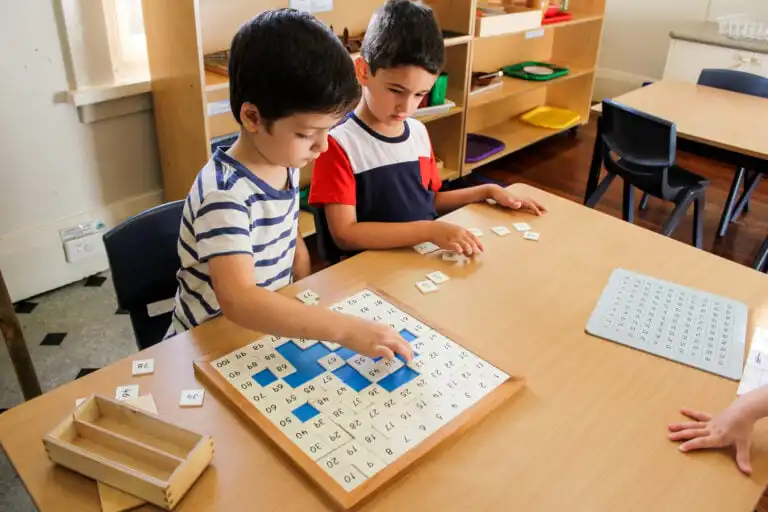
The Hundred Board is a key Montessori Mathematics material, which helps children make the leap from the recognition of numbers, to understanding how they belong in a sequence. As the name suggests, it focuses specifically on numbers 1 – 100.
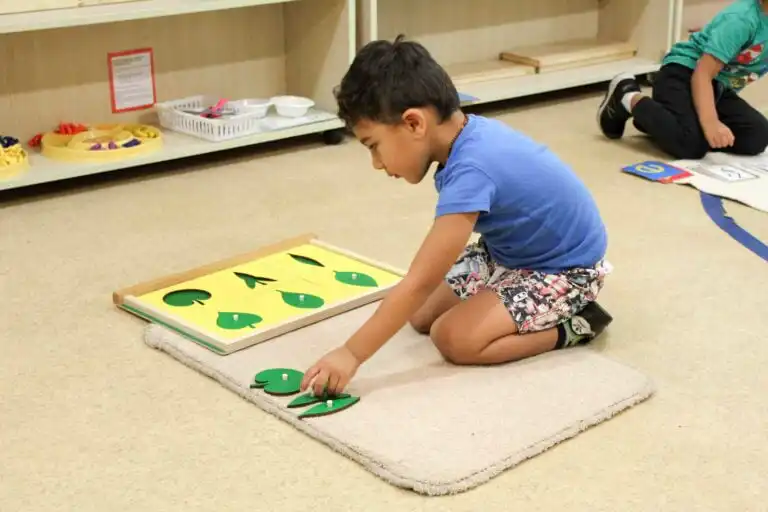
The Botany Cabinet, or the Leaf cabinet as it is sometimes known, is a Montessori sensorial material that provides children with an introduction to the world of botany. It is also one of the first Montessori materials children work with that allows them to explore the world through a scientific lens.
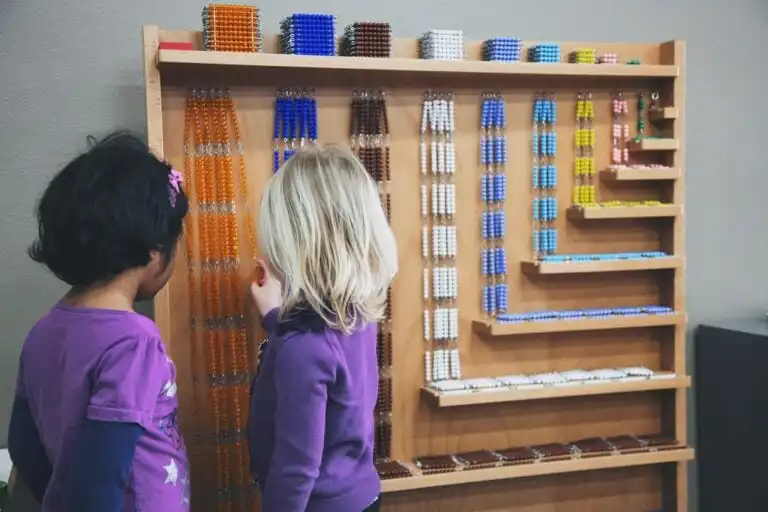
The Montessori Bead Cabinet, or Bead Chain Cabinet, is a beautiful and eye-catching material that is found in every Montessori Academy preschool classroom.
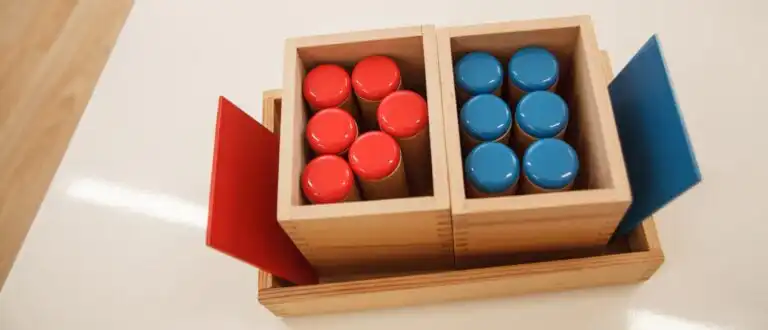
At the heart of Montessori education lies a deep understanding of the importance of sensory experiences that shape early learning. Among the array of tools designed to cultivate these experiences, sound boxes emerge as both simple and revolutionary within the early learning education system of Montessori.
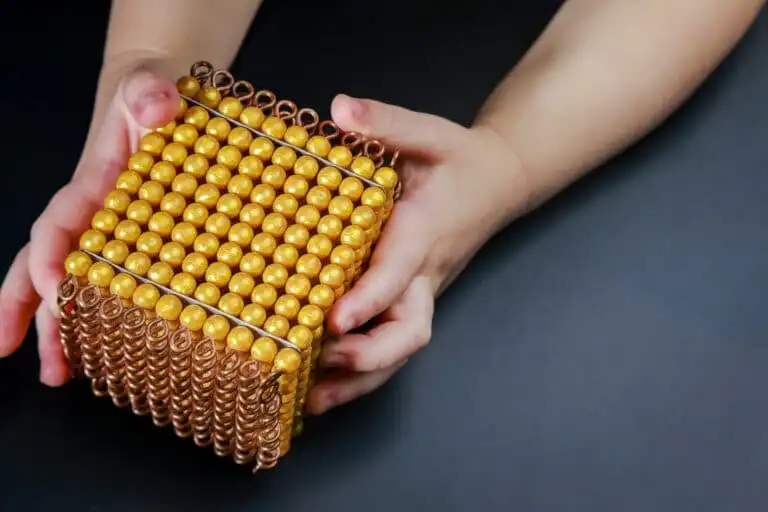
The Golden Beads materials are an essential tool in Montessori education, helping children understand the decimal system, place value, and basic mathematical operations.
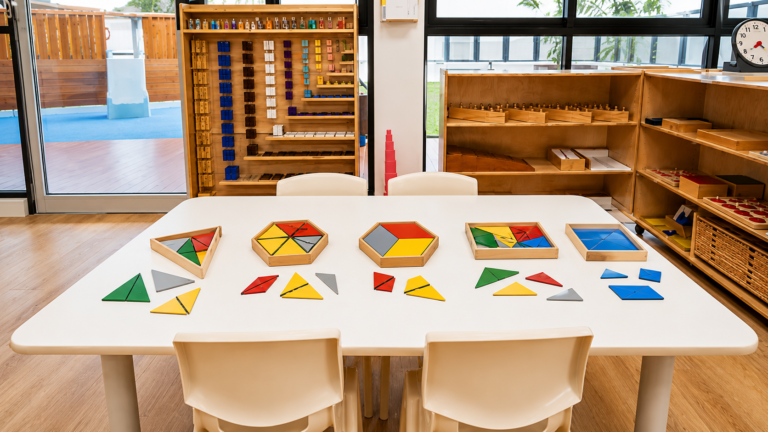
Constructive Triangles are an essential tool in Montessori education, helping children understand complex geometry concepts through hands-on learning. At Montessori Academy, we emphasise the importance of such materials to foster a foundation of mathematics.

Overview of Montessori Puzzle Maps: The article explains what Montessori Puzzle Maps are and their role in teaching geography to preschoolers through hands-on learning. It highlights their importance in building spatial awareness and global understanding.
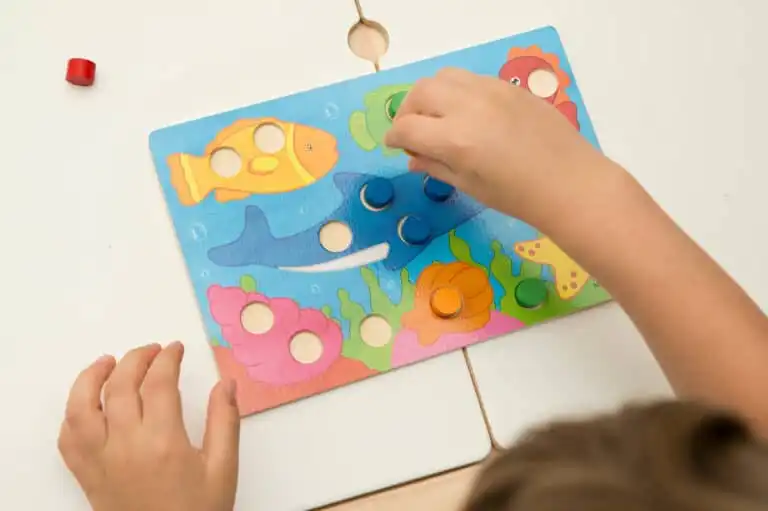
Montessori education is renowned for its hands-on approach, encouraging children to learn by doing and exploring the world around them. One of the key activities used in Montessori classrooms to teach children about animals is the Montessori Zoology Puzzle.
The Pink Tower is the iconic Montessori material. Often called the ‘symbol of Montessori’, it is a welcoming sign in any Montessori environment, and a favourite with educators globally.
This first thing that draws the eye in a Montessori classroom is the materials. Neatly ordered from left to right, and organised into curriculum areas, Montessori materials are specifically designed for little minds and little hands!
The Sandpaper Globe, also known as the land and water globe, is an introductory geography material from the Sensorial Curriculum.
Colour Boxes are one of the most visually appealing Montessori materials. Created to be introduced to children in three stages, Colour Boxes 1, 2 and 3 contain a different amount of matching coloured tablets, which are rectangular with handles on the side.
The Fraction Skittles are part of the Mathematics curriculum and provide children with an excellent visual example of fractions from an early age.
The Red Rods are part of the Montessori Sensorial Curriculum. It is common for sensorial materials to isolate one quality, such as weight, to assist the child in better understanding their environment.
The Moveable Alphabet is a key part of the Montessori Language Curriculum. The material primarily teaches children how to develop their knowledge of the alphabet, and thus written language skills.
The Touch Tablets form part of the Montessori Sensorial Curriculum, which aims to teach children how to classify items within their environment using the five senses. The Touch Tablets focus on the tactile sense of touch, and isolate the concepts of rough and smooth.
The Metal Insets are part of the Montessori Language Curriculum. They are a learning tool used to prepare children for writing.
The Large Number Cards are a Montessori Mathematics material which are used to introduce young children to the decimal system.
The Knobbed Cylinders are a Montessori Sensorial material, designed to assist children in making distinctions in their immediate environment. This material primarily engages the senses of touch and sight.
Each Montessori material isolates one particular skill, and the material’s purpose often correlates with other Montessori activities. This means that there are endless extensions students can embrace once they have mastered the original concept!
The Sandpaper Numbers are an important foundational Montessori mathematics material that introduce numerals 0 – 9 to young children.
The Dressing Frame is a key Montessori Practical Life material which helps children to develop independence and care of self as they learn to fasten different clothing implements.
The sensorial curriculum area is unique to Montessori education, encouraging children to engage all five senses in their learning, forming concreate ideas from the abstract in their environments. The Geometric Solids are a key part of the sensorial curriculum area, allowing children to understand 3D shapes by making them tangible objects.
The Hundred Board is a key Montessori Mathematics material, which helps children make the leap from the recognition of numbers, to understanding how they belong in a sequence. As the name suggests, it focuses specifically on numbers 1 – 100.
The Botany Cabinet, or the Leaf cabinet as it is sometimes known, is a Montessori sensorial material that provides children with an introduction to the world of botany. It is also one of the first Montessori materials children work with that allows them to explore the world through a scientific lens.
The Montessori Bead Cabinet, or Bead Chain Cabinet, is a beautiful and eye-catching material that is found in every Montessori Academy preschool classroom.
At the heart of Montessori education lies a deep understanding of the importance of sensory experiences that shape early learning. Among the array of tools designed to cultivate these experiences, sound boxes emerge as both simple and revolutionary within the early learning education system of Montessori.
The Golden Beads materials are an essential tool in Montessori education, helping children understand the decimal system, place value, and basic mathematical operations.
Constructive Triangles are an essential tool in Montessori education, helping children understand complex geometry concepts through hands-on learning. At Montessori Academy, we emphasise the importance of such materials to foster a foundation of mathematics.
Overview of Montessori Puzzle Maps: The article explains what Montessori Puzzle Maps are and their role in teaching geography to preschoolers through hands-on learning. It highlights their importance in building spatial awareness and global understanding.
Montessori education is renowned for its hands-on approach, encouraging children to learn by doing and exploring the world around them. One of the key activities used in Montessori classrooms to teach children about animals is the Montessori Zoology Puzzle.
What’s Unique About Montessori Materials?
- Hands-on learning tools that teach one skill at a time
- Designed with multiple learning styles in mind
- Build knowledge and skills through repetition and practice
- Made of natural materials and real-life objects
- Develop independence, fine motor skills, and concentration
- Learning outcomes discovered through problem-solving
- Designed for children to teach themselves
- Simplify abstract concepts
Hands-On Learning
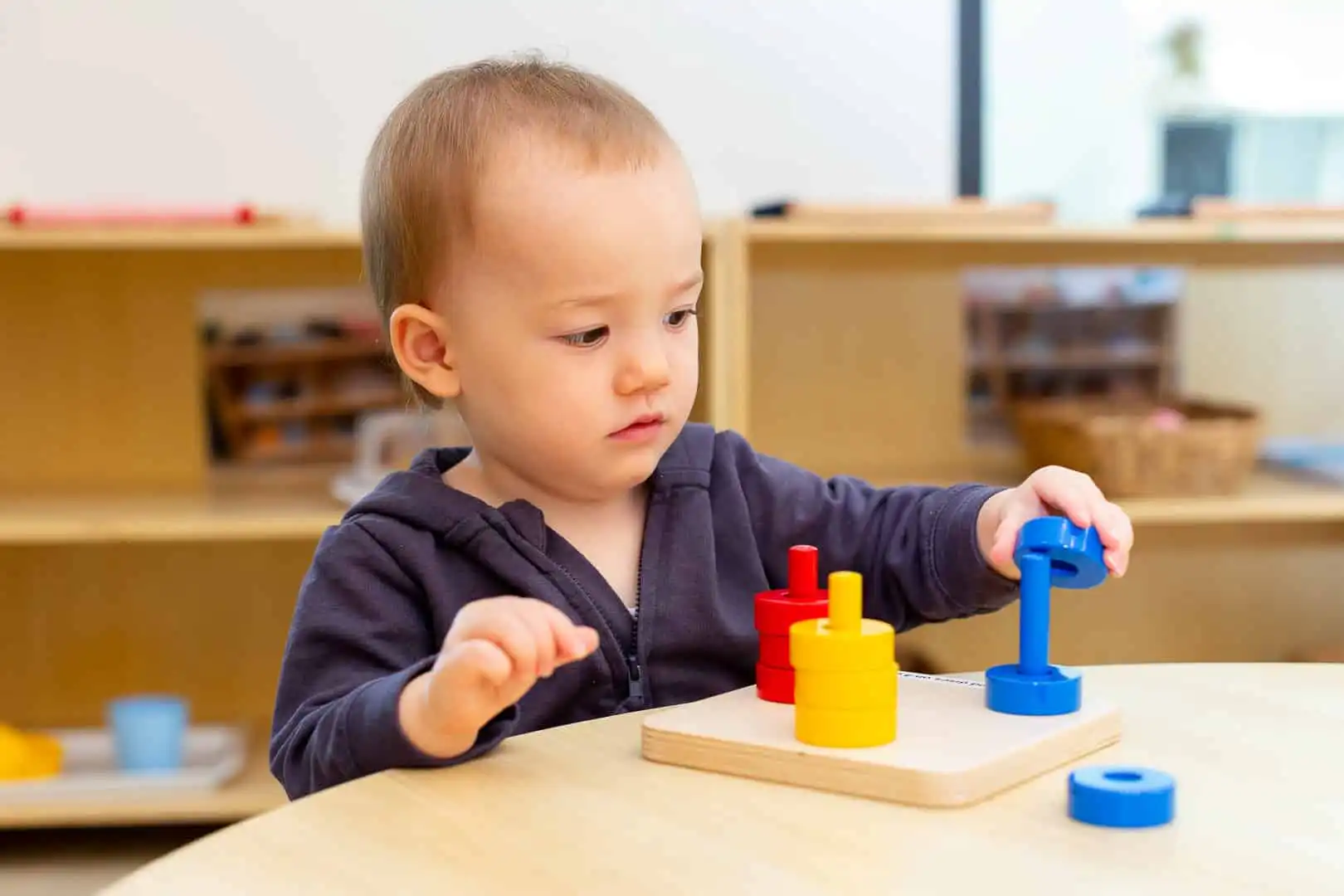
Montessori materials are hands-on learning tools that guide children to discover key learning outcomes through repetition and practice. Each material breaks down one key concept into simple steps that children master through hands-on exploration. This aspect makes the Montessori materials particularly effective, as they involve the hand, as well as the mind, in all learning experiences.
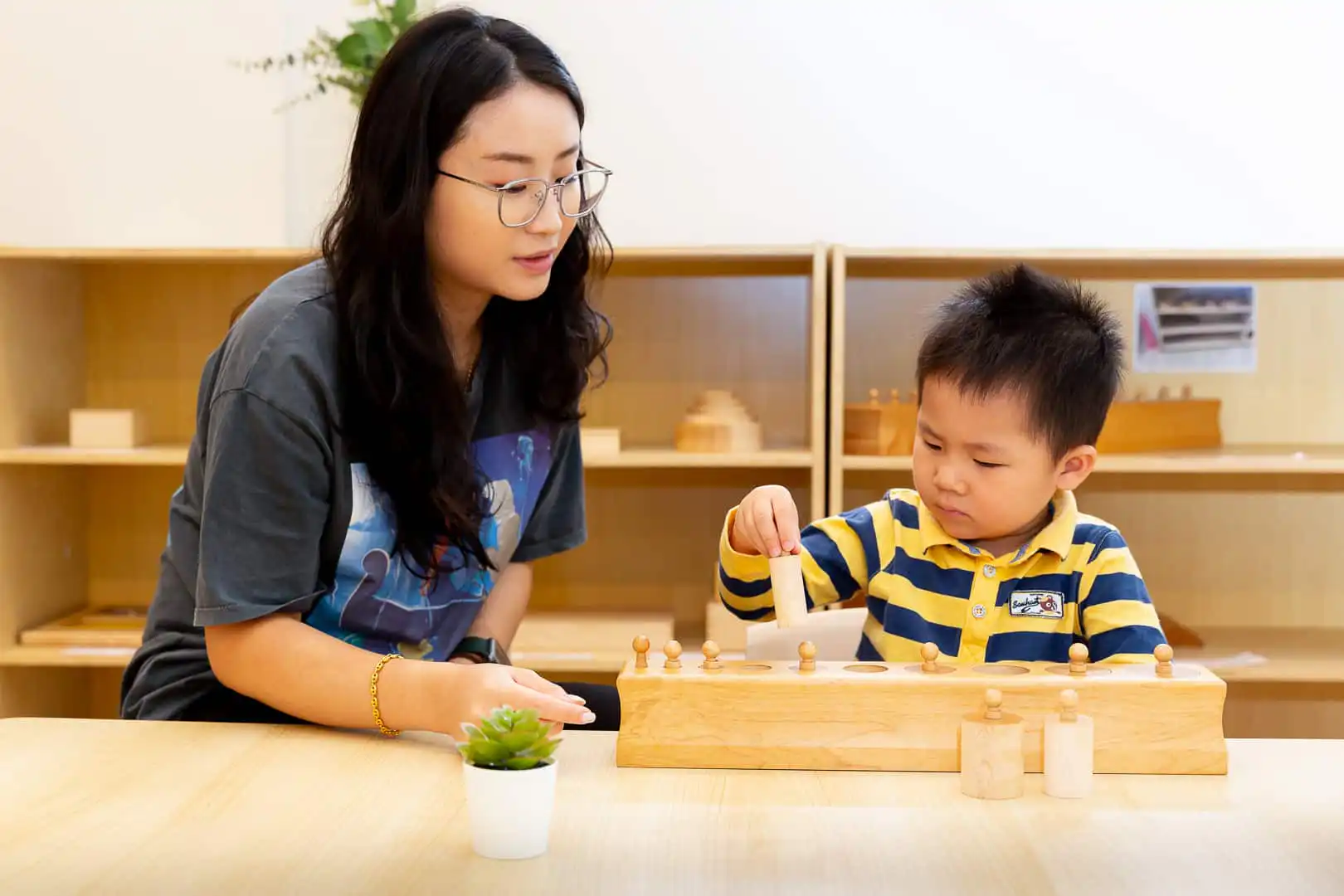
Control of Error
Montessori materials are designed with an inbuilt ‘control of error’ that is self-evident. This quality allows children to see their own mistakes and discover learning outcomes independently through repetition and practice. For example, the knobbed cylinder won’t fit in the incorrect hole, water may spill on the table, or there will be too many/too few objects at the end of a counting activity.
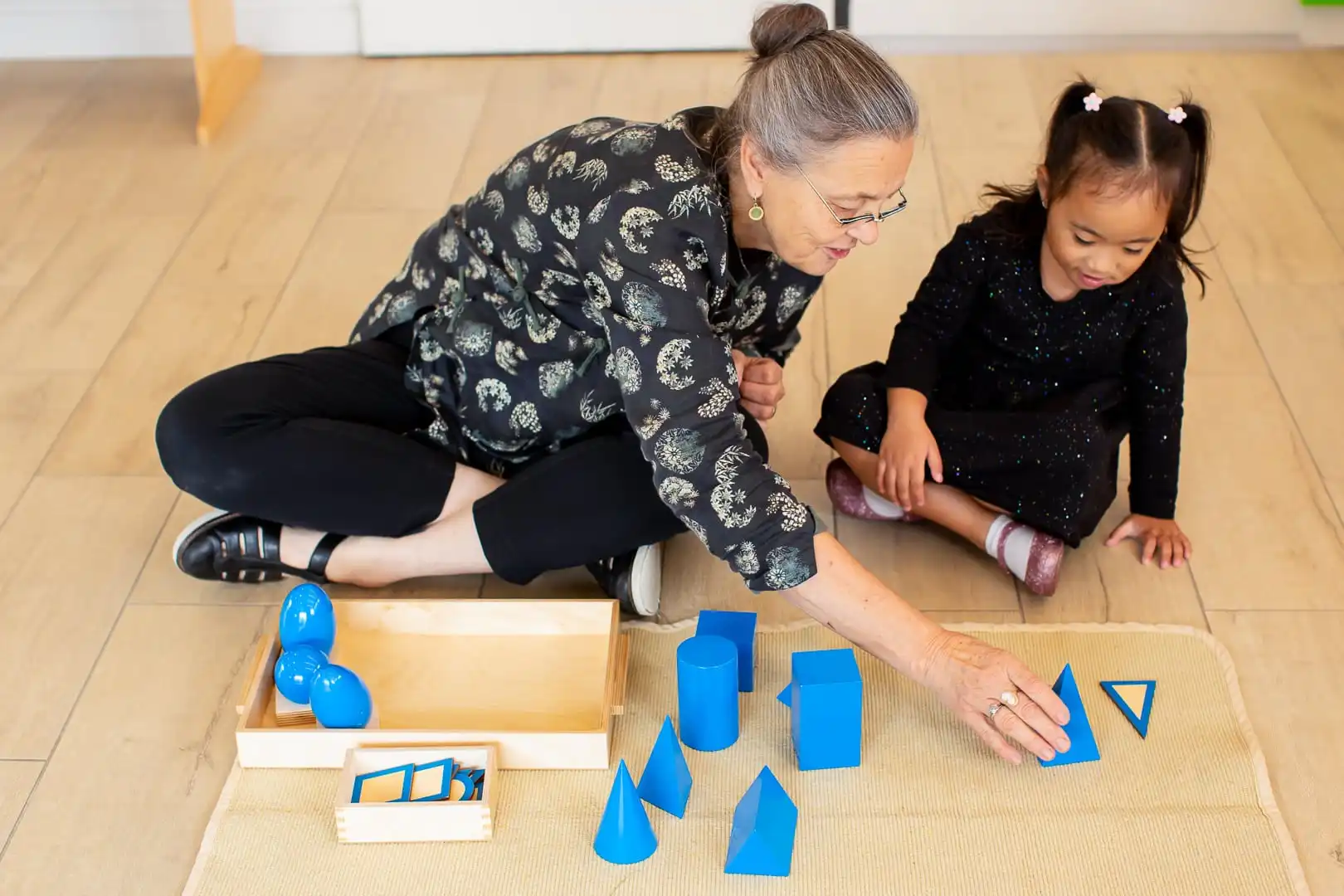
Progression Order
In the Montessori classroom, the Montessori materials are arranged within their curriculum area and are displayed from left to right in progression order, from easiest to hardest. This logical sequence provides children with a clear pathway to learning as they progress through the Montessori Curriculum.
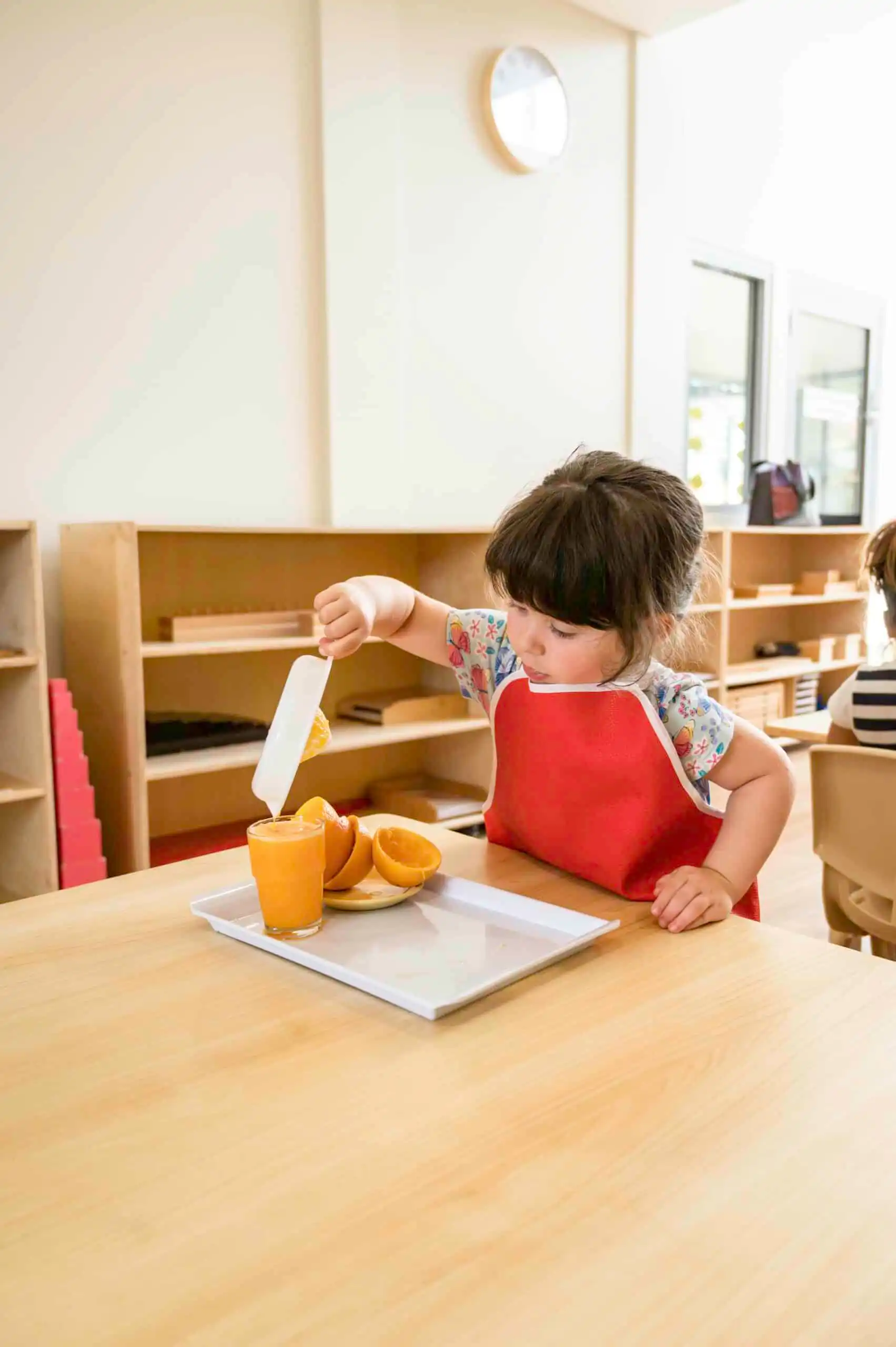
Fine Motor Skills
Montessori materials encourage purposeful movement and exploration. This manipulative quality makes them highly beneficial at developing fine motor skills. These skills are essential components of a balanced approach to early childhood education as they encourage independence, concentration, and prepare children for real life.
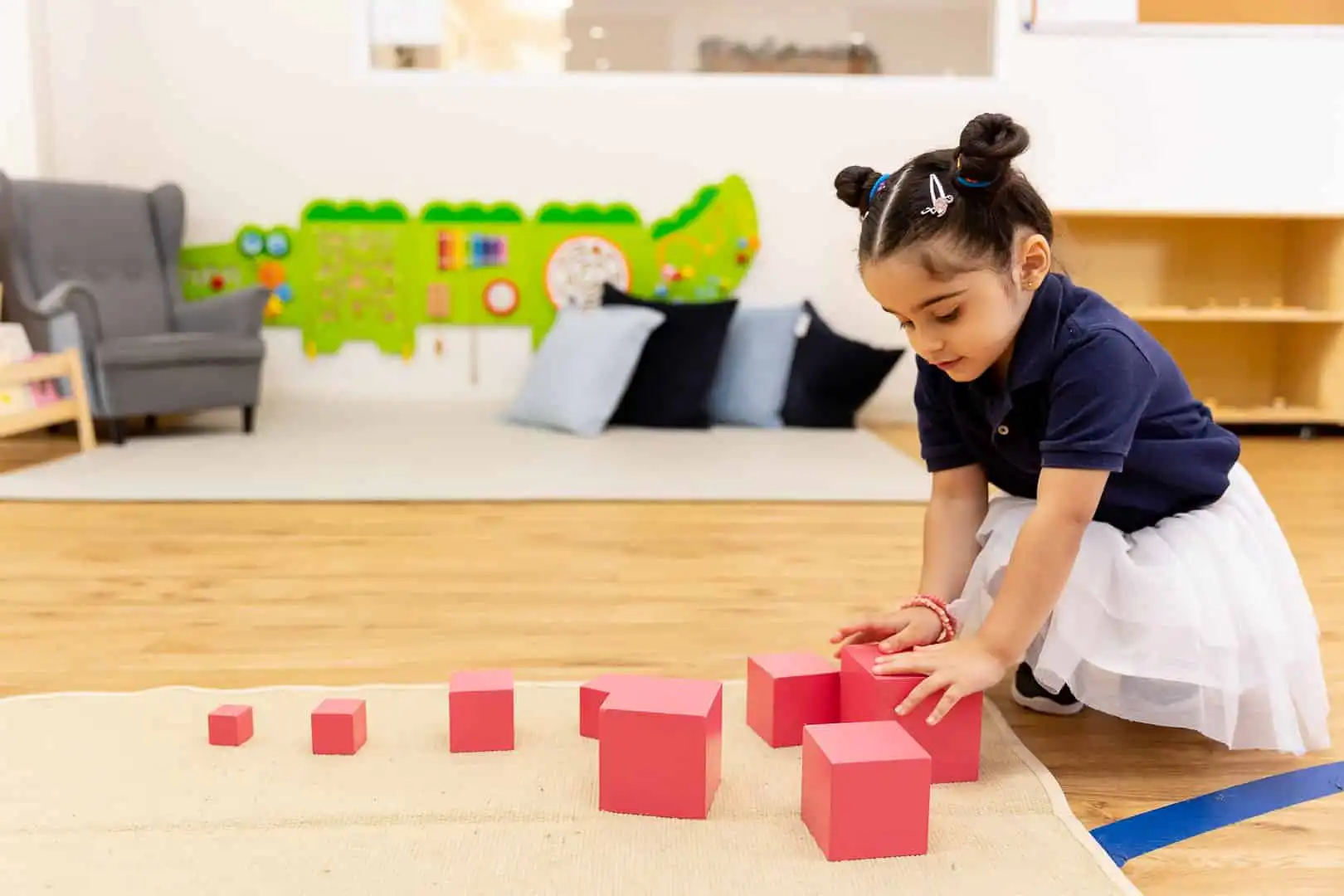
One Skill at a Time
Montessori materials teach only one skill or concept at a time. This allows children to deeply engage with the material as they discover, practice, and master the learning outcome at their own pace. Each material has been developed in the context of all the other materials to progressively build children’s knowledge and skills within each subject area.
Auto-Instructional
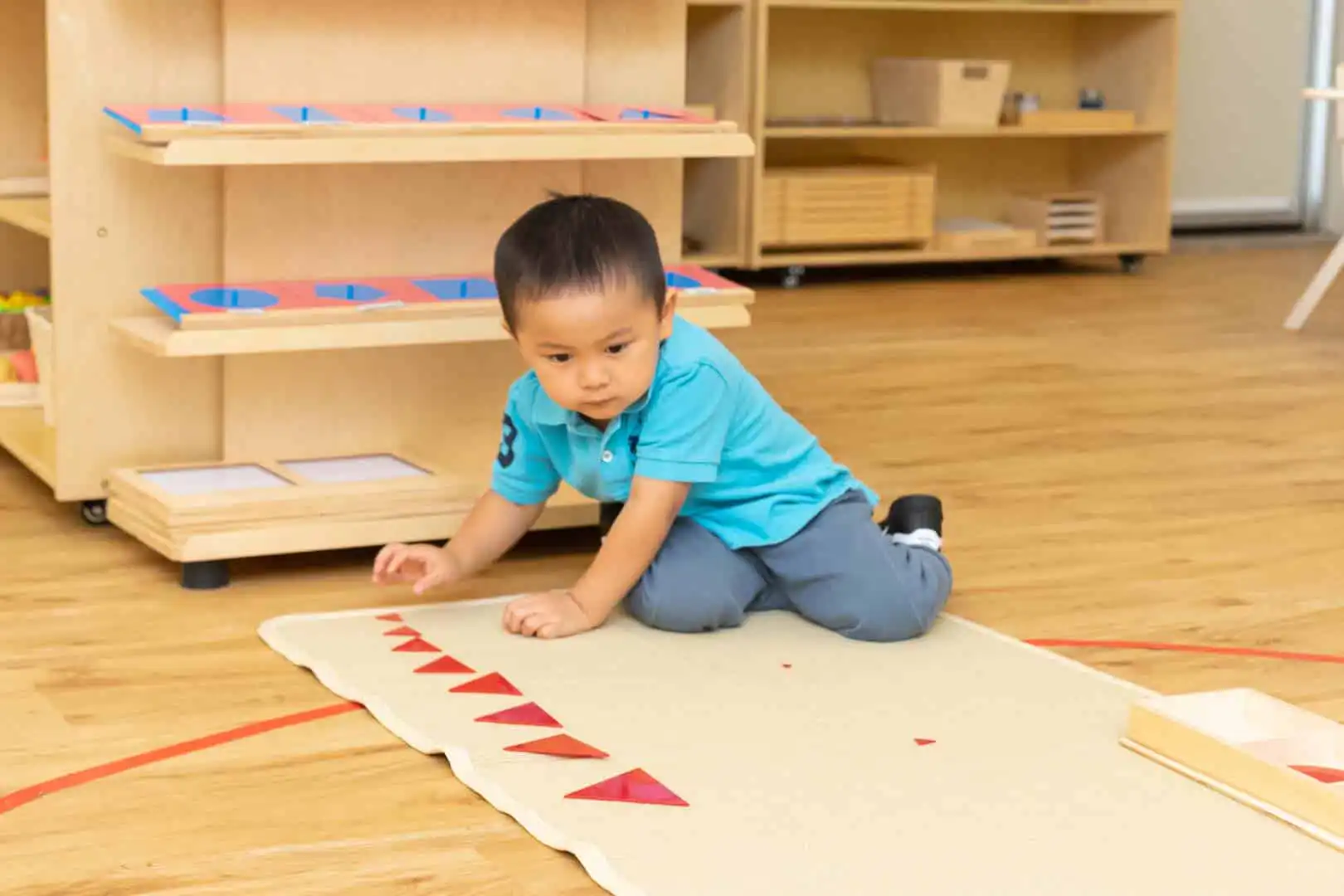
Montessori materials are designed to be used without the help of an adult. This allows children to discover and master the learning outcomes of each material through repetition and practice independently.
Where to next? Montessori Curriculum
The Montessori Curriculum offers children five key areas of study: Practical Life, Sensorial, Mathematics, Language, and Cultural Studies. Each area of study encompasses a suite of Montessori materials and activities that offer a simple step-by-step break down of key knowledge areas and skills. Through repetition and practice with the Montessori materials, children develop a foundational understanding of each curriculum area.