The Munch and Move program is an NSW Government initiative that helps early childhood education and care services encourage healthy eating, active play and less screen time in children from birth to five. It’s free, fun and play-based, and it’s designed to build healthy habits early, so that eating well and moving often simply become part of a child’s day. Curious how this fits into a typical day? Explore the daily routine Montessori Academy children enjoy across our campuses.
Munch and Move started in 2008 and is run by NSW Health, which gives services free training, resources and support, plus tips to share with families.
Munch and Move key messages
There are six key messages at the heart of Munch and Move:
- Encourage and support breastfeeding. Services support families who choose to breastfeed.
- Choose water as a drink. Water is the go-to drink, with sweet drinks left off the menu.
- Eat more fruit and vegetables. Children explore a colourful variety of tastes and textures.
- Choose healthier snacks. Everyday foods instead of “sometimes” foods high in sugar, salt or fat.
- Get active each day. Plenty of active play, indoors and out.
- Turn off the screen and get active. Less screen time means more time to play and move.
The “get active” messages also focus on Munch and Move fundamental movement skills: 13 building-block movements children use in sport and play (see the full list in the FAQs below).
For a quick overview, download the official Munch and Move six key messages fact sheet.
Benefits of Munch and Move
The early years are often when habits and food preferences begin to form, so Munch and Move focuses on everyday moments like mealtimes, snacks and outdoor play.
Some of the key Munch and Move benefits for children and families include:
- Fuel to grow, learn and play: A varied diet with plenty of fruit and vegetables can help give children the energy they need for busy days.
- Confidence in movement: Practising fundamental movement skills can help children feel more confident joining in games and sport.
- Positive attitudes to food: Children offered new foods in a relaxed way are more likely to give them a try.
- Consistent messages: When educators and families share the same messages, healthy habits are easier to build at home and in care.
Munch and Move builds everyday habits rather than giving medical advice. For questions about your child’s growth, diet or development, speak with your GP or child and family health nurse.
What it looks like at Montessori Academy
Munch and Move is part of everyday life across all Montessori Academy centres. To show how it comes to life, here’s a closer look at two of them, Bexley and Castle Hill.
At Bexley Montessori Academy, the team has developed a rolling four-week Munch and Move planner for each age group.
“At Bexley, we’ve created a rolling Munch and Move planner. Each day brings a new movement, food or sensory experience, linked to Montessori learning areas, and we invite the children and their families to help shape what comes next.” — Dena, Centre Manager, Bexley Montessori Academy
Highlights include:
- Infants (0–2 years): tummy time adventures, fruit and vegetable texture play, bubble chasing, crawl tunnels and pouring water from small cups.
- Toddlers (2–3 years): animal moves, rainbow snack sorting, dance and freeze, beanbag tosses and vegetable stamp art.
- Preschoolers (3–6 years): obstacle courses, healthy plate puzzles, throw-and-catch challenges, balance beams and fruit and vegetable relays.
Each experience links to a Montessori learning area and the Early Years Learning Framework, and families are invited to share ideas from home.
Over at Castle Hill Montessori Academy, mealtimes are one more chance for children to practise the independence they build throughout the day.
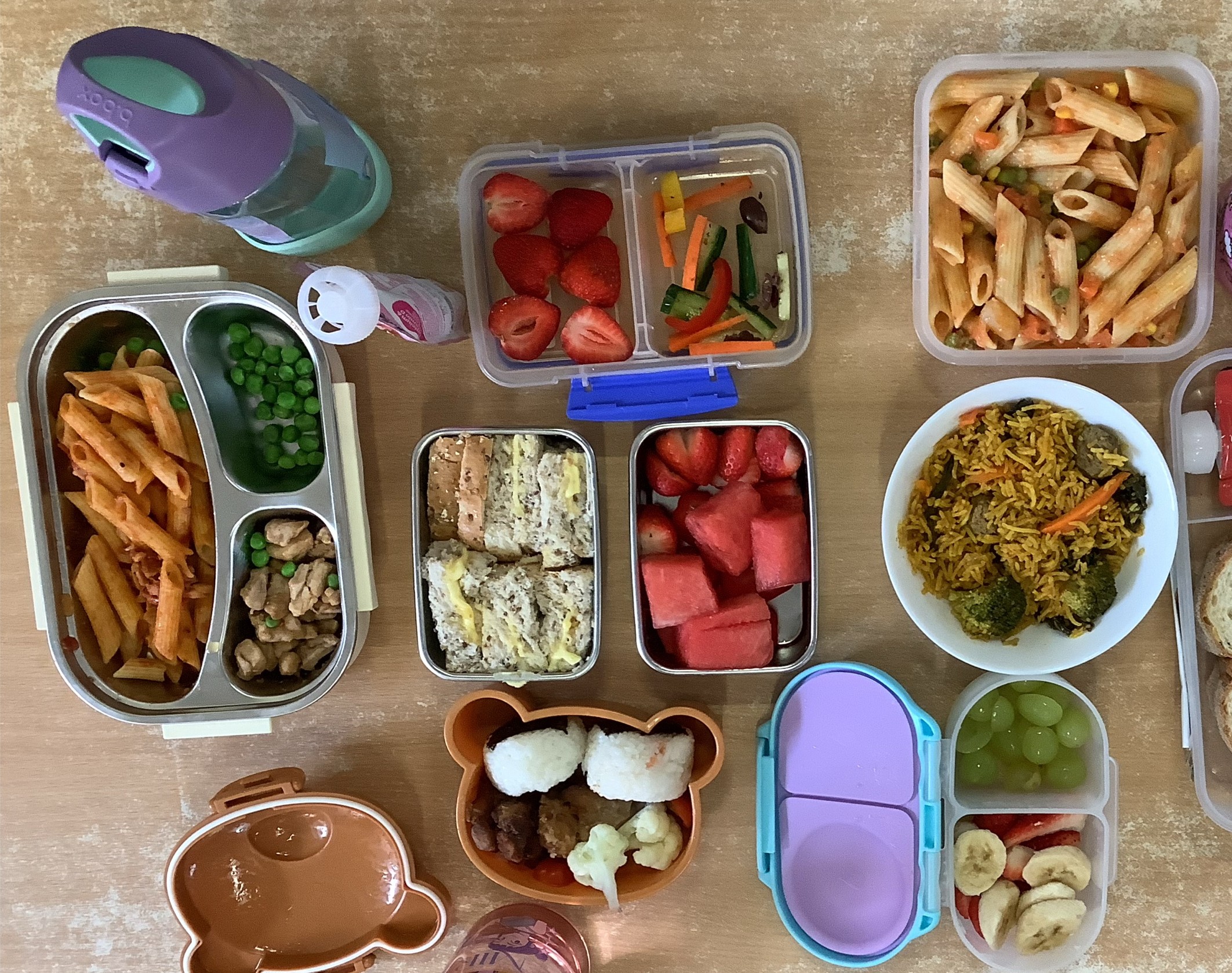
“Our families pack lunches from home, so from the infants room onwards, children eat lunch from their own lunchboxes. They open their containers and manage their food with growing confidence. It builds independence and gets them ready for life and school.” — Komal, Centre Manager, Castle Hill Montessori Academy
Healthy eating, in practice
Mealtimes at Montessori Academy are calm, social and child-led. Educators may sit with the children, and children help set the table, serve themselves and, at many campuses, pour their own water from a self-serve water station. Where meals are prepared on site, you can see examples on our seasonal menu.
Castle Hill prepares a fresh, varied morning and afternoon tea each day, while families pack lunches that reflect the centre’s multicultural community. The children’s favourite travelling classroom mascot, Mr Carrot Buddy, goes home with a different child for shopping trips and weekend adventures, encouraging them to try new foods and keep moving.
Active play, in practice
Movement is part of every day. Infants have safe floor space to roll and crawl, toddlers climb and balance, and preschoolers practise skills like hopping, catching and kicking through games and music.
At Castle Hill Montessori Academy, each Munch and Move session focuses on a different movement, and the children cheer each other on as they go.
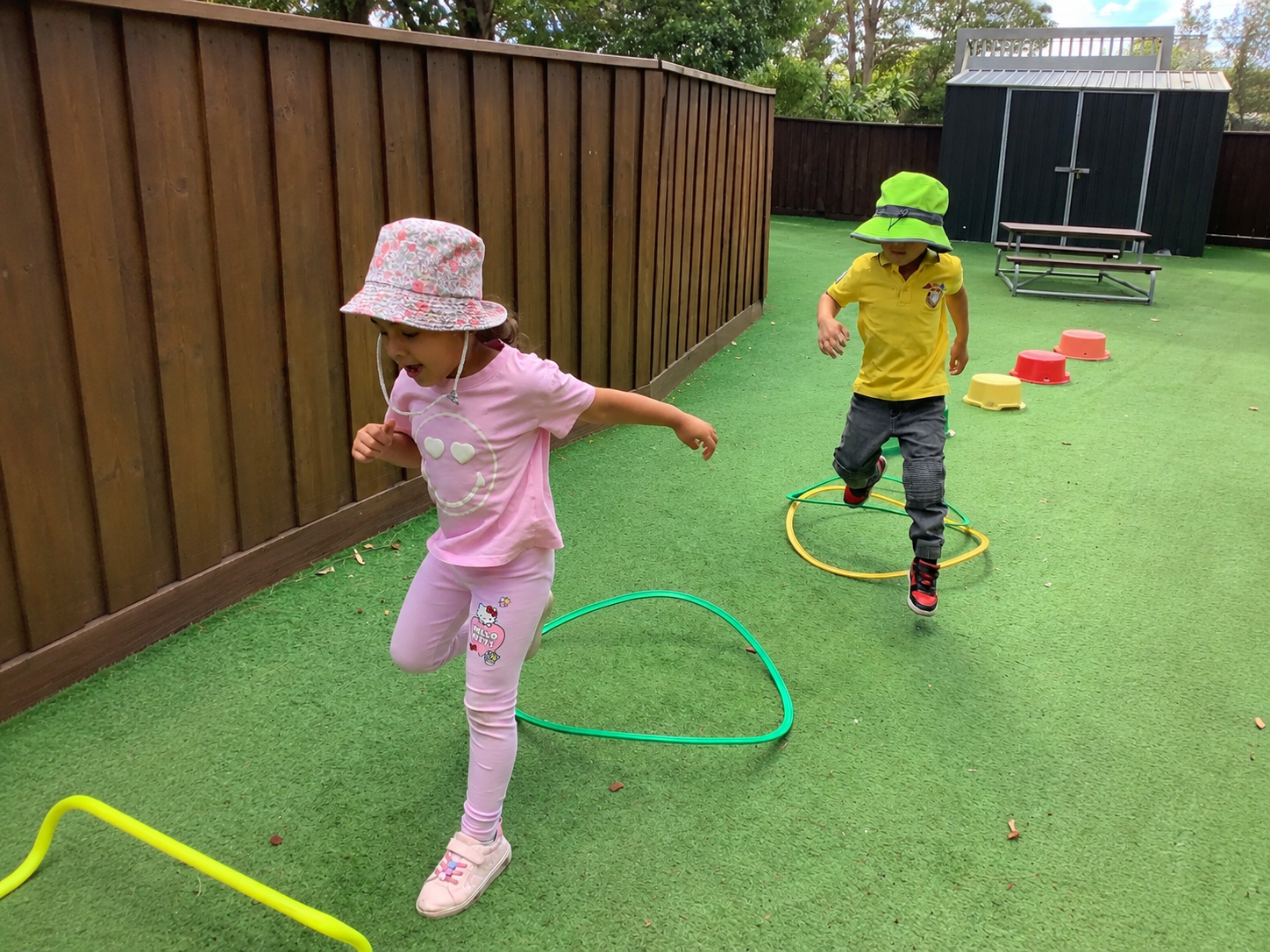
Castle Hill hoop obstacle course
At Bexley Montessori Academy, preschoolers recently enjoyed a spring camping adventure outdoors: a picnic afternoon tea, a fishing game and an imaginative-play campfire where they sang songs and roasted cotton-wool marshmallows. With hats on and sunscreen applied, it was active, imaginative play at its best.
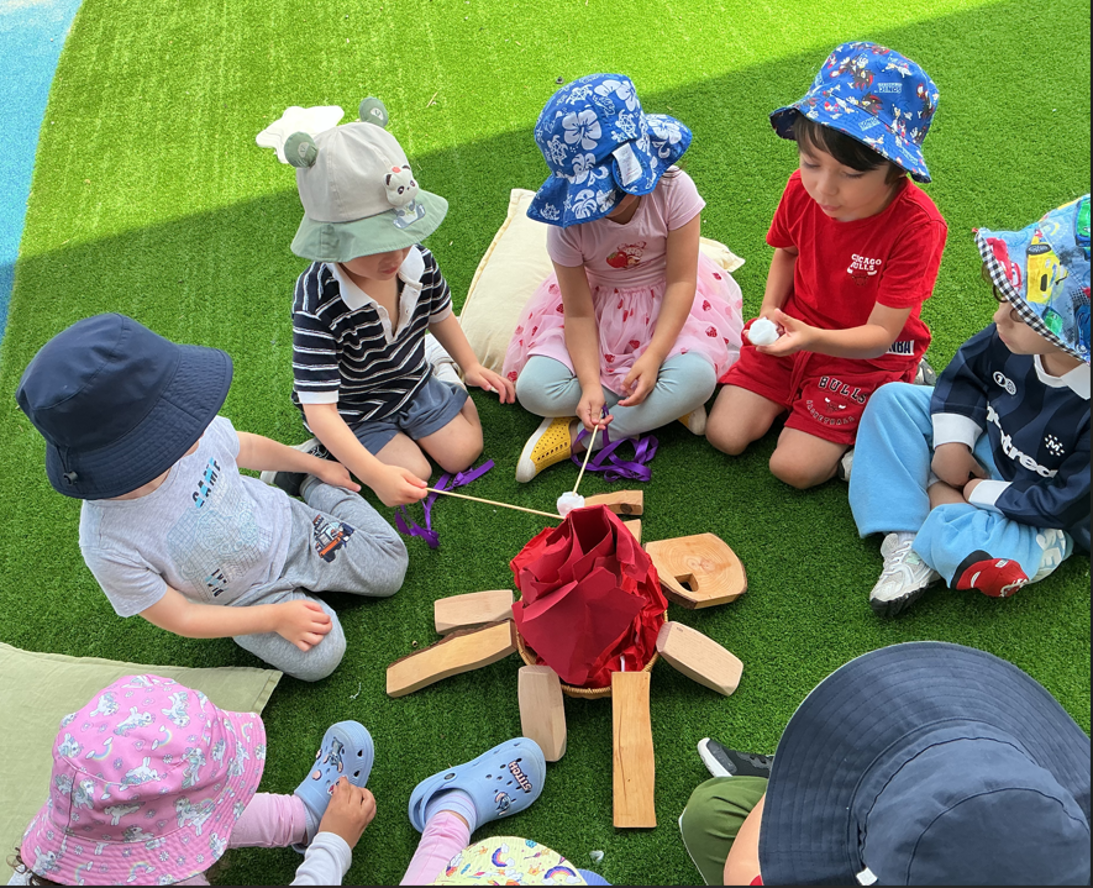
Bexley preschoolers around the pretend campfire
How Munch & Move fits with Montessori
Munch and Move sits naturally alongside the Montessori approach, because both see the child as capable, curious and ready to take part in real life.
- Practical life skills: Peeling a mandarin, slicing a banana, pouring a glass of water and wiping up spills are classic Montessori practical life activities. They also build the healthy food habits Munch and Move encourages.
- Independence at mealtimes: Montessori children are encouraged to serve food themselves, listen to their bodies and decide how much to eat, which supports a positive relationship with food.
- Freedom of movement: Montessori classrooms are designed so children can move freely, choosing their work and moving between activities rather than sitting for long periods.
Munch and Move ideas to support at home: activities and recipes
Try these simple Munch and Move activities and food ideas at home.
Age | Munch and Move activities | Food and recipe ideas |
| Infants | Tummy time on a blanket; reaching and rolling for a favourite toy; kicking and splashing at bath time | Once your infant has started solids, offer a variety of soft, age-appropriate vegetables and fruit and let them explore textures with their hands (your child health nurse or GP can advise on when and how to start) |
| Toddlers | Chasing bubbles; kicking a large soft ball; a cushion obstacle course; dancing to music | Washing vegetables or tearing lettuce; banana and wholemeal wrap “sushi”; colourful veggie sticks with a yoghurt dip |
| Preschoolers | Hopscotch for hopping; throw-and-catch with a soft ball; crab-walk and side-sliding races; skipping games | Build-your-own fruit kebabs; wholemeal pita pizzas topped with vegetables; mini vegetable and cheese muffins |
| The whole family | A walk or scooter ride to the park; screen-free play time after dinner | Cook a meal together; keep a jug of water on the table; try one new vegetable each week |
These Munch and Move activities for infants, toddlers and preschoolers work best when they’re playful and pressure-free.
FAQs
Why is Munch and Move important?
The early years are an important time for building healthy habits. Munch and Move gives educators practical tools and families simple messages to share at home. If you have concerns about your child’s eating or development, speak with your GP or child and family health nurse.
What age is Munch and Move for?
Munch and Move is designed for children from birth to five years. It’s available free to early childhood education and care services in NSW, including long day care, preschools and family day care.
Is Munch and Move only in NSW?
Yes, it’s an NSW Government program. Other states run similar programs, such as Tasmania’s Move Well Eat Well.
What are the Munch and Move fundamental movement skills?
Munch and Move teaches 13 fundamental movement skills, usually grouped into:
- Locomotor skills (moving the body from place to place): running, jumping, galloping, hopping, leaping, side-sliding and skipping.
- Manipulative or object-control skills (sending or receiving an object): catching, kicking, overarm throwing, underarm rolling, dribbling a ball and striking a ball.
Every child develops at their own pace. If you have questions about your child’s movement, your GP or child and family health nurse can help.
What are some fun Munch and Move activities for toddlers?
Toddlers learn best through short, playful bursts of movement. Try:
- Animal moves: hop like a frog, waddle like a duck or gallop like a horse.
- Mini obstacle courses: cushions to climb over and a tunnel to crawl through.
- Moving between activities: tiptoe to the bathroom or fly like an aeroplane to the table.
Is there a free PDF version of Munch and Move recipes?
Yes. The Munch and Move resource library has free fact sheets and guides, and the Caring for Children: Birth to 5 years manual includes recipes for early childhood settings. Check ingredients for allergies, and speak to your GP or a dietitian for personalised advice.
Healthy habits that start early
Munch and Move gives children a simple, joyful foundation: drink water, enjoy fruit and vegetables, choose healthier snacks, move every day and switch off the screen.
At Montessori Academy, we bring these ideas to life through real-world practical activities, nourishing meals and plenty of active play, supporting each child to grow in confidence, independence and wellbeing.