

Providing children with a caring environment that is rich in appropriately challenging activities is the key to developing problem-solving and higher-order processing skills.

Teaching art appreciation, and the skills associated with artistic expression, is an important part of the Montessori Art Curriculum. This is because the study of art is fundamental to children’s creative, visual, sensorial, and emotional development.

The essence of Doctor Maria Montessori’s educational philosophy is the holistic development of the child, and every element of the learning curriculum supports this goal, including the design of the classroom.
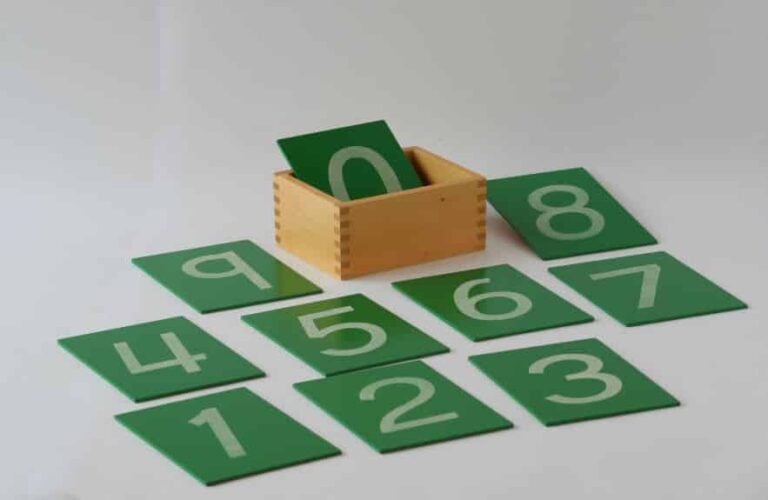
The Sandpaper Numbers are an important foundational Montessori mathematics material that introduce numerals 0 – 9 to young children.

Each Montessori material isolates one particular skill, and the material’s purpose often correlates with other Montessori activities. This means that there are endless extensions students can embrace once they have mastered the original concept!
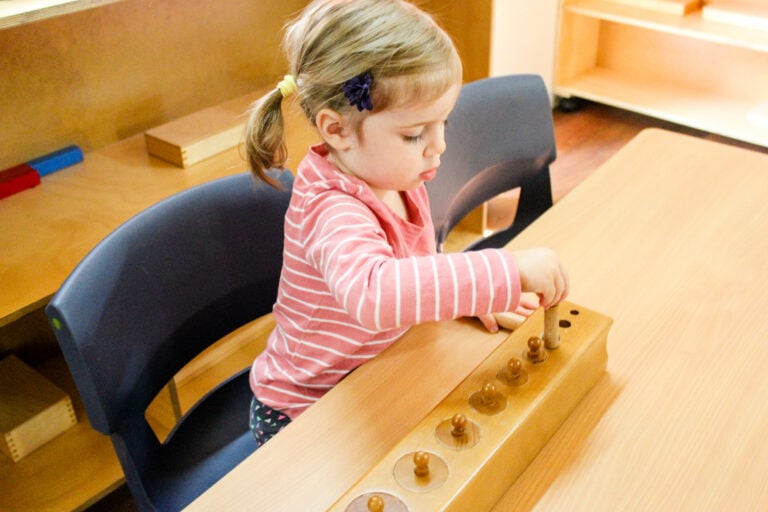
The Knobbed Cylinders are a Montessori Sensorial material, designed to assist children in making distinctions in their immediate environment. This material primarily engages the senses of touch and sight.
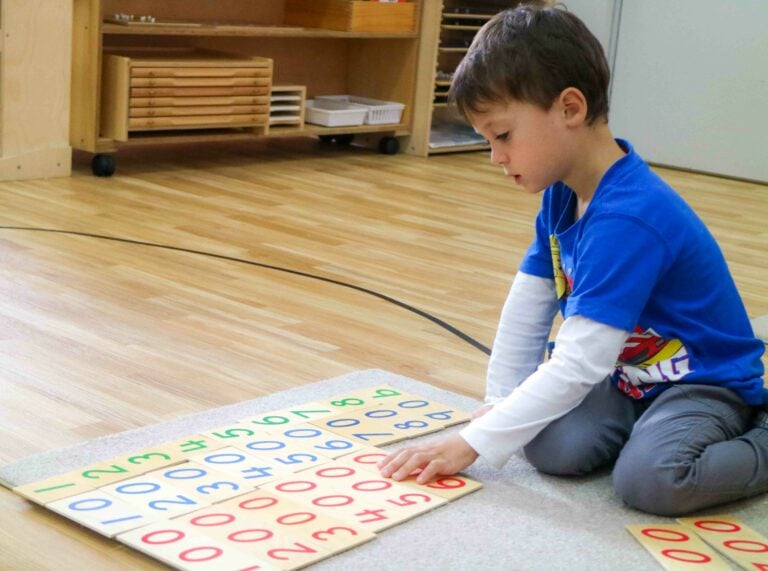
The Large Number Cards are a Montessori Mathematics material which are used to introduce young children to the decimal system.
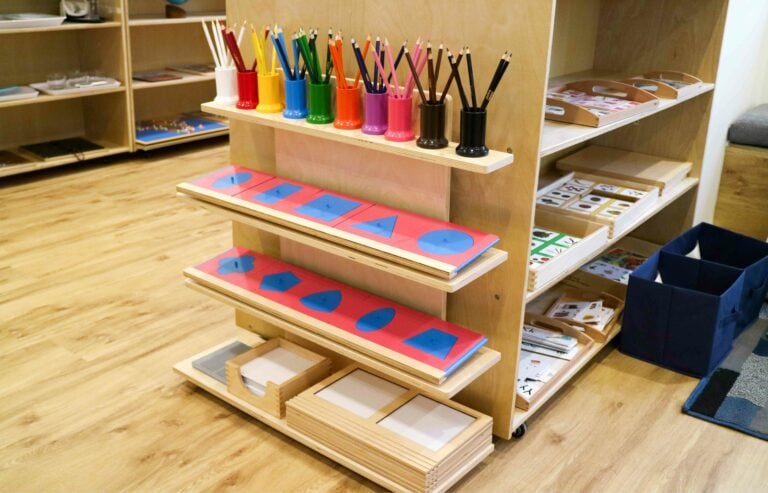
The Metal Insets are part of the Montessori Language Curriculum. They are a learning tool used to prepare children for writing.
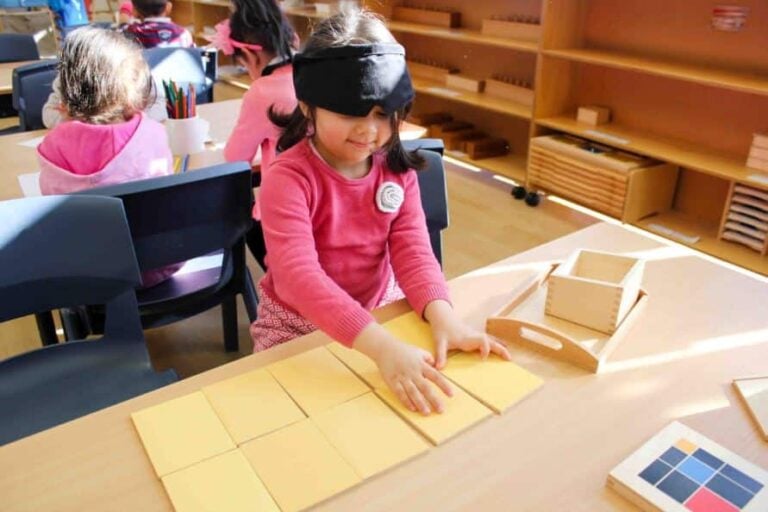
The Touch Tablets form part of the Montessori Sensorial Curriculum, which aims to teach children how to classify items within their environment using the five senses. The Touch Tablets focus on the tactile sense of touch, and isolate the concepts of rough and smooth.
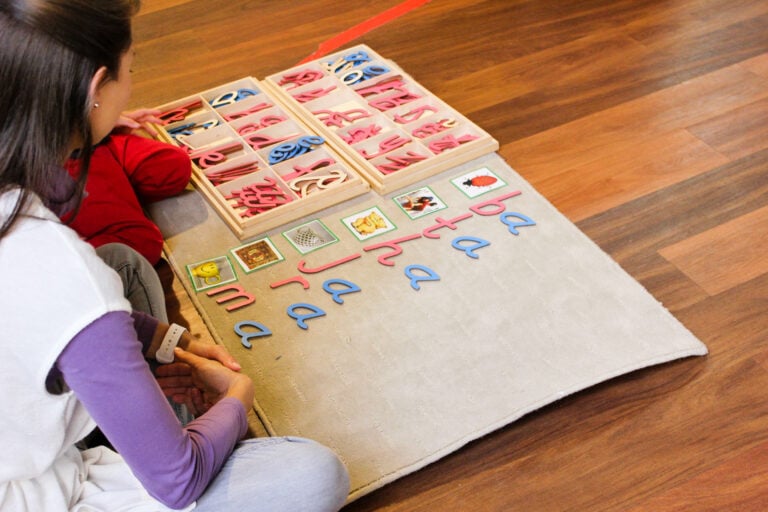
The Moveable Alphabet is a key part of the Montessori Language Curriculum. The material primarily teaches children how to develop their knowledge of the alphabet, and thus written language skills.
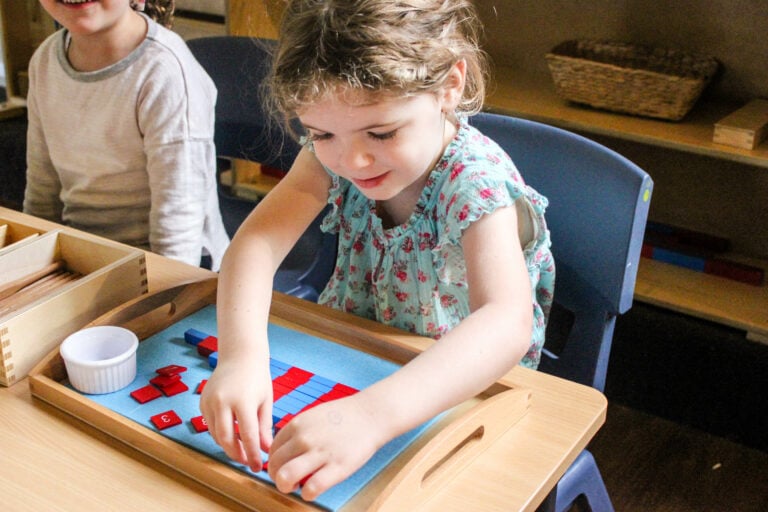
Joining a Montessori Preschool is an exciting time in your child’s development and education. Settling into the Montessori environment is a process characterised by three stages of development, which Doctor Maria Montessori termed: ‘Normalisation.’
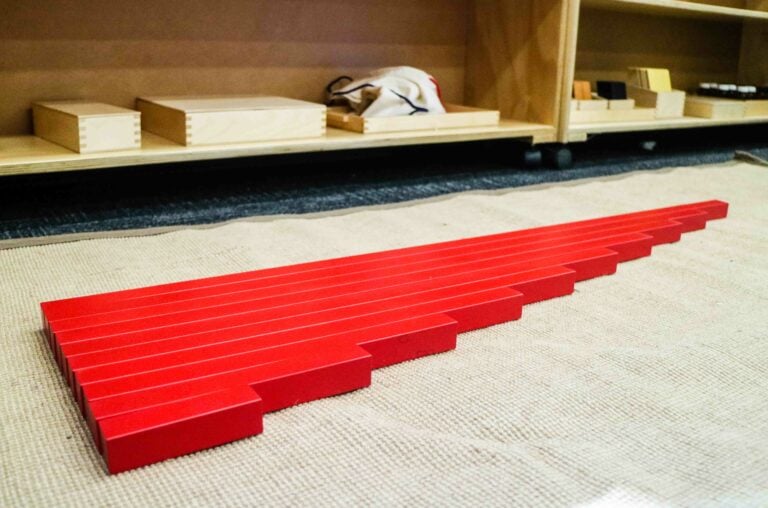
The Red Rods are part of the Montessori Sensorial Curriculum. It is common for sensorial materials to isolate one quality, such as weight, to assist the child in better understanding their environment.