Home Lesson One: Matching
- Place the control page on your work space
- Lay out the cut-outs randomly below the control page
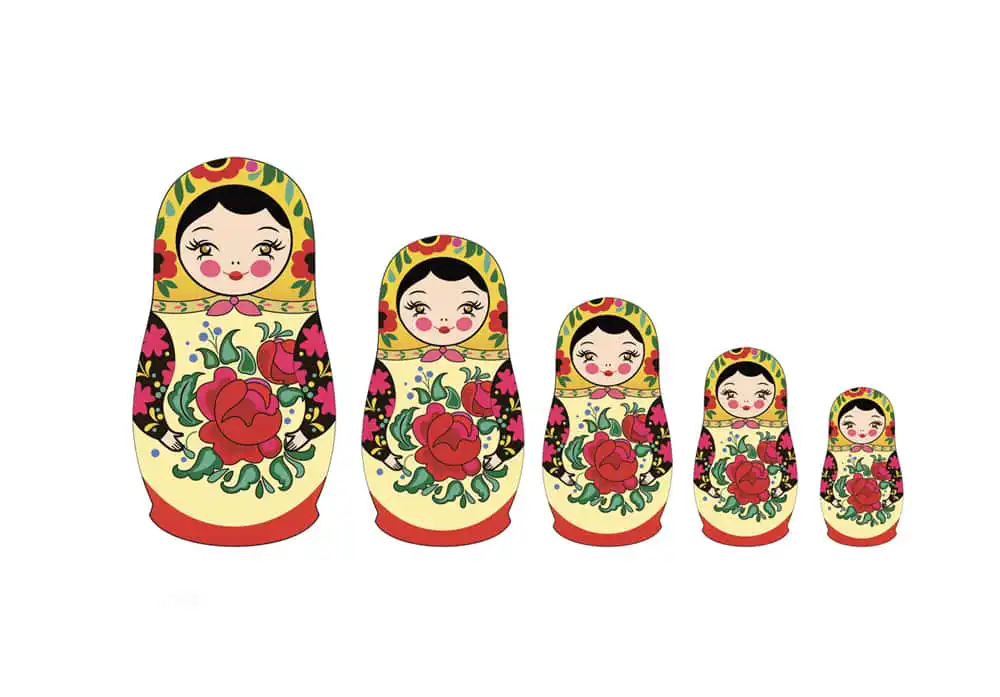
- Scan the cut-outs for the ‘biggest’ and place the matching doll on the control sheet
- Scan the remaining dolls and complete the activity a second time
- Invite your child to take a turn
- Use the language “Biggest, Smaller, Smaller, Smaller, Smaller, Smallest” to describe the doll cut-outs once they are properly arranged
- You can also match the dolls beneath the control sheet
Home Lesson Two: Visual Discrimination
- Place the cut-outs randomly on your work space
- Arrange the dolls from biggest to smallest from left to right
- Invite your child to take a turn
- For an extension you can also order the dolls from smallest to largest
Home Lesson Three: Comparative Language Cards
- Place the cut-outs in order from largest to smallest
- Choose a sets of related language cards i.e Biggest, Smaller, Smallest
- Match the language card to the cut-outs
- For an extension, you can use more than one set of language cards, or introduce opposite words such as tall and short
Home Lesson Four: Counting Cards
- Lay out the nesting doll counting cards from smallest to largest and from top to bottom
- Count the nesting dolls on each card aloud
- Invite your child to take a turn
- Match the numeral counting cards to the nesting doll counting cards using the language “this is one, this says one”
- Invite your child to continue the activity
- You can match left to right or top to bottom
Home Lesson Five: Counting Games
- Fan out your numeral counting cards with the number facing down
- Invite your child to pick a card and lay it out on the work space
- Invite your child to use the individual cut-out dolls to quantify the numeral on the card