Creating a Montessori Weekly Lesson Plan
Helping families create a solid connection between Montessori learning in the classroom and at home.
How to Create a Weekly Lesson Plan
Creating a weekly lesson plan provides structure for learning experiences. In the Montessori classroom, the lesson plan is used in addition to the Montessori work cycle to extend on children’s interests, implement intentional teaching strategies, and scaffold skills over time. These ideas can be implemented in a simplified format to assist with providing structure to learning at home. To create a successful Montessori based lesson plan at home for infants, toddlers or preschoolers, it’s important to include a few basic elements, and not to over schedule. Remember that repetition is key to developing and mastering new skills. To view a sample Montessori lesson plan click here.
Observe Your Child’s Interests
You should begin your weekly lesson plan by observing your child’s interests and use this as a base for the type of learning experiences you are going to prepare. Ask yourself:
- What are they showing interest in?
- What toys do they play with the most?
- When are they happiest?
- What do they talk about all the time?
- What is their favourite story?
- What songs do they enjoy?
Use What You Have
When creating a weekly lesson plan, go for a walk around your house, and look at what you already have on hand. You can create lessons and activities from almost anything. Begin lesson planning by asking yourself: “what do I have?” as opposed to “what do I need?” For example, if you have an egg carton, some grapes, and a set of chopsticks, you have a transfer activity. Look at what you have and create learning experiences from found objects around the home. Remember to re-use and recycle where possible. Learning should be linked to the home, encourage the development of real-life skills, and reinforce the importance of sustainability and environmental awareness.
Give the Activity a Name
When you are presenting an activity ensure you give it a name that is relevant and factual. This gives your child a point of reference for the activity and also assists them in learning its proper place when packing away. For example, if you are discussing dog pet care, make sure to use the word “dog” and opposed to “puppy” or “woofie.”
Identify the Main Aim
When you’re planning lessons or activities, think about the purpose, or the goal of the activity. It may be useful to think about what developmental milestone or skills and interests are relevant and engaging to your child. For example, the aim of tummy time for an infant is to help them develop the muscular strength and coordination required for more complex motor activities such as rolling, sitting, crawling and walking. Take cues for lesson planning from your child by observing their level of attention and interest.
Repetition is Key
You don’t need to over schedule your child and create a lesson plan that covers every 15-minute block throughout your child’s day. Choose a few things per day to focus on and repeat those activities every day for a week, or every other day, and build on core skills. Remember that long-term learning takes time, repetition, and practice.
Use Open Questioning
In order to expand on your child’s interests, and build on their skills, it is important to use open-ended questions. These questions typically begin with the five W’s: Who, What, When, Where, and Why. For example, ask your child:
- “What do you think comes next?”
- “What else do you think that could do?”
- “What does this make you think of?”
- “How would you organise that?”
- “How can we/you find the answer?”
Scaffold Their Learning
The key to successful lesson planning is to use your child’s interests and expand on them in a relevant way in order to teach new skills and scaffold their learning. For example, if your child is interested in dinosaurs, think about how you could incorporate dinosaurs into different types of learning experiences to teach new skills. This could include:
The key to successful lesson planning is to use your child’s interests and expand on them in a relevant way in order to teach new skills and scaffold their learning. For example, if your child is interested in dinosaurs, think about how you could incorporate dinosaurs into different types of learning experiences to teach new skills. This could include:
- Practical Life Activities: Locate all the dinosaur toys you have around the house and show your child how to wash, clean, and dry them. Have your child pack away at the end of the activity to develop a sense of order.
- Sensorial: Create a sensory tub with soil and water where your child can create ‘habitats’ for their dinosaurs. This could extend to a sorting activity, where your child categorises dinosaurs into water, sky, or land animals. You could extend even further by exploring the different species of dinosaurs, and whether they are herbivores, omnivores or carnivores.
- Mathematics: Count the dinosaur toys you have in the tub. You could then extend by ordering the dinosaurs from largest to smallest. You could extend further with classifying and sorting activities, as well as using dinosaur toys for basic addition and subtraction.
- Language: Locate a book or a story about dinosaurs and read this with your child. Explore the names and characteristics of different species and learn more about where they lived and what they ate to develop your child’s vocabulary and understanding.
- Culture: Look for resources that provide information about where different species of dinosaur lived during the Mesozoic period. This could extend to the study of different dinosaurs that were located on or near each of the continents we know today.
- Art: Create your own ‘fossil’ at home by drawing or painting on a rock.
- Music and Movement: Look up dinosaur songs on YouTube and sing and dance to them with your child. You could also draw a simple dinosaur outline in chalk on the sidewalk and have your child follow the outline as they walk with their feet.
- Outdoor play: Extend on your fossil art project by doing a fossil dig for buried objects in a tub, pot plant, or in the backyard.
Reflect
No planning cycle would be complete without reflection. At the end of each week, spend some time asking yourself a few simple questions to assist with planning for the week ahead, and extending on your child’s interests. Example questions may include:
- What worked well?
- What activities did my child enjoy?
- What activities should I continue and repeat?
- What didn’t work or didn’t interest my child?
- Why didn’t it work? Was the activity too far removed from their interests, or beyond their level of knowledge and skill?
- How can I extend on my child’s interests to scaffold their skills next week?
Begin Again
The final stage of lesson planning is returning to the beginning. It’s best to lesson plan while the experiences of the week are still fresh in your mind. Make a plan for the week ahead based on your child’s interests, what you have readily available, and the notes from your reflection.
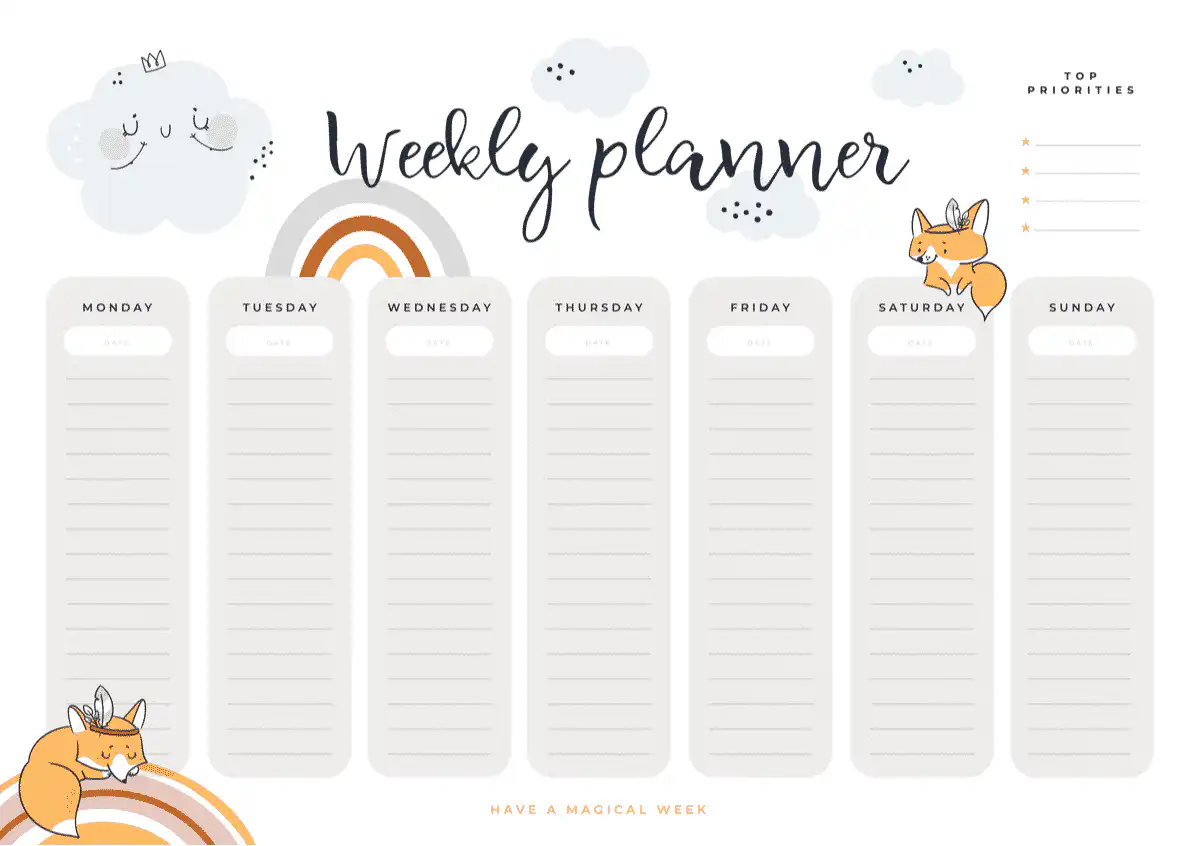
Supplied Printables
- Sample Home Lesson Plan for Infants
- Sample Home Lesson Plan for Toddlers
- Sample Home Lesson Plan for Preschoolers
The Keys to Lesson Planning at Home
- Observe your child’s interests
- Use what you have
- Don’t over schedule
- Give each activity or lesson a name
- Identify the main aim
- Repetition is fundamental to learning
- Scaffold their learning to build new skills and diversify interests
- Use open questions
- Reflect
- Begin again using what you have learned
Examples of Open-Ended Questions
- What do you think comes next?
- What else do you think that could do?
- What does this make you think of?
- How would you organise that?
- How can we/you find the answer?
- Which one has more or less?
- What happened first, second, and third?
- Tell me how you would build this?
- How can we make this tower stronger?
- Why is this important?
- Is there anything you would change?
- What is one way to use this?
Examples of Questions for Reflection
- What worked well this week?
- What did my child enjoy?
- What didn’t work?
- Why didn’t it work?
- What questions did my child ask that I didn’t know the answer to?
- How can we discover this knowledge together?
- What conversations did I have with my child that challenged them to think deeply?
- What activity or skill is my child currently working on and? How can I help them master this?
- What activities or skills has my child mastered? How we can progress to the next level?