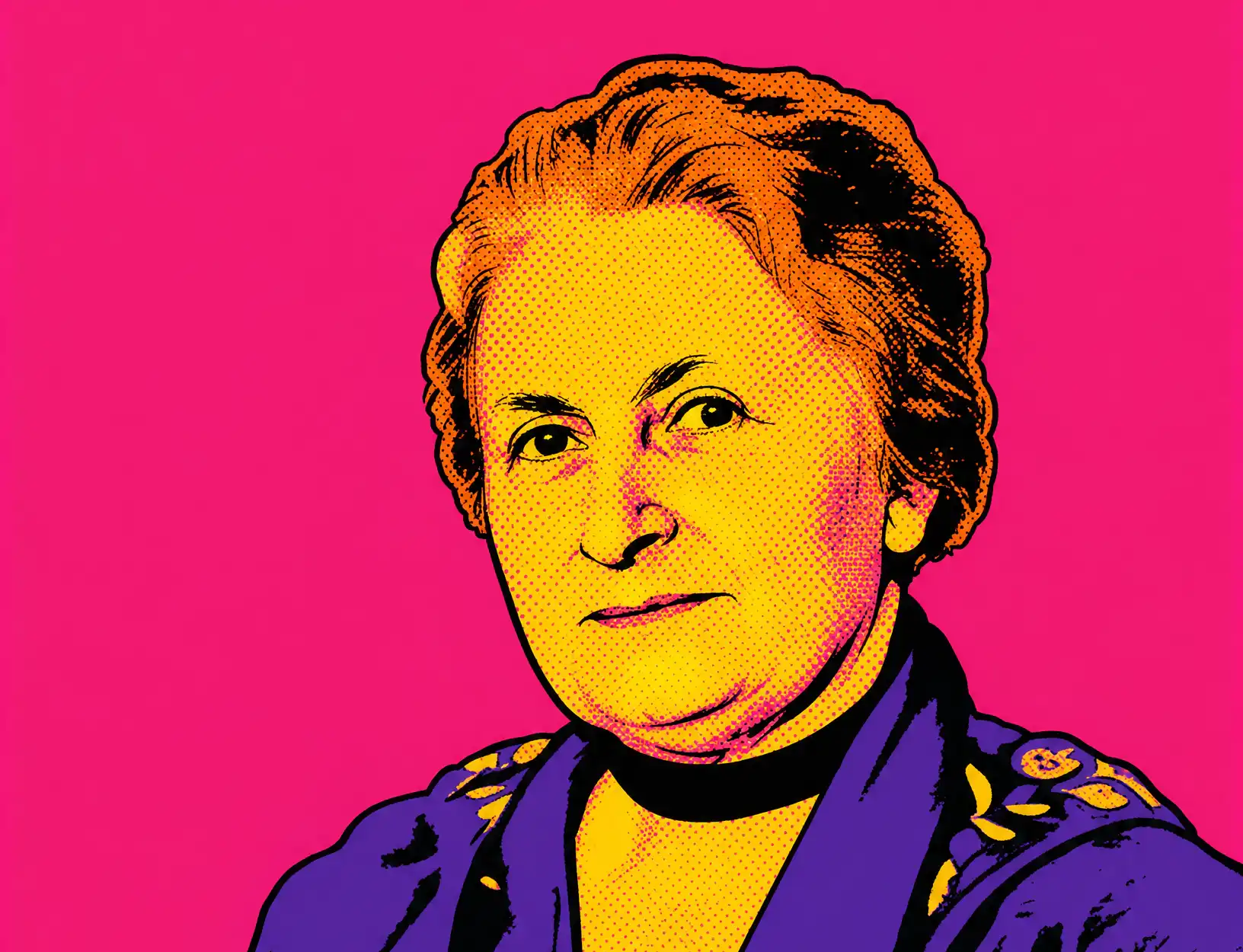
No single person has done more to change how humanity understands children than a young Italian woman who wasn’t supposed to be in the room. Dr Maria Montessori was an Italian physician, scientist, and educator who developed the philosophy behind Montessori education. Today, her ideas about childhood and learning have shaped classrooms in more than 140 countries. Born in 1870, she became one of Italy’s first female doctors, worked with children society had dismissed as uneducable, and in 1907 opened a small school in a Roman slum that quietly changed the world. More than a century later, her educational philosophy is not only alive, it is growing.
In this article, you will find a full biography of Dr Maria Montessori: the history of her early life, the discoveries that shaped her theory, the principles behind the Montessori method, her key contributions to education, and why her approach to childhood continues to matter for preschool children and families today.
In this article:
- Who was Dr Maria Montessori and why does she still matter?
- Her early life and the fierce determination that shaped her thinking
- How she appealed to the Pope to gain entry to medical school
- The discovery that sparked the Montessori method
- The key ideas behind the Maria Montessori theory, in her own words
- What the Montessori method looks like in a classroom
- Her major contributions to education
- Why her ideas were revolutionary
- Her global impact, including exile, fascism, and three Nobel Peace Prize nominations
- Common misconceptions, cleared up
- Her legacy today and why it still matters
Early Life and Education
She Was Told Women Couldn’t Be Doctors. She Became One Anyway.
Maria Tecla Artemisia Montessori was born on 31 August 1870 in Chiaravalle, a small town in the Ancona province of Italy. Her father Alessandro was a civil servant. Her mother Renilde was well-educated, politically aware, and deeply devoted to her only child, a combination that gave young Maria both the permission and the determination to think differently.
From the start, she refused the script her era had written for women.
At thirteen, she enrolled at a boys’ technical school to study engineering, an almost unheard-of choice for a girl in 1880s Italy. She later changed direction and set her sights on medicine, a field so exclusively male that the University of Rome’s medical faculty turned her away outright. Most people would have stopped there. Maria Montessori wrote to Pope Leo XIII.
Whether it was her letter, her persistence, or a combination of both, the papal endorsement came. In 1890, she enrolled at the University of Rome to study physics, mathematics, and natural sciences, and two years later earned the diploma that made her eligible for medical school. She was the first woman ever admitted to the University of Rome’s Faculty of Medicine.
It was not a warm welcome. Male students refused to work beside her. Anatomical dissections had to be done alone, after hours, because mixed-sex dissection rooms were not permitted. She did them anyway, by lamplight, on her own. On 10 July 1896, she graduated with honours as one of Italy’s first female physicians.
That same year, she represented Italy at the International Women’s Congress in Berlin, where she spoke on equal pay for equal work. She was twenty-six years old.
How Maria Montessori Developed Her Educational Philosophy
The Children Nobody Believed In Changed Everything
After graduating, Montessori took a post at Rome’s psychiatric clinic, working with children who had intellectual disabilities, children labelled uneducable and largely forgotten by the education system.
What she found there changed everything.
These children were not beyond learning. They were understimulated and placed in environments that gave them nothing to engage with. When Montessori gave them purposeful materials and genuine attention, they responded. Her students at the Orthophrenic School, where she became co-director in 1900, began passing the same academic examinations as children from mainstream schools.
Rather than feeling satisfied, she felt troubled. If these children could achieve this, what was the standard education system doing, or failing to do, for everyone else?
She resigned, returned to university, and spent years reading every major work in educational theory she could find. She studied the methods of French physicians Jean-Marc Itard and Edouard Seguin, who had pioneered sensory-based education with children who had disabilities. She began developing her own materials, refining them through observation rather than assumption.
Then in 1907, a group of Roman property developers offered her the opportunity she had been preparing for. The children of San Lorenzo, a poor working district of Rome, were being left unsupervised while their parents worked, and were causing significant damage to a newly renovated building. Montessori accepted the challenge.
On 6 January 1907, she opened the first Casa dei Bambini, the Children’s House. Sixty children, ages one to six, from the slums of Rome. On opening day, she told those present: “I had a strange feeling which made me announce emphatically that here was the opening of an undertaking of which the whole world would one day speak.”
It was not an overstatement.
The Maria Montessori Theory
What She Saw When She Simply Watched
The Montessori theory is an educational framework based on scientific observation of children. It centres on the absorbent mind, sensitive periods, independence, freedom within limits, the prepared environment, and respect for the child’s natural development.
It is grounded in the belief that children are natural learners, curious, capable, and driven to make sense of the world, when given the right conditions. Rather than being developed in theory, Montessori education evolved through years of observing children in real learning environments.
One observation in particular left a lasting impression on Maria Montessori. She watched a young girl become completely absorbed in working with the Cylinder Blocks, concentrating so deeply that nothing around her seemed to matter. Curious, Montessori carefully lifted the child’s chair, with the girl still seated, and placed it on top of a table. The child remained focused on her work, undistracted and fully engaged.
On another occasion, visitors donated a collection of expensive toys to the classroom. The children explored them briefly before quietly returning to the Montessori materials. Given the freedom to choose, they consistently gravitated towards meaningful, purposeful work.
From observations like these, Montessori built a theory that continues to guide preschool and primary education across the world today.
- The Absorbent Mind
Young children do not learn the way adults do. They absorb their environment. In The Absorbent Mind, Montessori wrote:
“Impressions do not merely enter his mind; they form it. They incarnate themselves in him. The child creates his own mental muscles, using for this what he finds in the world about him.”
A child does not study their mother language, they absorb it through immersion. The same process applies to movement, social understanding, and practical skills. These are the Montessori principles that sit at the foundation of every Montessori classroom, from Montessori preschool and early learning settings through to primary education.
- Sensitive Periods
Montessori identified sensitive periods: windows of time during which a child is particularly receptive to learning specific skills. A child in a sensitive period for language absorbs vocabulary with an ease that simply is not available later. Recognising these windows allows educators to offer the right experiences at the right time, something central to the Montessori approach to education practised in schools today.
- Independence
A cornerstone of the Maria Montessori teaching philosophy is that children develop genuine confidence through doing things for themselves. Practical activities, pouring water, preparing food, caring for the classroom environment, are not just tasks. They are the foundation of self-belief.
Montessori heard a child in the Casa dei Bambini say four words she never forgot: “Help me to do it myself.” That phrase became the spirit of everything she built.
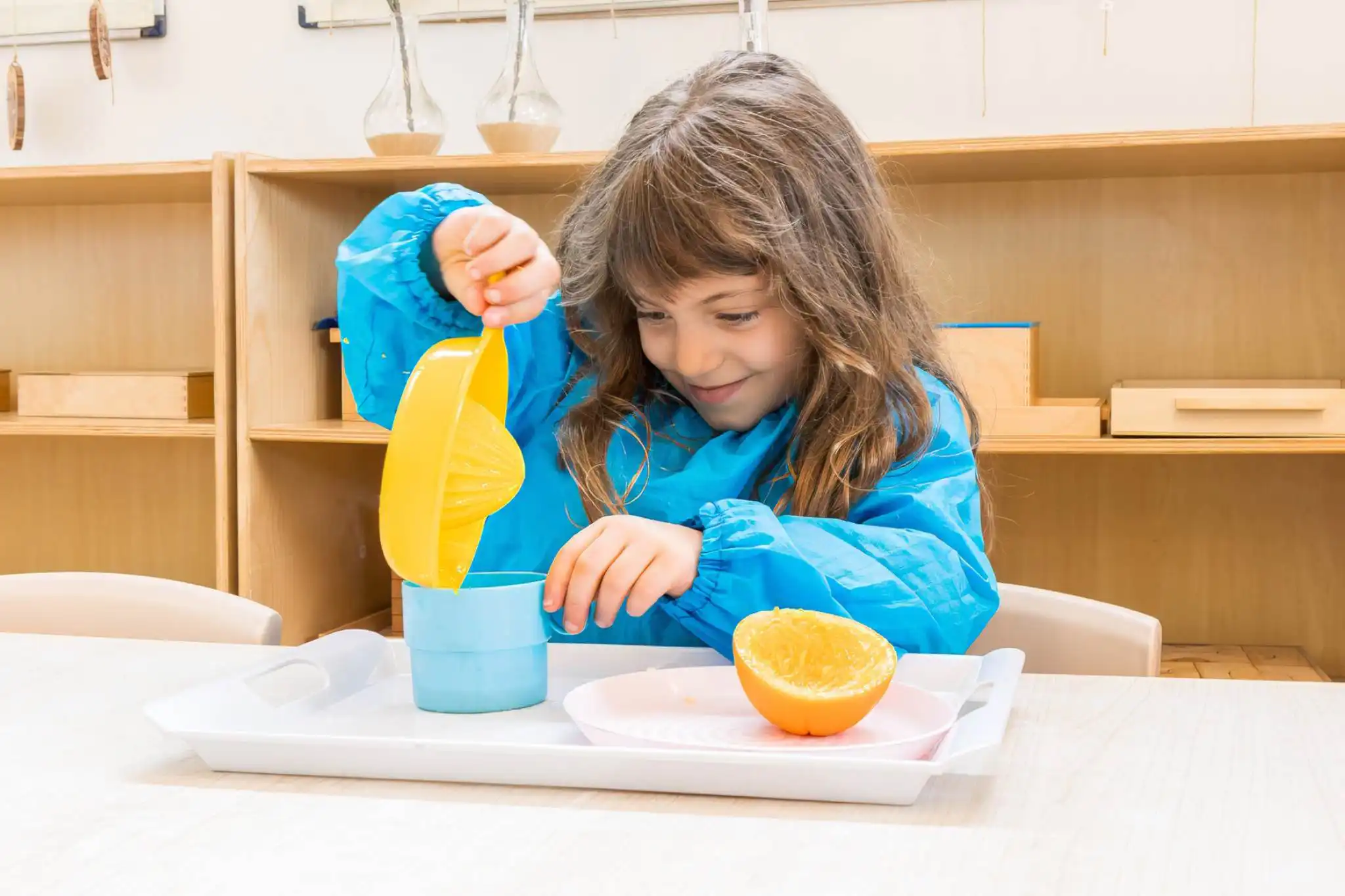
A child practising the Montessori practical life activity of pouring – one of the foundational exercises in every Montessori classroom.
- Freedom Within Limits
The Maria Montessori philosophy encourages freedom of choice within a structured, purposeful environment. Children choose their activity within clear boundaries that respect the classroom community.
“Freedom without organisation of work would be useless. The child left free without means of work would go to waste, just as a new-born baby, if left free without nourishment, would die of starvation. (The Montessori Method, 1914)”
- Respect for the Child
Perhaps the most radical aspect of the Maria Montessori philosophy was the idea that children deserve genuine respect, not as a sentiment, but as a practice. Montessori viewed children as full human beings worthy of dignity and trust, and she described conventional classrooms of the time as places where:
“children, like butterflies mounted on pins, are fastened each to his place.”
What Is the Montessori Method?
A Classroom Where the Teacher’s Greatest Achievement Is Becoming Invisible
The Montessori Method is a child-centred approach to education where children learn by doing – free to explore at their own pace, guided by trained educators and a carefully prepared environment.
It is the practical application of Maria Montessori’s philosophy in the classroom. Where traditional education relied on passive listening and rote memorisation, Montessori placed the child at the centre of their own learning – with educators acting as guides rather than authorities.
As Montessori herself wrote:
“The greatest sign of success for a teacher is to be able to say, ‘The children are now working as if I did not exist.'”
Key features include child-led learning, mixed-age classrooms, hands-on materials, and long uninterrupted work periods, all designed to follow each child’s natural development.
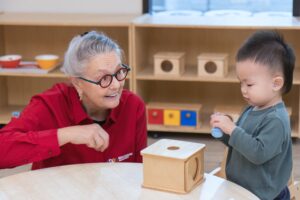
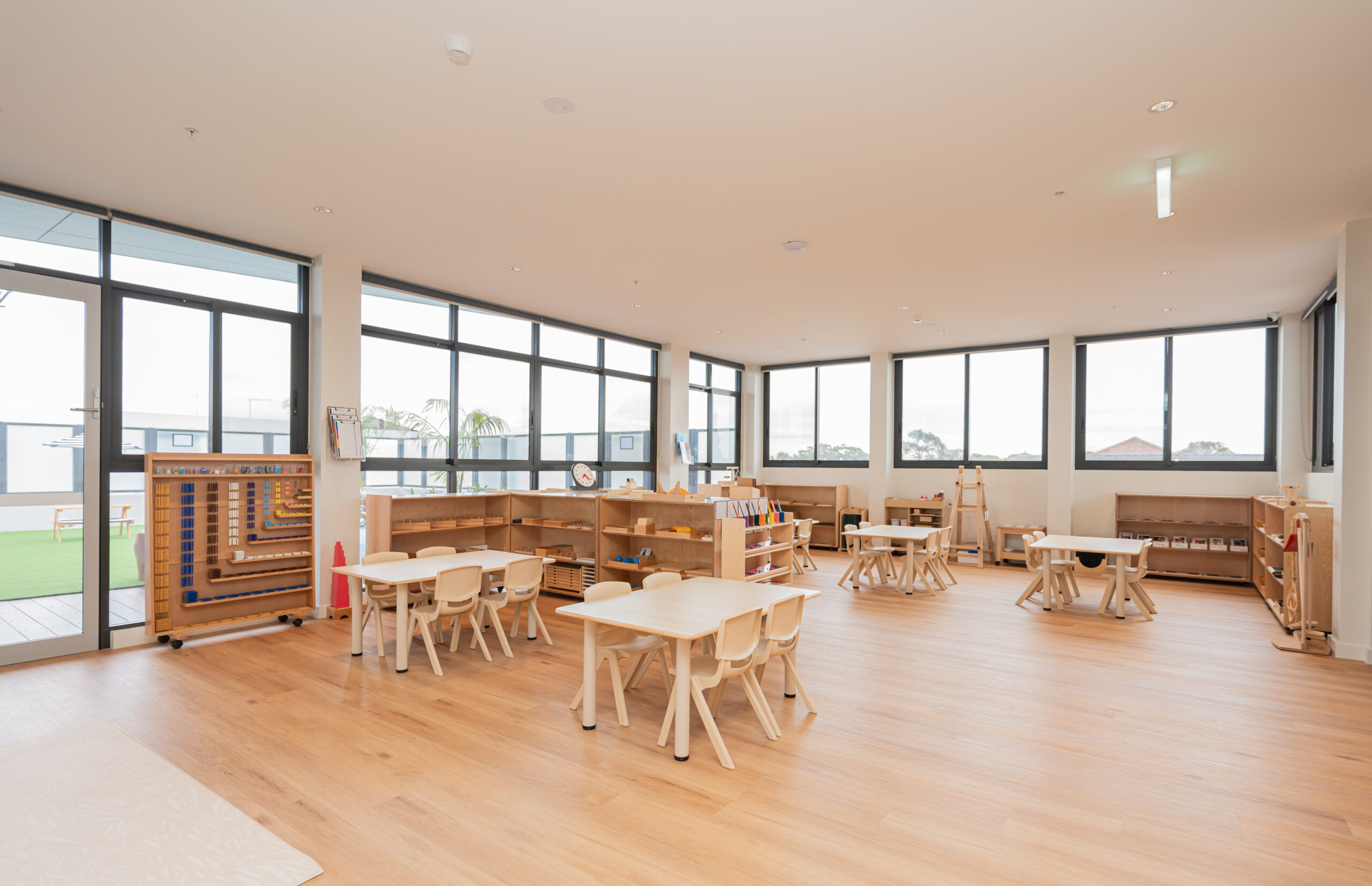 A contemporary Montessori classroom – the prepared environment, mixed ages, and child-led activity reflect principles unchanged since 1907.
Maria Montessori’s Key Contributions to Education
The Ideas That Outlasted Everything
- Practical Life Education: Activities such as sweeping, pouring, folding, food preparation, and gardening may appear simple, but they play a powerful role in a child’s development. Through these purposeful, hands-on experiences, children build coordination, concentration, independence, and confidence while learning to care for themselves, others, and their environment. In Montessori education, practical life activities are not separate from learning. They form the foundation for it.
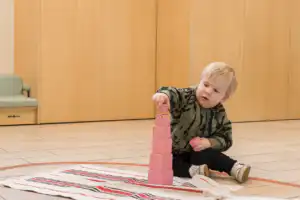
- Hands-On Learning Materials: Montessori designed materials that are still used in classrooms today, largely unchanged from her originals. The sandpaper letters, the pink tower, the golden beads, the moveable alphabet. Children trace letters with their fingers before they ever pick up a pencil. Four and five-year-olds at the first Casa dei Bambini taught themselves to write using these materials, surprising even Montessori herself. The materials are self-correcting, so children identify their own mistakes without adult intervention.
- Observation-Based Teaching: Maria Montessori believed that every child develops at their own pace. Rather than following a one-size-fits-all approach, Montessori educators carefully observe each child’s interests, abilities, strengths, and readiness for new challenges. These observations help educators introduce lessons at the right time, provide the appropriate level of support, and create learning experiences tailored to each child’s unique developmental journey. This personalised approach ensures children are both supported and challenged, allowing them to progress with confidence and genuine enthusiasm for learning.
- A Curriculum for the Whole Child: The Montessori curriculum is designed to support every aspect of a child’s development. Through practical life, language, mathematics, science, culture, art, and social learning, children build strong academic foundations while developing confidence, independence, resilience, and essential life skills. Rather than viewing learning as separate subjects, Montessori education recognises that children learn best when their intellectual, social, emotional, and physical development are nurtured together.
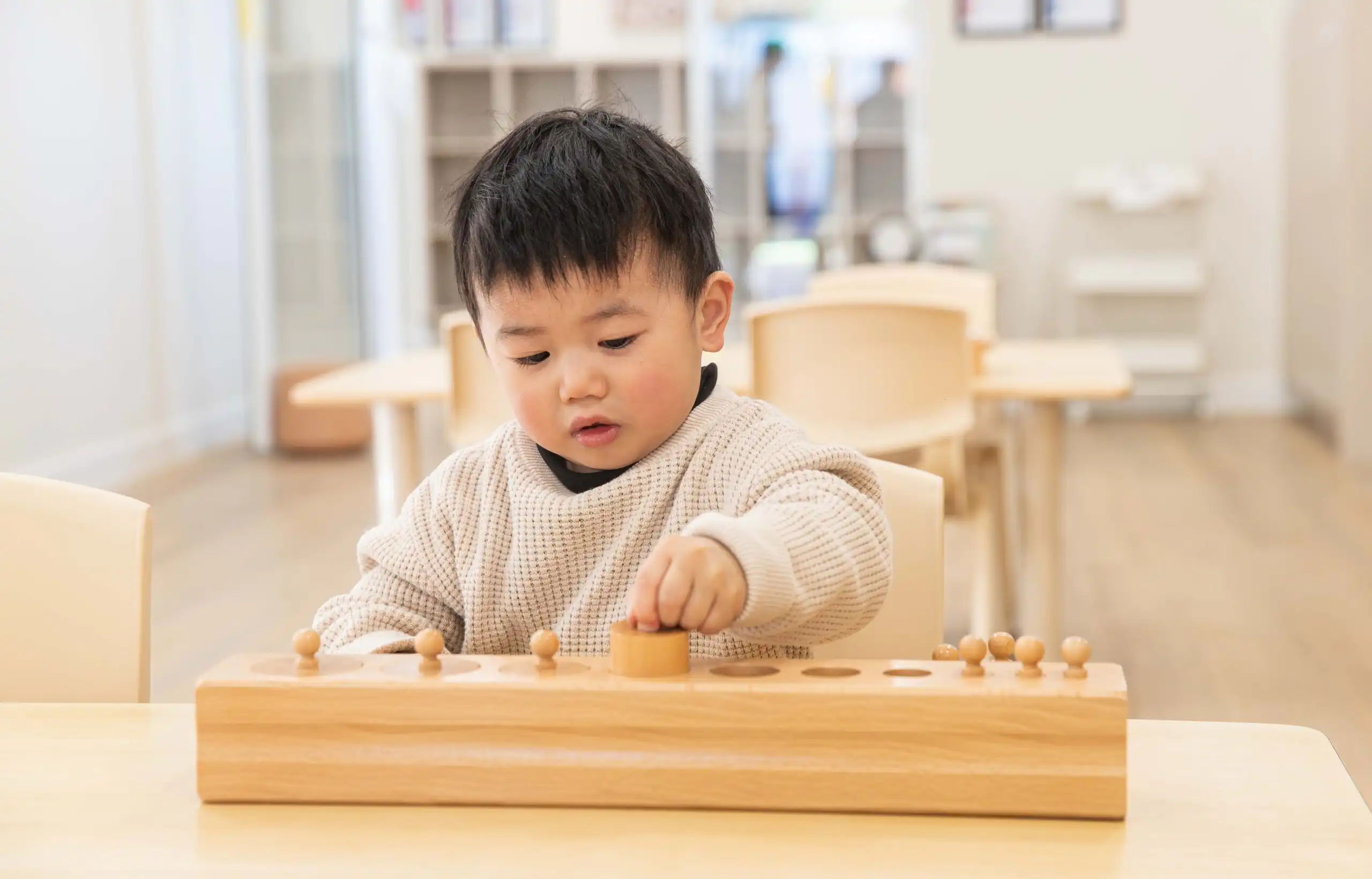
Classic Montessori learning materials – the sandpaper letters, golden beads, and pink tower remain in use in classrooms worldwide.
Why Maria Montessori’s Ideas Were Revolutionary
She Didn’t Just Change the Classroom. She Changed How We See Children.
When Dr Maria Montessori introduced her approach in the early twentieth century, it ran directly against the dominant assumptions of the time. Traditional education viewed children as passive recipients of knowledge. Teachers delivered; children absorbed, sat still, and did not question.
Montessori replaced rigid desks with movable furniture. She replaced teacher instruction with guided discovery. She replaced punishment and reward with intrinsic motivation and genuine interest. Her emphasis on independence, observation, respect, and hands-on learning was not simply a new teaching technique, it was a different way of seeing children entirely.
Her ideas laid the foundation for practices that are now considered essential in early childhood education globally.
Maria Montessori’s Global Impact
Three Nobel Nominations, One Clear Mission
By 1912, The Montessori Method had been translated into more than twenty languages. Alexander Graham Bell and his wife Mabel became early champions of the method in the United States, and Mabel Bell served as president of the first American Montessori association. By 1913, there were more than one hundred Montessori schools across the United States alone. Mahatma Gandhi visited her schools in Rome. Helen Keller corresponded with her. Sigmund Freud and Jean Piaget were among the early sponsors of the Association Montessori Internationale, which she founded with her son Mario in 1929. She was nominated three times for the Nobel Peace Prize.
Her personal life carried its own extraordinary story. In 1898, Montessori gave birth to a son, Mario, born of a relationship with a colleague. To protect her career in an era when an unmarried mother would have been professionally destroyed, Mario was raised in the countryside by a family near Rome. Montessori visited him, but never as his mother. He did not know the truth until he was fifteen years old, when he walked up to her and said simply: “I know you are my mother.” From that moment, they were inseparable. Mario became her translator, collaborator, and closest companion for the rest of her life.
She also lived through history in ways that tested everything she believed. When Mussolini’s government tried to use her schools for political indoctrination, she closed every Montessori school in Italy herself and left the country in 1934. Hitler ordered her schools closed and her books burned. She spent World War Two in India after being classified as an enemy alien, while Mario was interned as a prisoner of war. He was released on her 70th birthday, as a gift from the British Viceroy.
She died in the Netherlands in 1952, aged eighty-one, still working, still travelling, her son beside her.
Today, the Montessori method is practised in more than 140 countries, from small preschool centres to government-funded primary schools, serving children from infancy through adolescence.
Today, the Montessori method is practised in more than 140 countries, from small preschool classrooms to government-funded schools, serving children from infancy through adolescence.
As Australia’s largest provider of Montessori education, Montessori Academy continues Maria Montessori’s vision by preparing children not just for school, but for life through hands-on learning, personalised education, and a deep respect for every child’s potential.
Common Misconceptions About Maria Montessori
“Children do whatever they want.” Montessori classrooms are carefully structured. Freedom of choice exists within clear, consistent boundaries. The environment itself guides behaviour.
“It is only for preschool.” The Montessori theory stages span from birth through young adulthood. The four planes of development she identified guide educational practice across all ages.
“It lacks academic rigour.” Montessori education is built on strong academic foundations. Through hands-on learning experiences and carefully designed Montessori materials, children develop a deep understanding of literacy, mathematics, science, and cultural studies. Rather than memorising information for short-term recall, children build knowledge, critical thinking skills, and genuine mastery of concepts.
“It is a passing trend.” The Montessori method has been in continuous practice for more than 115 years. It has been tested across generations, cultures, continents, and educational systems, remaining as relevant today as it was when Maria Montessori first introduced it in 1907.
Maria Montessori’s Legacy Today
The Rooms She Opened Are Still Open
More than a century after she opened that first classroom in a Roman slum, Maria Montessori’s influence is stronger than ever. Her conviction that children thrive when trusted, respected, and given meaningful opportunities to learn independently has moved from radical to accepted wisdom in early childhood education.
Her Maria Montessori philosophy remains deeply relevant in modern Maria Montessori preschool settings and beyond. Whether you are a parent discovering Montessori for the first time, an educator deepening your practice, or a family exploring a Montessori preschool centre for your child, the ideas at the heart of this approach are surprisingly simple, and genuinely effective.
Children learn best when we prepare a beautiful environment, step back, and trust the process.
Frequently Asked Questions About Maria Montessori
Who is Dr Maria Montessori?
Dr Maria Montessori (1870–1952) was an Italian physician and educator who developed the Montessori method, a child-centred approach to education now practised in more than 140 countries.
What is the Montessori theory of play?
Maria Montessori believed that play and learning are deeply connected. She observed that children are naturally drawn to activities that challenge, engage, and develop their abilities. Through purposeful, hands-on experiences, children build concentration, independence, creativity, problem-solving skills, and confidence.
In Montessori education, learning happens through active exploration rather than passive instruction. This belief is captured in Maria Montessori’s well-known quote: “Play is the work of the child.” By following their curiosity and engaging in meaningful activities, children develop the foundations for lifelong learning.
What are Montessori theory stages?
Maria Montessori identified four developmental stages – birth to six, six to twelve, twelve to eighteen, and eighteen to twenty-four – each with distinct characteristics and learning needs. These Maria Montessori developmental stages continue to guide Montessori educators today.
What did Maria Montessori do for education?
She developed a child-centred education system that transformed how we understand childhood learning, introducing hands-on materials, the prepared environment, observation-based teaching, and a curriculum built around the whole child.
How did Maria Montessori impact education?
Her approach demonstrated that children learn best through active engagement, intrinsic motivation, and environments designed around their developmental needs, not the convenience of the system.
What is the Montessori philosophy?
The Montessori philosophy centres on a profound respect for the child. It recognises that children learn best when they are given the freedom to explore, make choices, and progress at their own pace within a carefully prepared environment. Its ultimate goal is not simply academic success, but the development of capable, confident, and independent individuals prepared for life.
Why is Maria Montessori important in early childhood education?
Her work gave early childhood education a scientific foundation and a deeply humanistic heart. The Maria Montessori curriculum approach continues to shape best practice in preschool and early learning settings across the world.
Further Reading and Sources
AMI Montessori Archives – Maria Montessori’s Life
AMI Montessori Archives – Early Years
Association Montessori Internationale (AMI)
Montessori Australia Foundation
The Montessori Method (1912) – full text via Project Gutenberg