
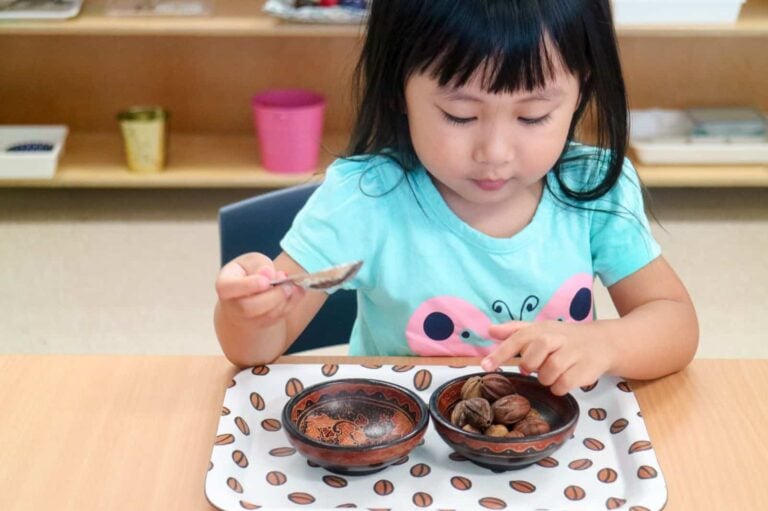
Have you heard the adage: “practice makes perfect?” In early childhood, repetition forms the basis for learning, skill development, and accomplishment.
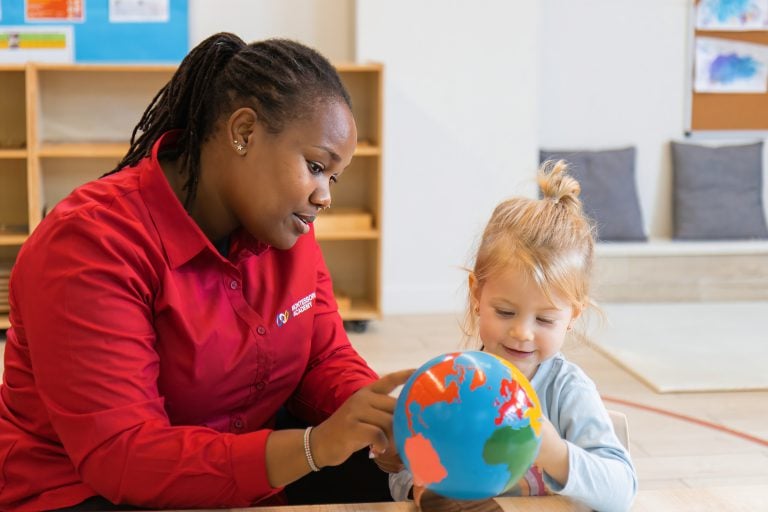
Cosmic Education is a cornerstone of the Montessori Philosophy. At its core, Cosmic Education tells the story of the interconnectedness of all things. It describes the role of education as comprehensive, holistic and purposeful; to encompass the development of the whole person within the context of the universe. It also introduces the possibility that humanity might have a “cosmic task,” to better the world for future generations.

The Fraction Skittles are part of the Mathematics curriculum and provide children with an excellent visual example of fractions from an early age.
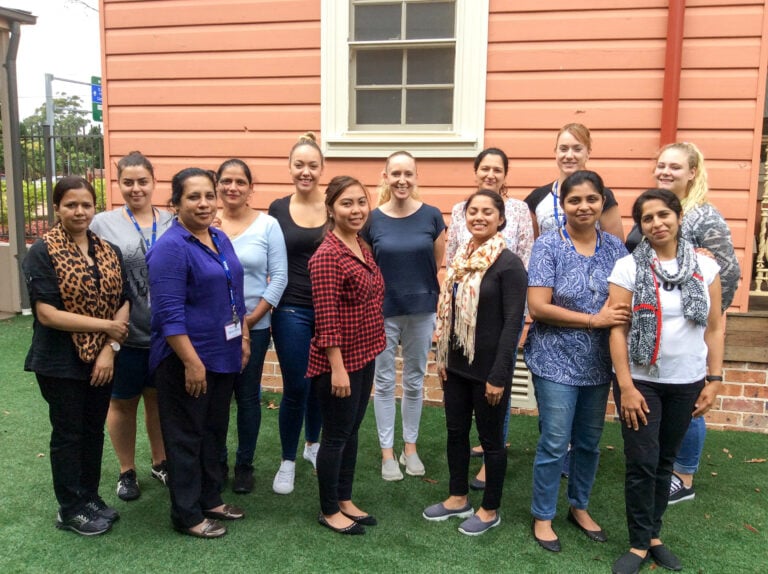
Montessori Academy is pleased to announce that our Castle Hill early learning service has been awarded an Exceeding National Quality Standards Rating following Assessment and Rating by the Australian Children’s Education & Care Quality Authority (ACECQA) in February 2017.

Colour Boxes are one of the most visually appealing Montessori materials. Created to be introduced to children in three stages, Colour Boxes 1, 2 and 3 contain a different amount of matching coloured tablets, which are rectangular with handles on the side.

The Sandpaper Globe, also known as the land and water globe, is an introductory geography material from the Sensorial Curriculum.

This first thing that draws the eye in a Montessori classroom is the materials. Neatly ordered from left to right, and organised into curriculum areas, Montessori materials are specifically designed for little minds and little hands!


The Pink Tower is the iconic Montessori material. Often called the ‘symbol of Montessori’, it is a welcoming sign in any Montessori environment, and a favourite with educators globally.

Maria Montessori was one of the first academics to link children’s emotional development to their ability to learn at an optimal rate. To support the development of social skills, emotional intelligence, and academic wellbeing, Montessori designed the concept of a classroom community to support the development of these skills over time.

The Montessori approach to early childhood education offers a broad vision of education as an “aid and a preparation for life.” It is designed to help children grow from birth to maturity, and succeeds because it is flexible, interest-based, and aligned to children’s key developmental stages. The Montessori Curriculum and classroom structure incorporates flexible learning in a number of ways. Ultimately, this leads to the development of an optimal learning environment that caters to the needs of a diverse range of students and abilities. So how is the Montessori Curriculum flexible?

Parents frequently ask why Montessori classes group children by two to three year age groups, when primary schools group students by their birth year.