Preschool Learning Goals
Formation of individual letters and numbers
Recognises numerals and counts by rote
Reads simple sentences and constructs phonetic words
Can write and recognise their own name
Aware of the decimal system, addition, and subtraction
Participates in physical activities and follows the rules of games
Shows self-confidence and interacts well with others
Ability to concentrate and work independently
Responds to challenges and demonstrates problem-solving skills
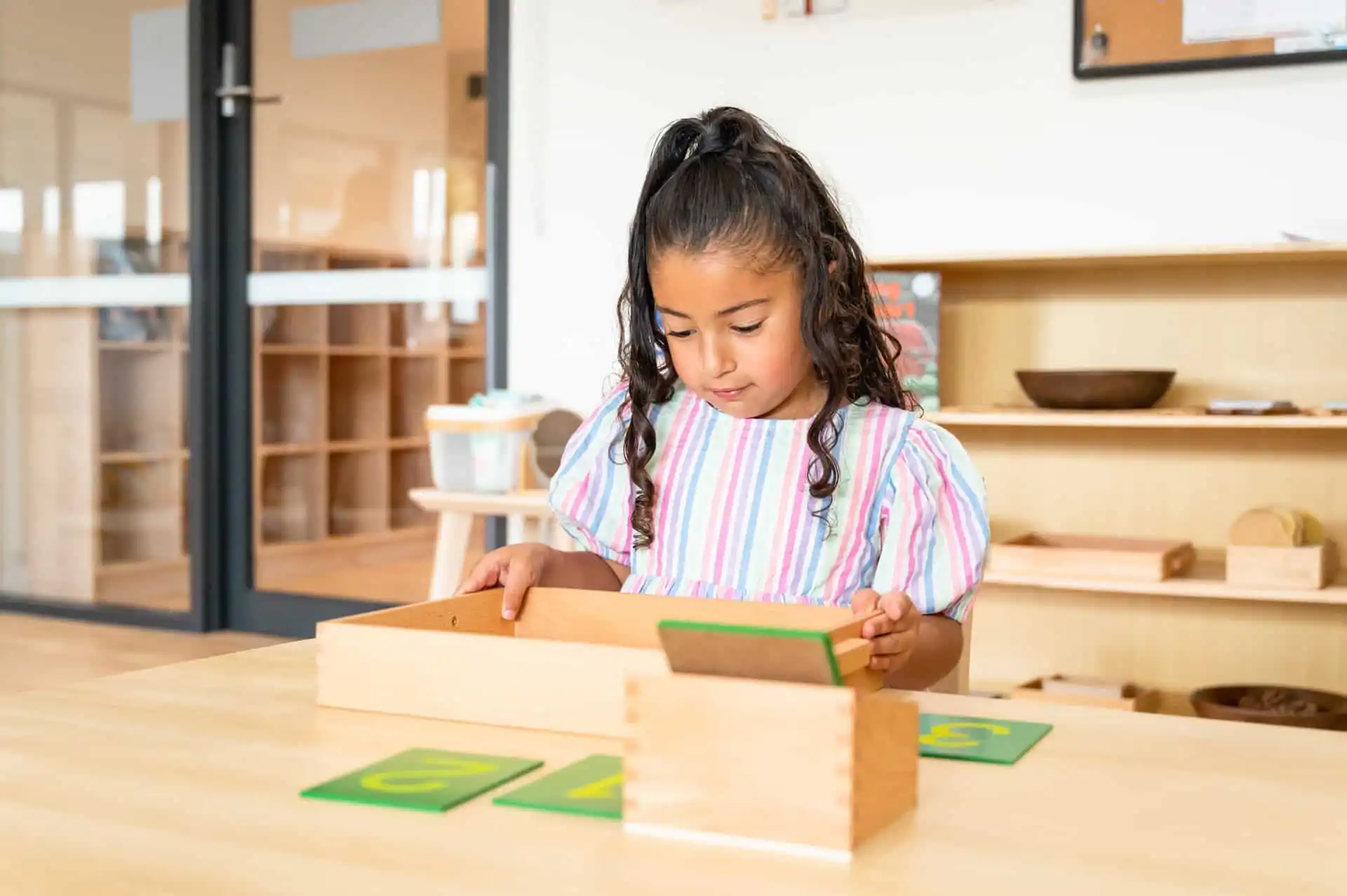
Formation of individual letters and numbers
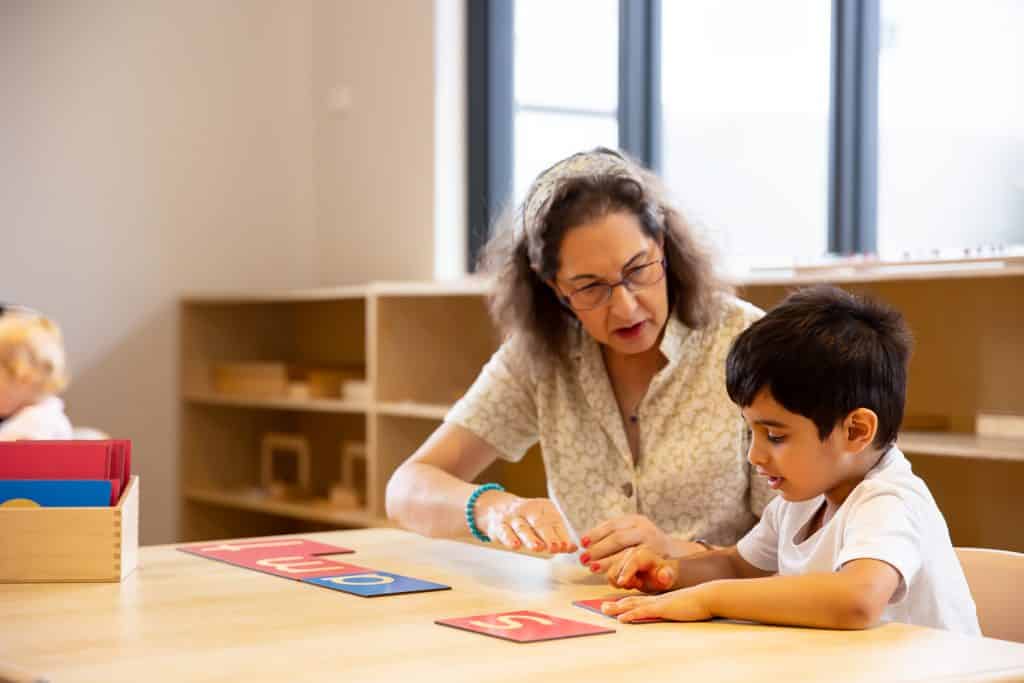
Formation of individual letters and numbers in toddler learning is supported through activities like using Sandpaper Numbers & Letters and engaging with Sand Tray or Chalkboards, providing tactile experiences and opportunities for hands-on practice to develop fine motor skills and letter/number recognition at an early stage of development.
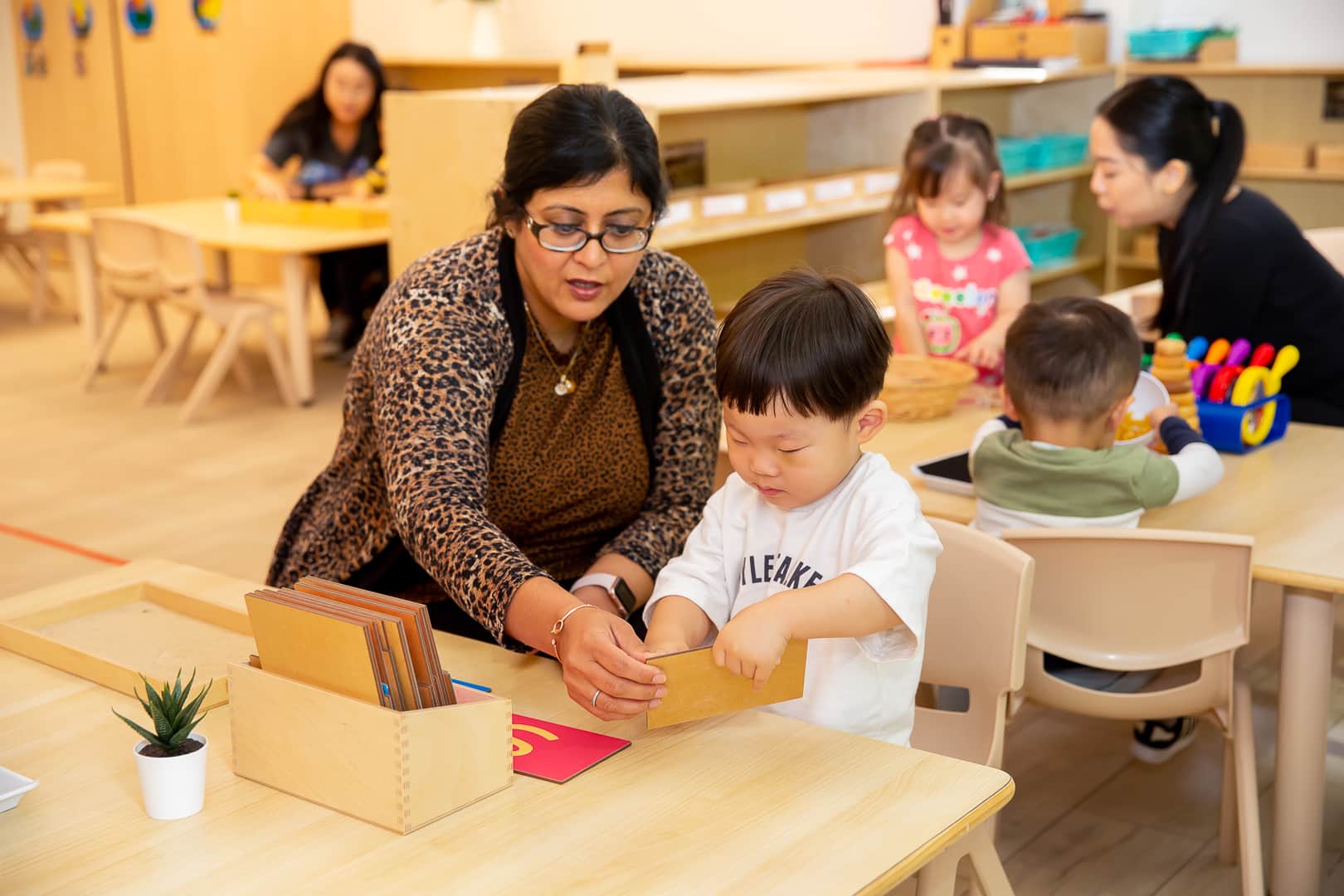
Recognises numerals and counts by rote
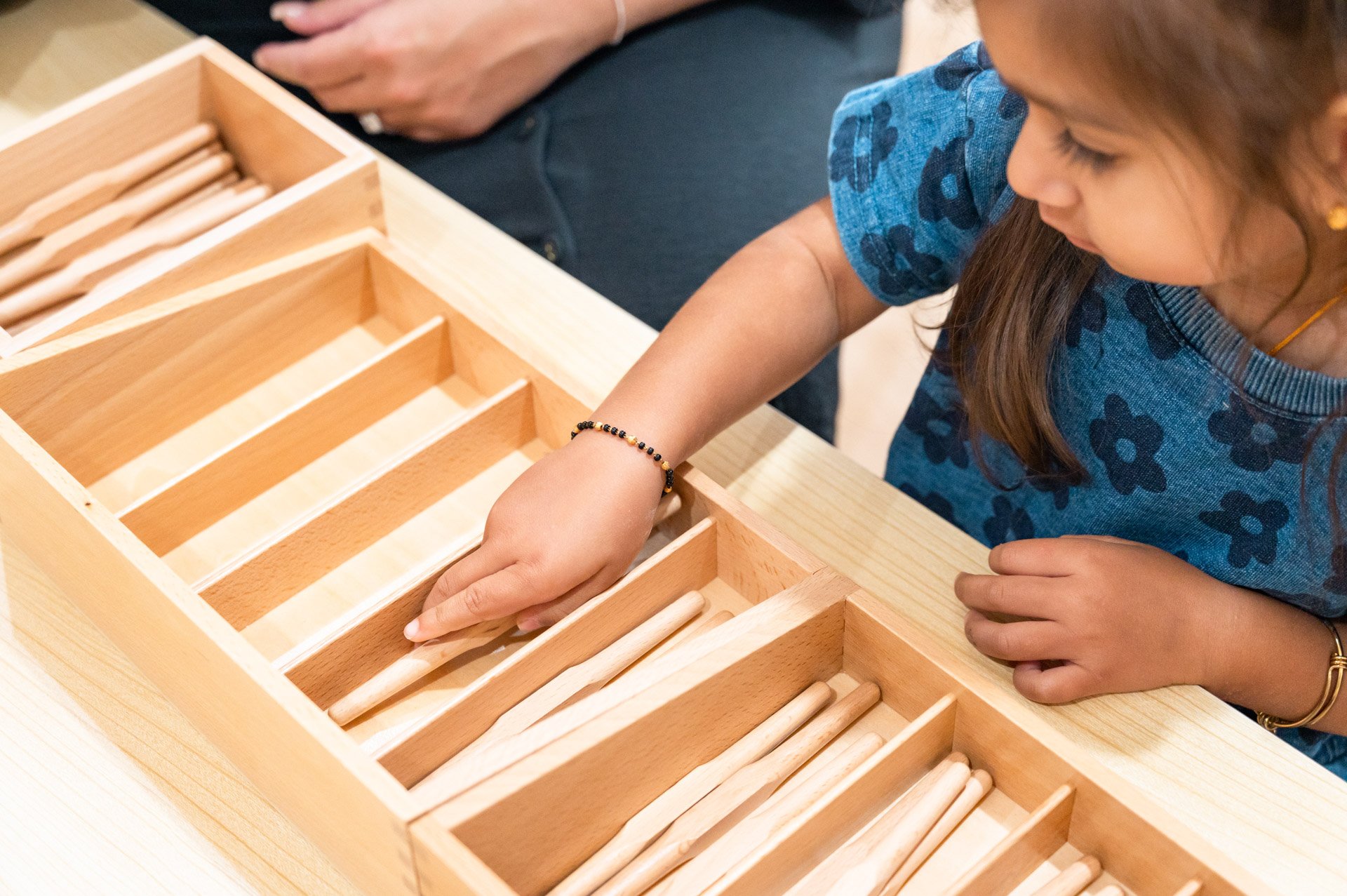
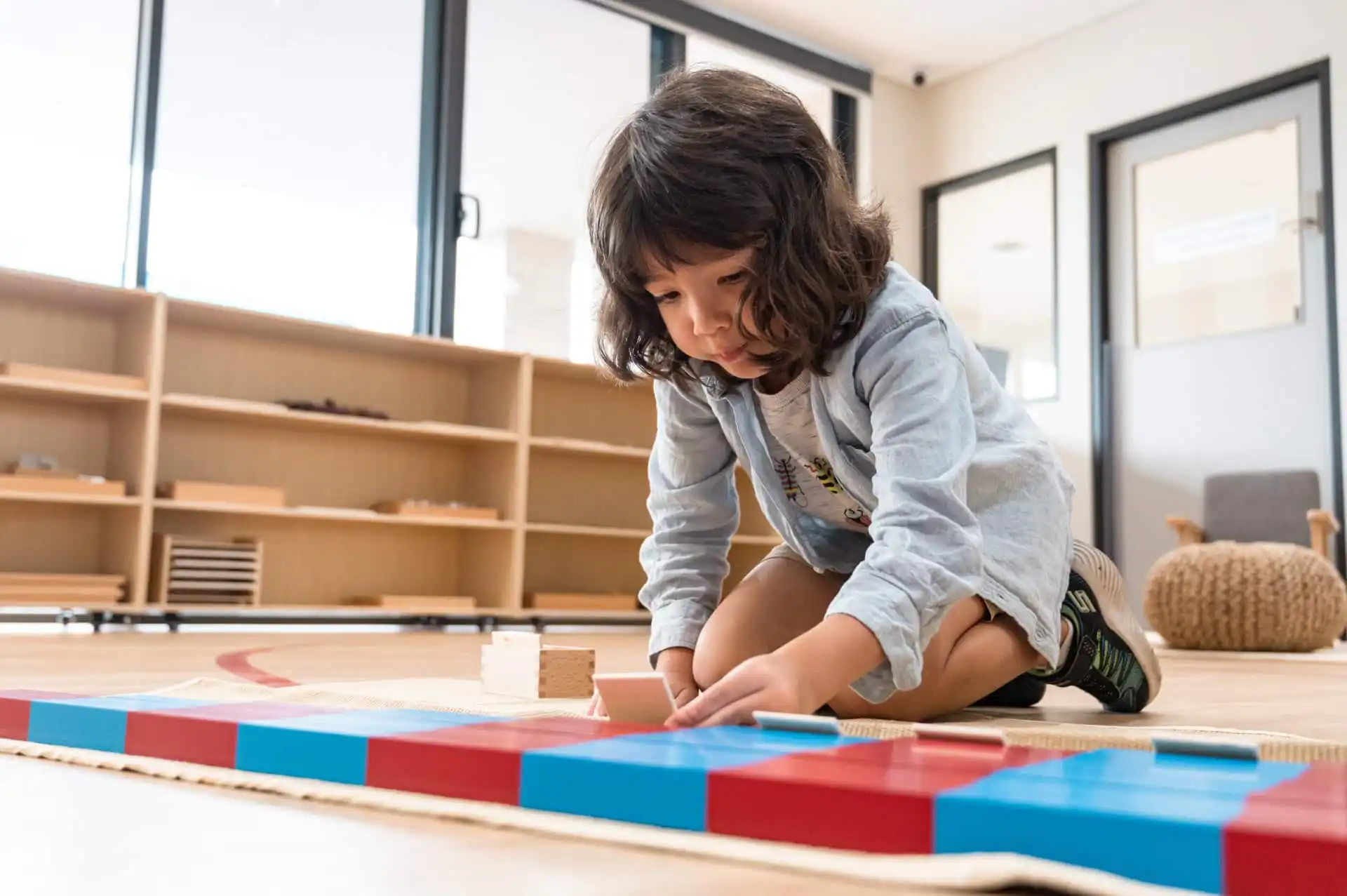
Toddlers learn to recognise numerals and count by rote through tactile materials such as Sandpaper Numbers, Number Rods, and the Spindle Box, which provide hands-on experiences to reinforce numerical concepts, laying the foundation for early numeracy skills and number recognition.
Reads simple sentences and constructs phonetic words
Children develop the ability to read simple sentences and construct phonetic words through activities such as using the Moveable Alphabet and engaging with Pink Series materials, which provide hands-on opportunities to manipulate letters and phonetic sounds, fostering early literacy skills and phonemic awareness in a structured and interactive learning environment.

Can write and recognise their own name
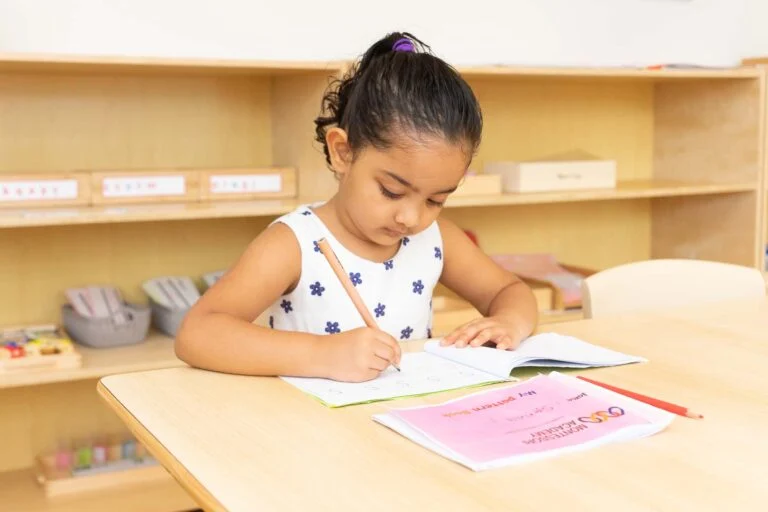
Children develop the ability to write and recognise their own name through engaging activities such as writing name exercises on chalkboards and paper, providing opportunities for hands-on practice and repetition to strengthen fine motor skills and visual recognition, fostering early literacy skills and a sense of personal identity.
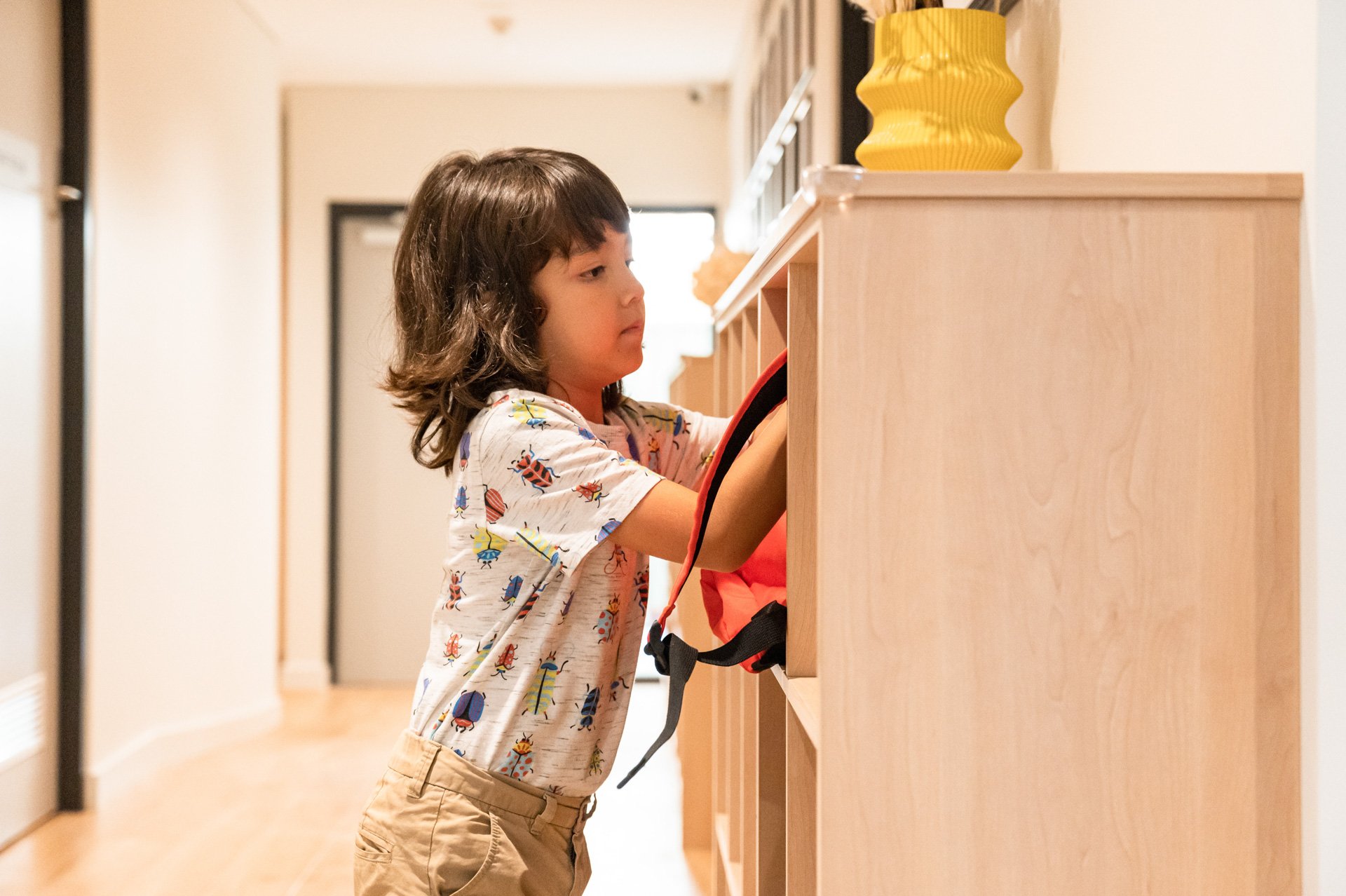
Aware of the decimal system, addition, and subtraction
In preschool learning, awareness of the decimal system, addition, and subtraction is introduced through Montessori materials such as the Golden Beads, Numbers & Counters, Addition Strip Board, and Subtraction Strip Boards, allowing children to explore mathematical concepts concretely through hands-on experiences, fostering a foundational understanding of numerical relationships and arithmetic operations.
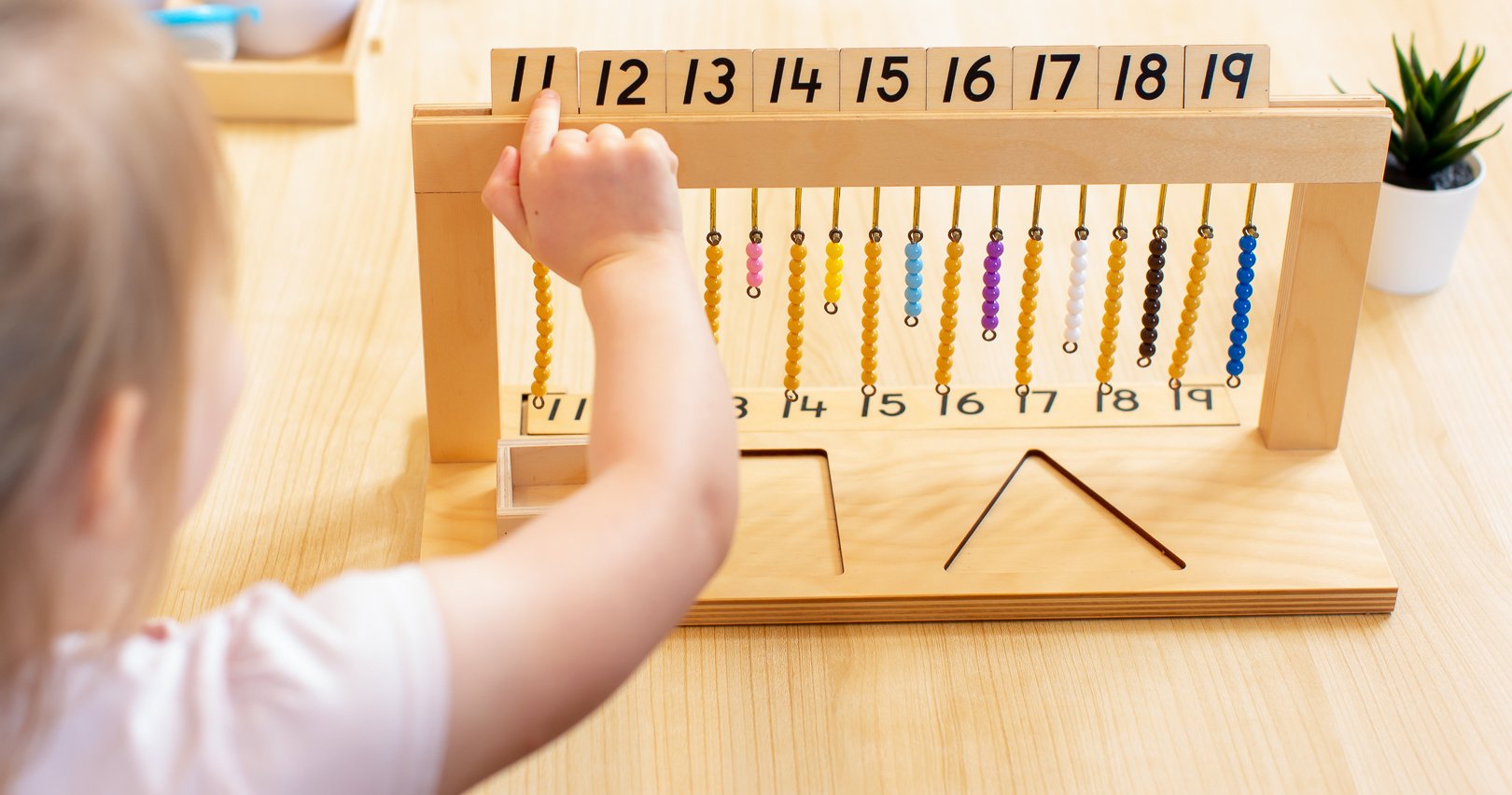
Participates in physical activities and follows the rules of games
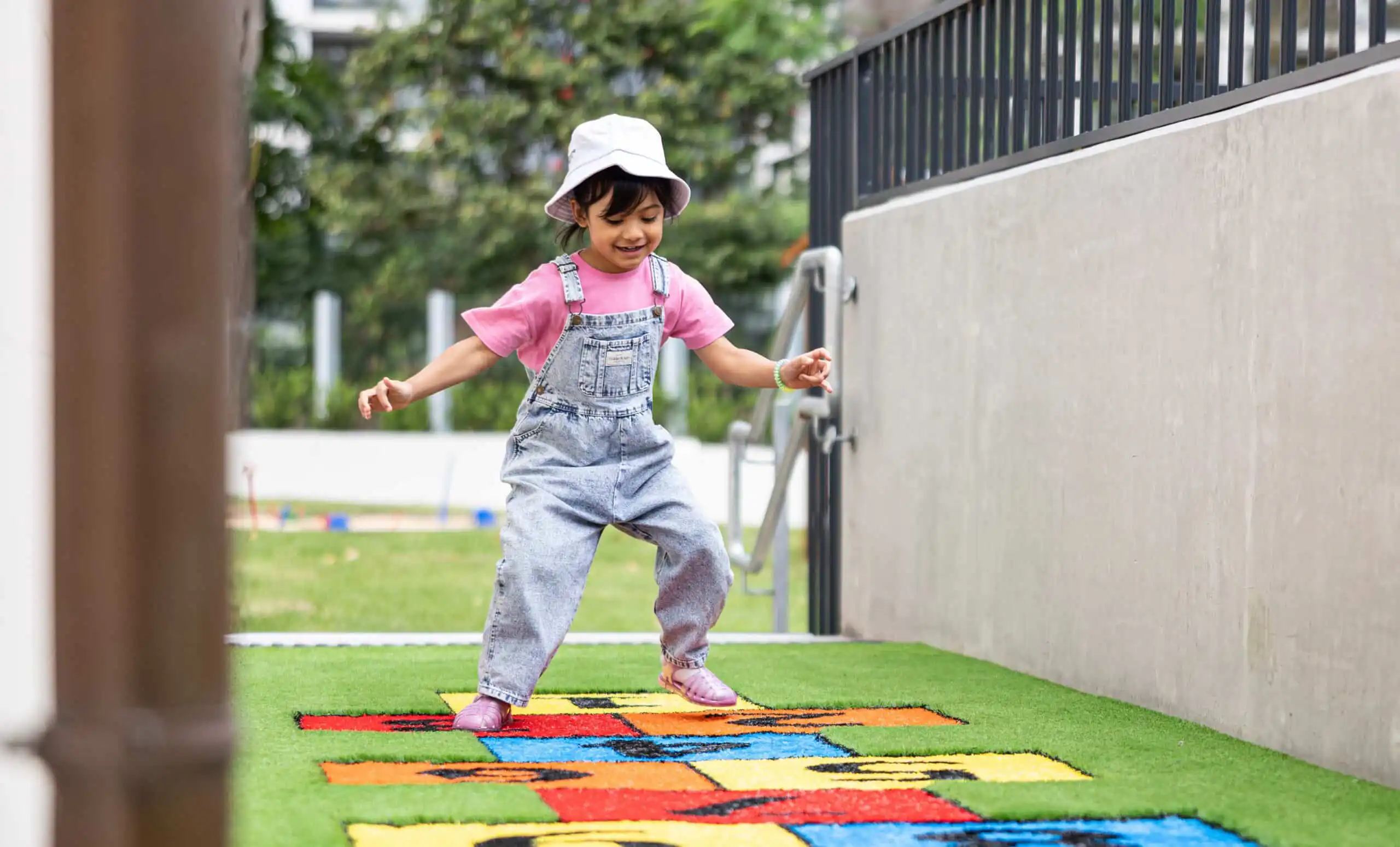
In preschool learning, participation in physical activities and adherence to game rules are encouraged through structured outdoor play and indoor music and movement programs, providing opportunities for children to develop gross motor skills, coordination, and social skills while engaging in fun and interactive group activities that promote teamwork and sportsmanship.
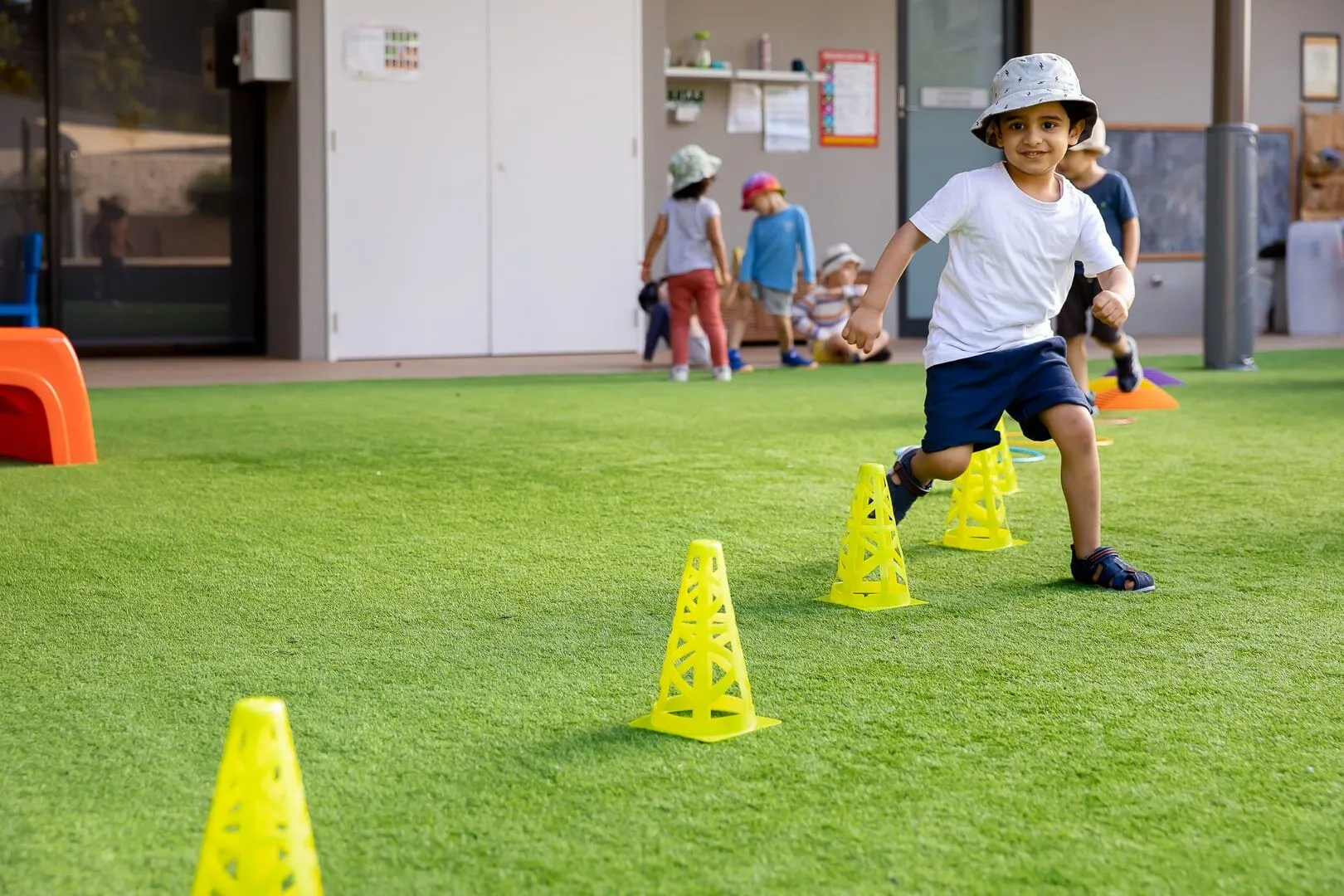
Shows self-confidence and interacts well with others
In preschool learning, the development of self-confidence and positive social interactions is fostered through a supportive environment that encourages exploration, risk-taking, and respectful communication, where children engage in collaborative activities, express themselves freely, and receive encouragement and validation from educators and peers alike.
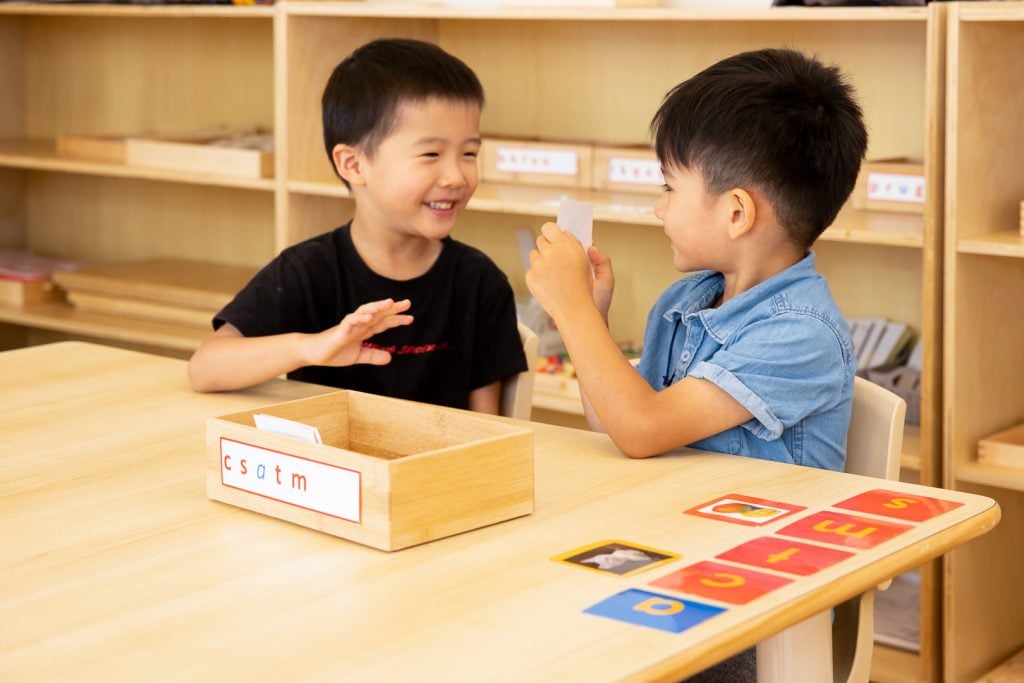
Ability to concentrate and work independently
In preschool learning, the ability to concentrate and work independently is nurtured through activities tailored to the child’s interests, coupled with the freedom to engage in these activities for as long as they desire, fostering autonomy and self-directed learning as they explore and engage with subjects that captivate their curiosity.
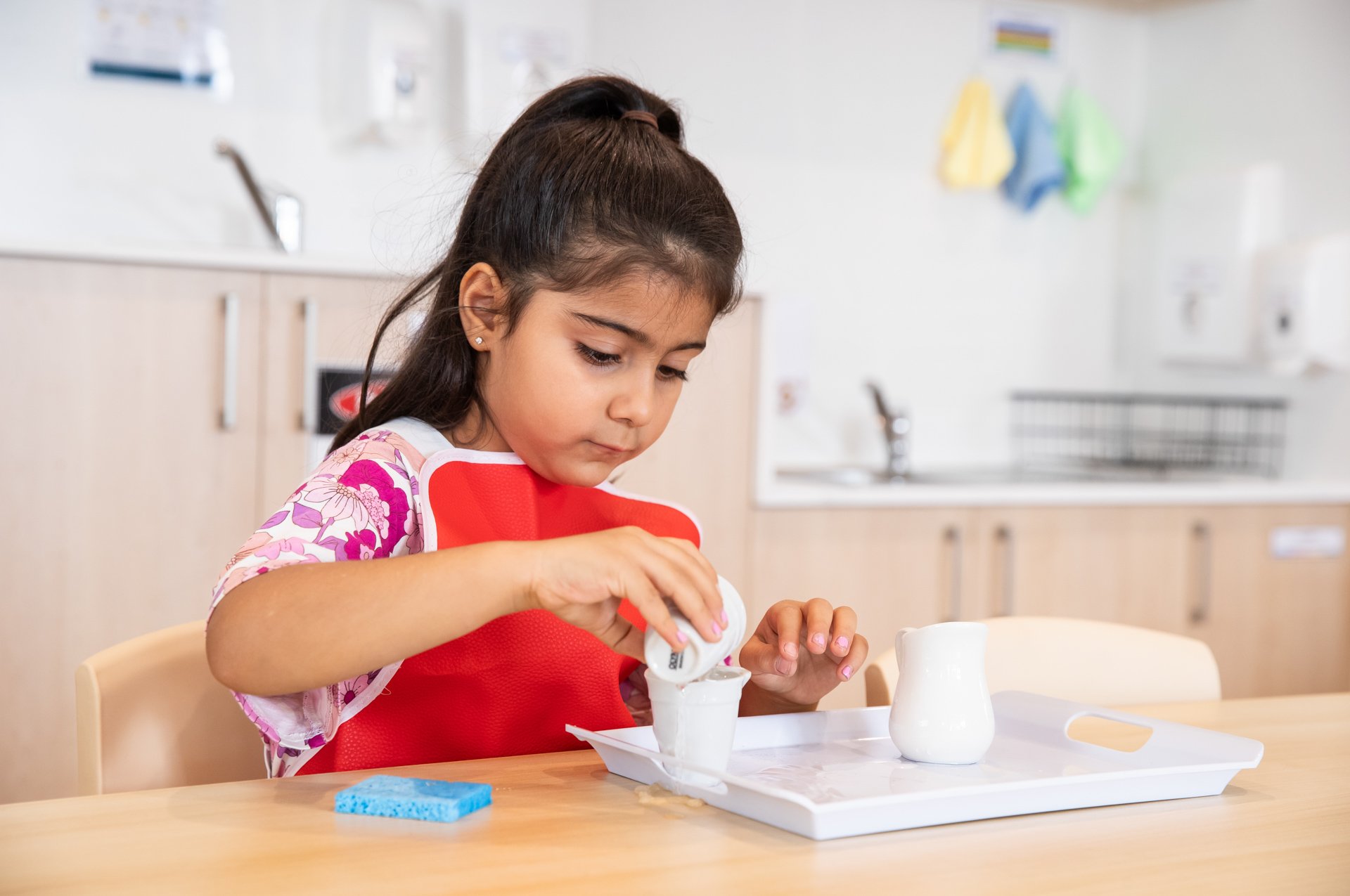
Responds to challenges and demonstrates problem-solving skills
In preschool learning, children respond to challenges and demonstrate problem-solving skills through independent activities, facilitated by the freedom to work, express themselves, and repeat tasks as needed, fostering a sense of autonomy and resilience as they navigate various challenges and find creative solutions.
Tour With Your Preschooler
Montessori nurtures preschoolers’ natural curiosity and independence through hands-on learning and real-world experiences. It helps children build confidence, social skills, concentration, and early academic foundations, preparing them for school and a lifelong love of learning.
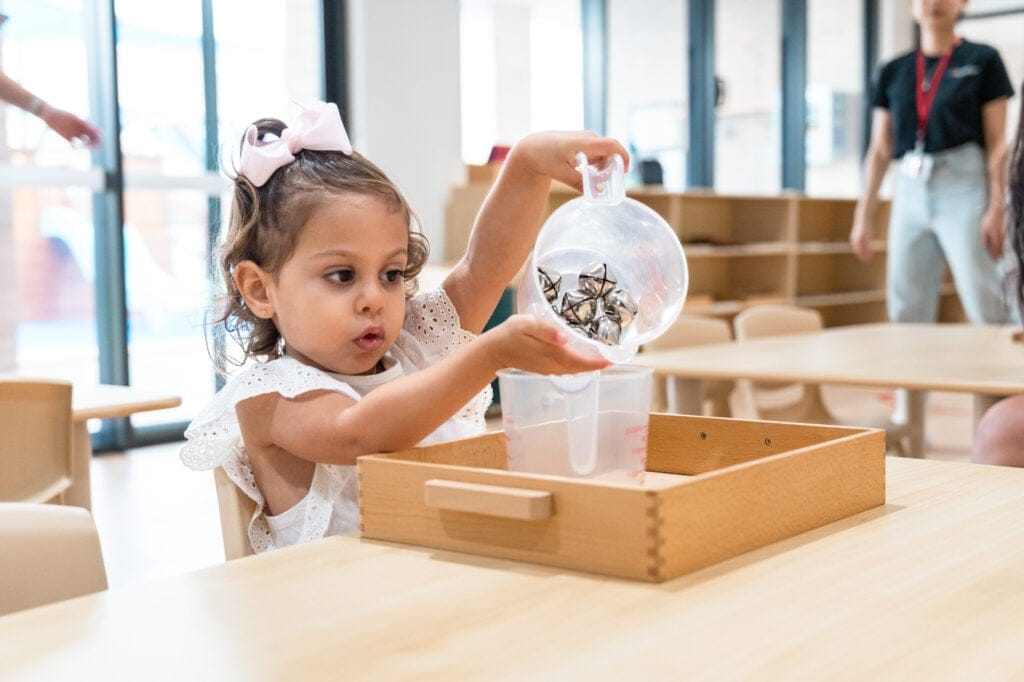
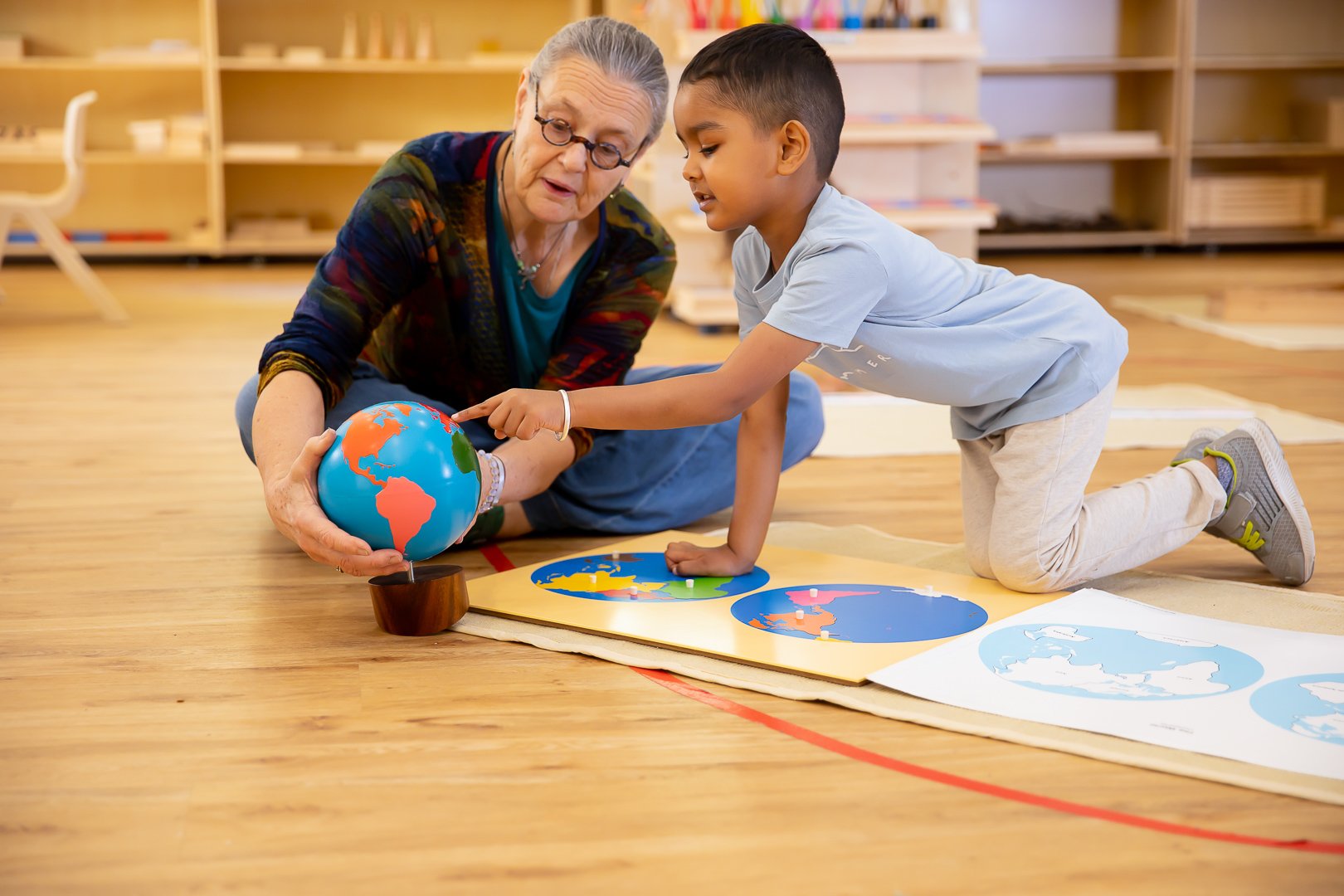
The Parts of the World Puzzle visually introduces children to the forms and names of the continents, oceans, and hemispheres and their relationship to each other.

Numbers and Counters reinforce children’s understanding of numbers, sequencing, and quantities. This material teaches children that each number is made up of seperate quantities.
The Sandpaper Letters are used to teach children the sound for each letter through muscular and visual memory. Children trace the symbol until the shape of the letter becomes part of their muscle memory.

The Constructive Triangles are used to show that all plane geometric figures can be constructed from triangles. There are five boxes. Each box contains triangles of different sizes, shapes, and colours.
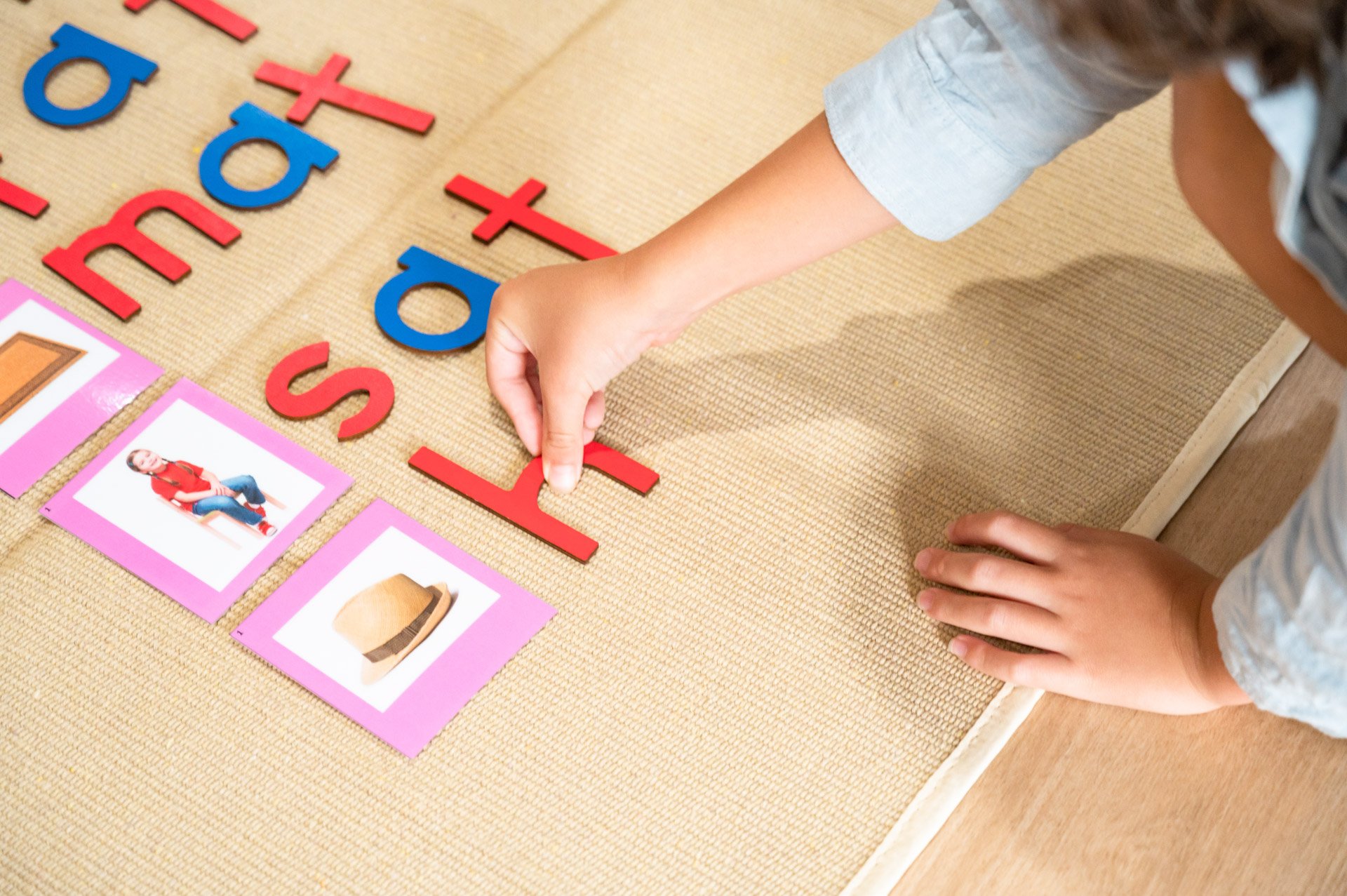
The Moveable Alphabet teaches children to recognise letters and construct words. This material is used in conjunction with language cards. It prepares children for writing and reading.

Mirror polishing teaches children how to clean items in their environment. The process of polishing develops hand-eye coordination, fine motor skills, concentration and independence.
The Parts of the World Puzzle visually introduces children to the forms and names of the continents, oceans, and hemispheres and their relationship to each other.
Numbers and Counters reinforce children’s understanding of numbers, sequencing, and quantities. This material teaches children that each number is made up of seperate quantities.
The Sandpaper Letters are used to teach children the sound for each letter through muscular and visual memory. Children trace the symbol until the shape of the letter becomes part of their muscle memory.
The Constructive Triangles are used to show that all plane geometric figures can be constructed from triangles. There are five boxes. Each box contains triangles of different sizes, shapes, and colours.
The Moveable Alphabet teaches children to recognise letters and construct words. This material is used in conjunction with language cards. It prepares children for writing and reading.
Mirror polishing teaches children how to clean items in their environment. The process of polishing develops hand-eye coordination, fine motor skills, concentration and independence.