Infant Learning Goals
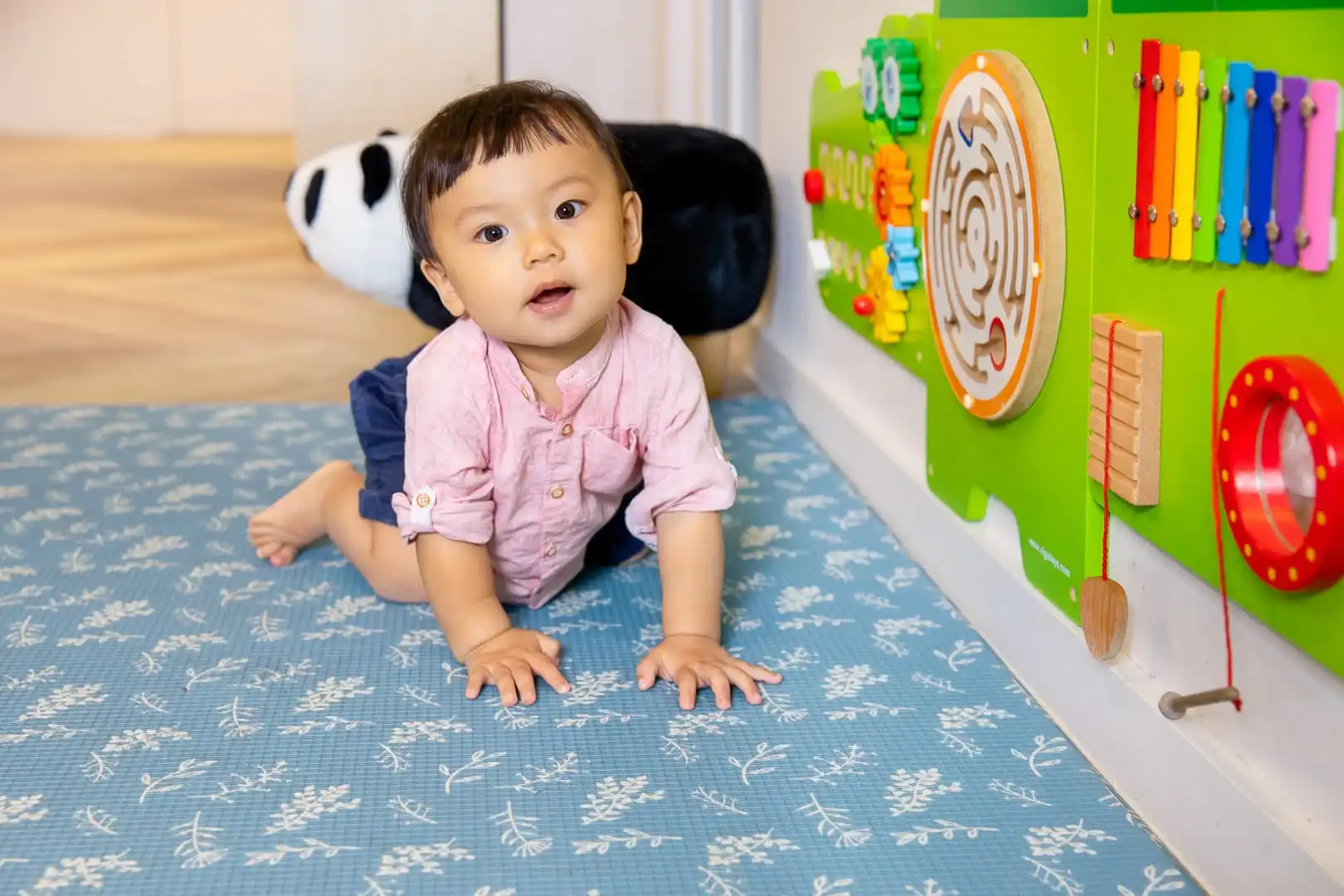
Achieving physical development milestones such as crawling, walking, climbing and jumping
Demonstrates independence skills such as self-feeding
Beginning to use one to two word phrases
Knows the names of body parts, colours, and shapes
Plays alongside others
Chooses an activity and packs it away
Explores objects in different ways
Uses simple gestures to communicate
Achieving physical development milestones such as crawling, walking, climbing and jumping
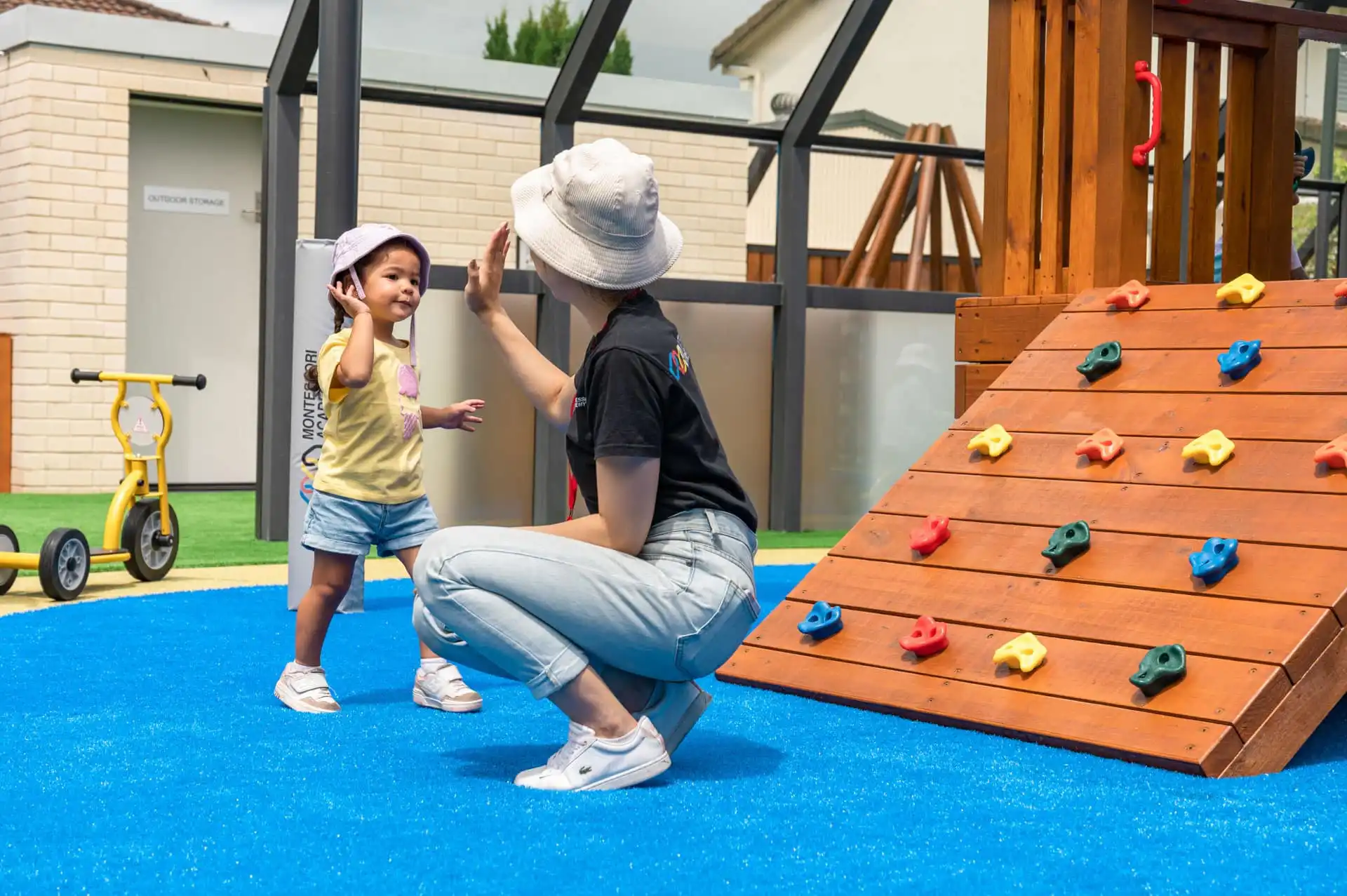
Achieving physical development milestones such as crawling, walking, climbing, and jumping is supported by providing infants with freedom to move in unobstructed spaces and engaging them in outdoor and music & movement programs, offering opportunities for exploration and practice of gross motor skills in a safe and stimulating environment, promoting physical development and motor coordination from an early age.
Demonstrates independence skills such as self-feeding
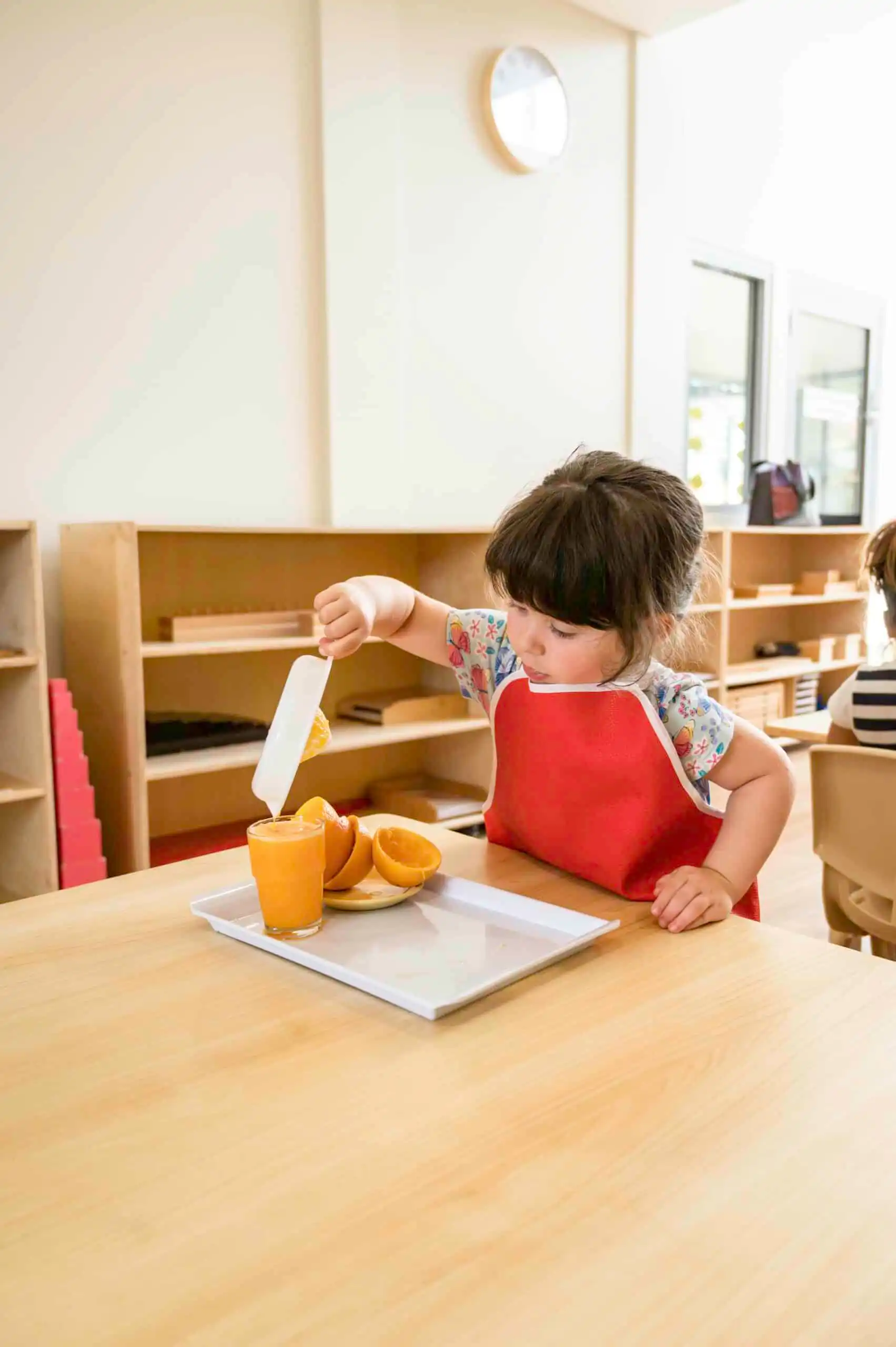
Demonstrating independence skills such as self-feeding is encouraged in infant learning through opportunities to practice these skills during the daily routine and practical life activities, such as spooning, where infants are given freedom to explore and develop self-feeding abilities, fostering autonomy and self-sufficiency from an early age.
Beginning to use one to two word phrases
Infants begin to use one to two-word phrases through exposure to the Montessori Language Curriculum and the encouragement of freedom of expression, providing opportunities for infants to engage in meaningful communication and language exploration, fostering early language development and the expression of simple thoughts and needs.
Knows the names of body parts, colours, and shapes
Knowing the names of body parts, colours, and shapes is facilitated through the use of Language Cards in infant learning, providing visual and auditory stimulation to support early language development and cognitive understanding, fostering the recognition and naming of basic concepts essential for communication and cognitive growth.
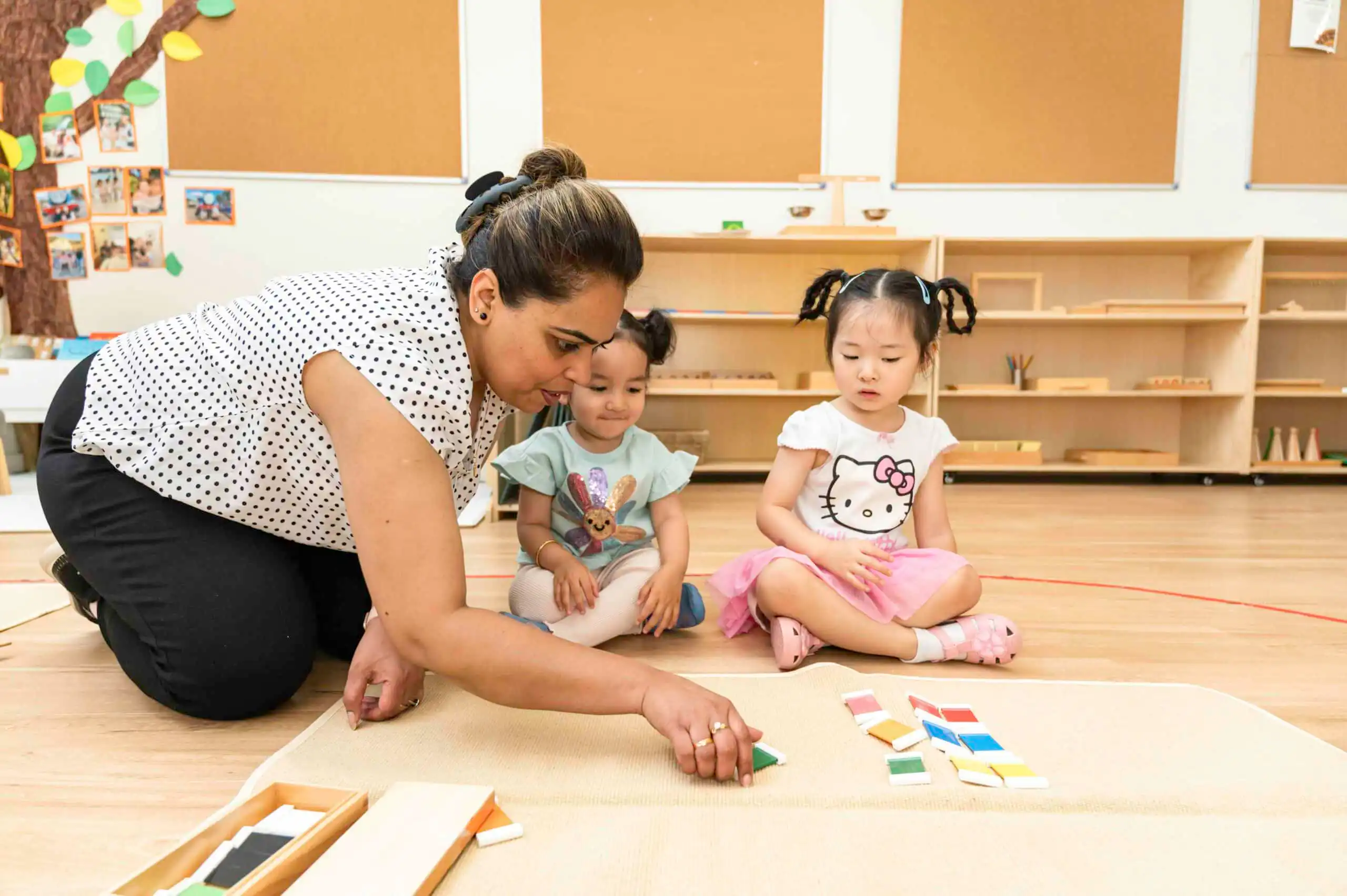
Plays alongside others
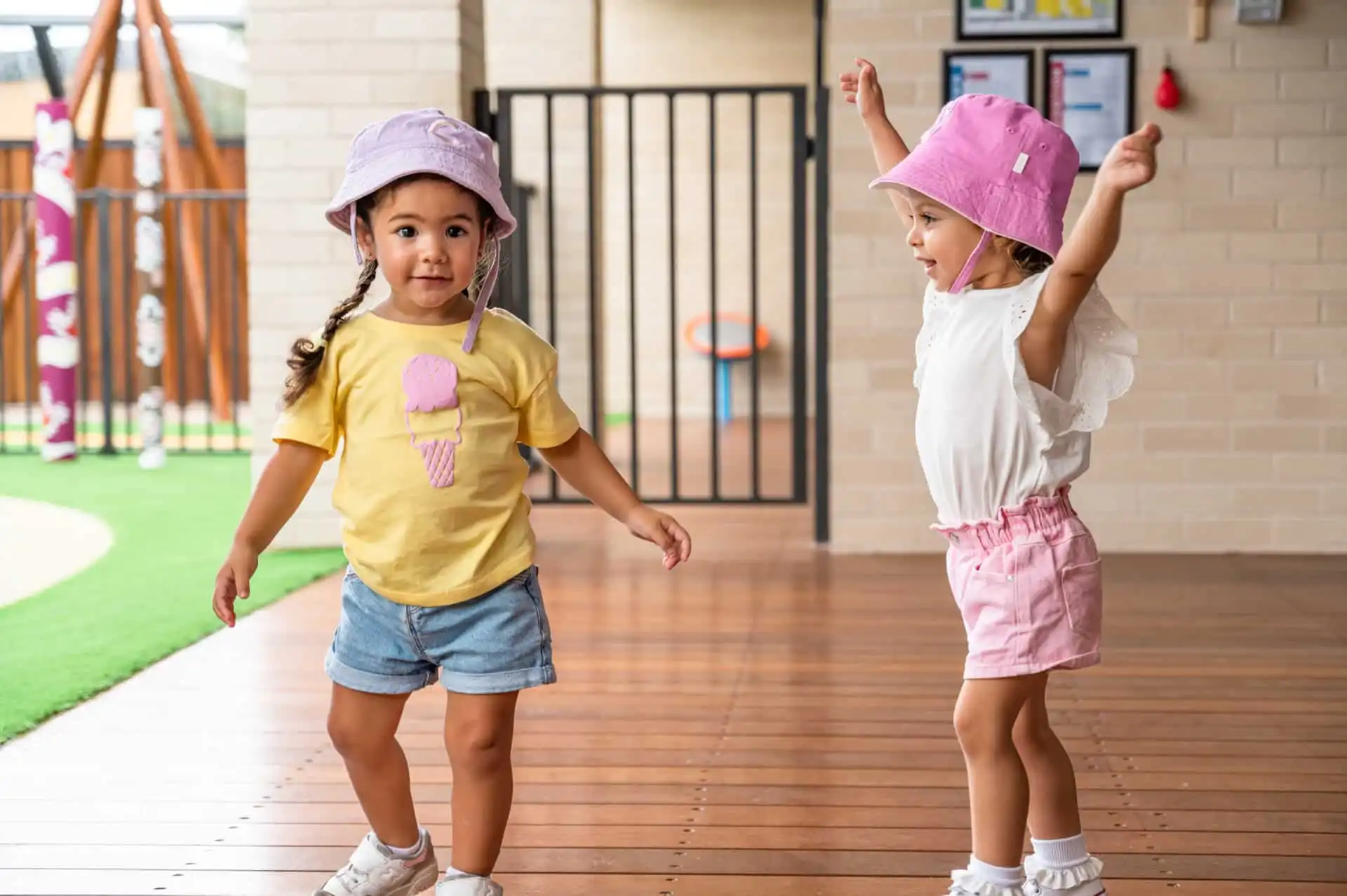
Encouraging parallel play and social exploration, infants engage in playing alongside others through freedom of interaction and movement, with open-ended play activities such as building blocks, playdough, craft, and outdoor games provided to develop motor skills and creativity in a supportive and stimulating environment.
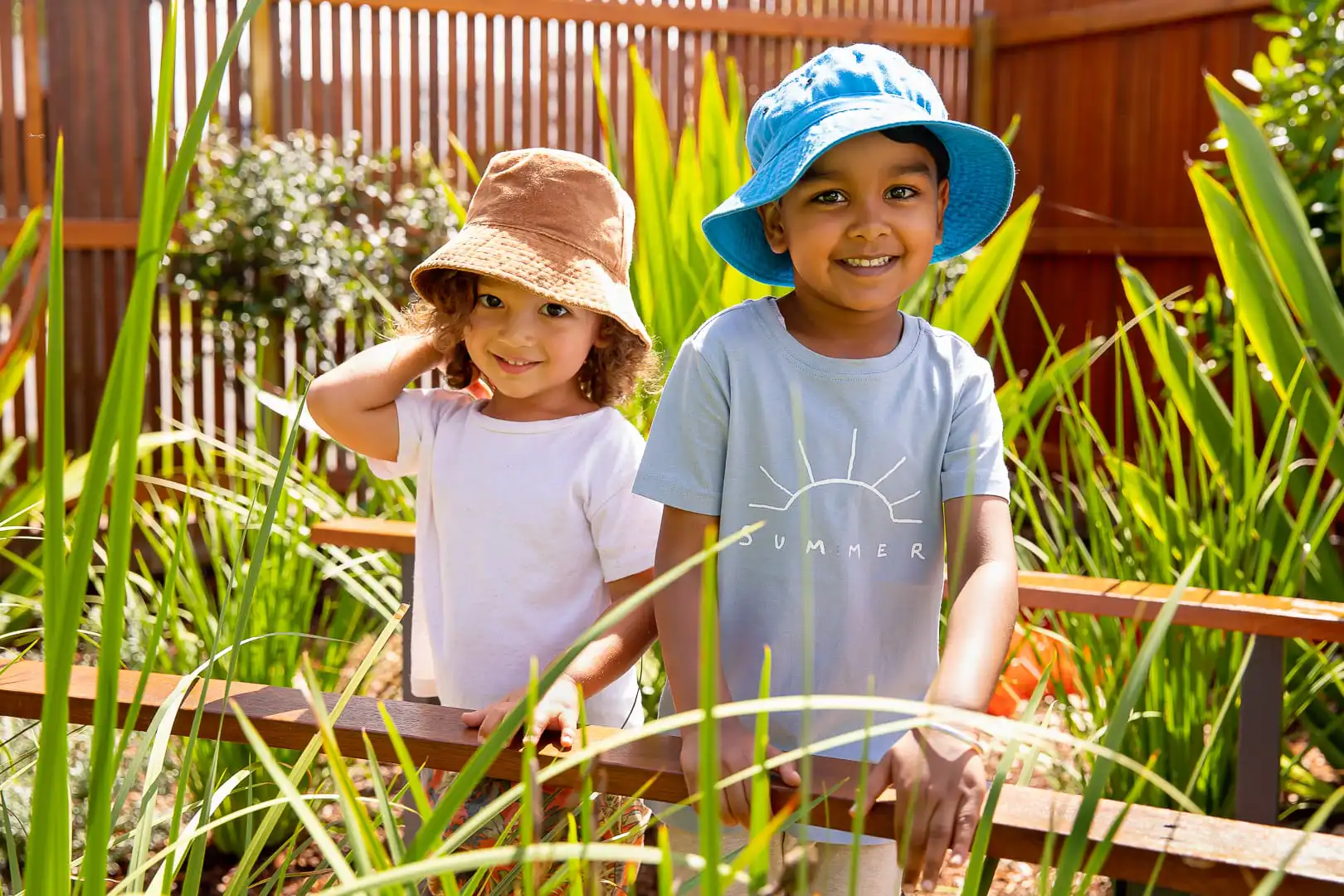
Chooses an activity and packs it away
Facilitating independence in infants, the ability to choose an activity and pack it away is nurtured through Montessori presentations, where adults role model the process, providing visual demonstrations and guidance on selecting and tidying up materials, fostering autonomy and responsibility in daily routines.
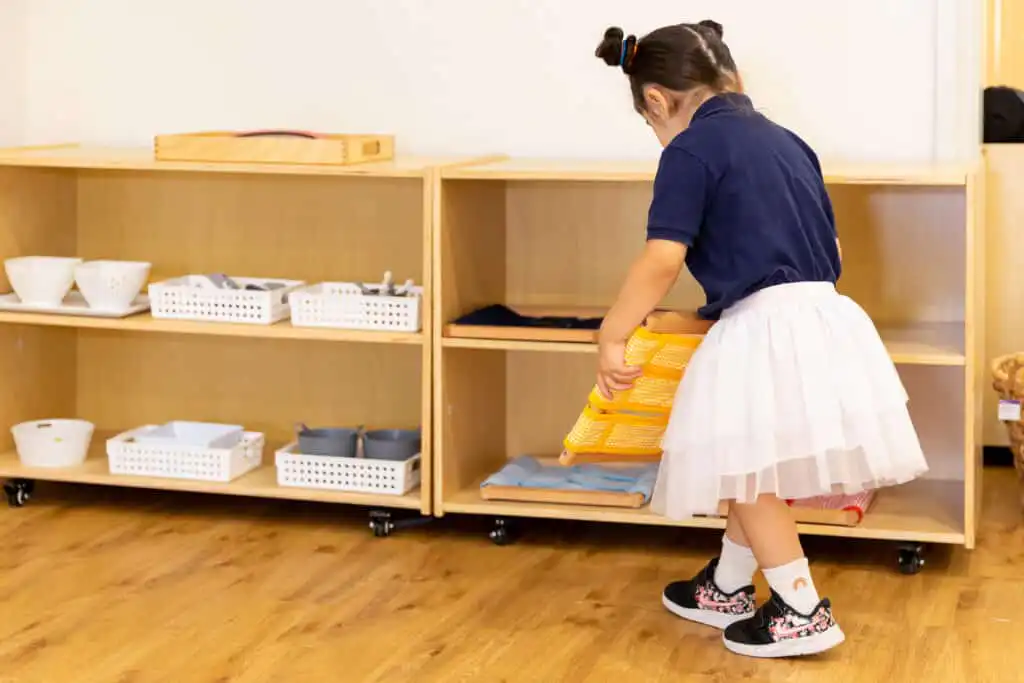
Explores objects in different ways
Infants explore objects in various ways through the freedom to work with activities and the opportunity for repetition, allowing them to manipulate objects, experiment with different movements, and engage in sensory exploration, fostering curiosity and sensorimotor development in a supportive and unrestricted learning environment.
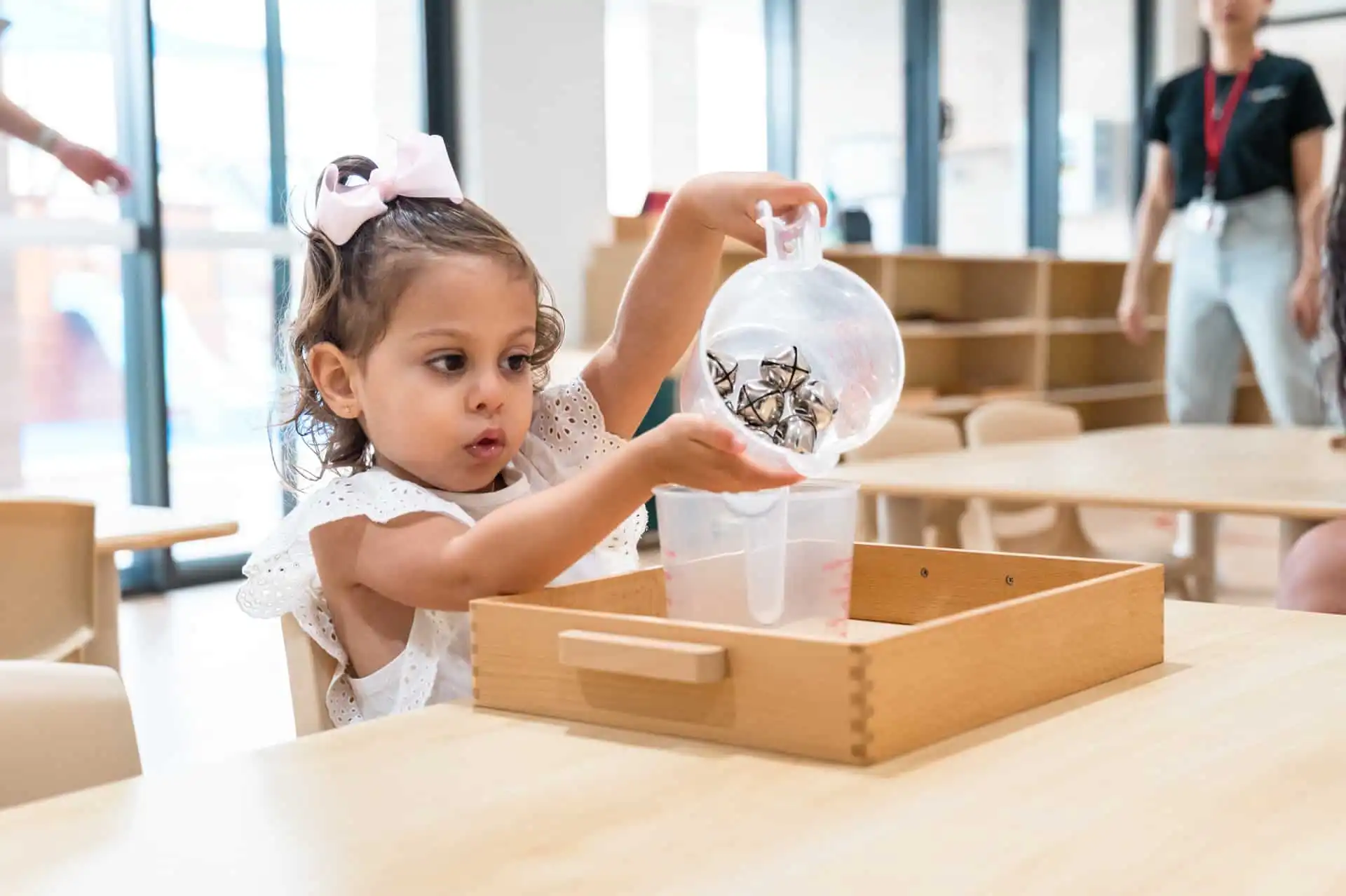
Uses simple gestures to communicate
Encouraging communication development in infants involves incorporating simple gestures into their interactions, facilitated by the Montessori Language Curriculum, which supports non-verbal communication through activities such as sign language or pointing, providing infants with tools to express their needs, desires, and emotions before they develop verbal language skills.
The Montessori Academy Difference
At Montessori Academy, we believe every child learns in their own unique way. Our classrooms are hands-on, engaging, and tailored to each child’s interests and developmental stage. Children explore, problem-solve, and connect learning to the real world—all while building a strong foundation for both academic success and well-being.
0-2
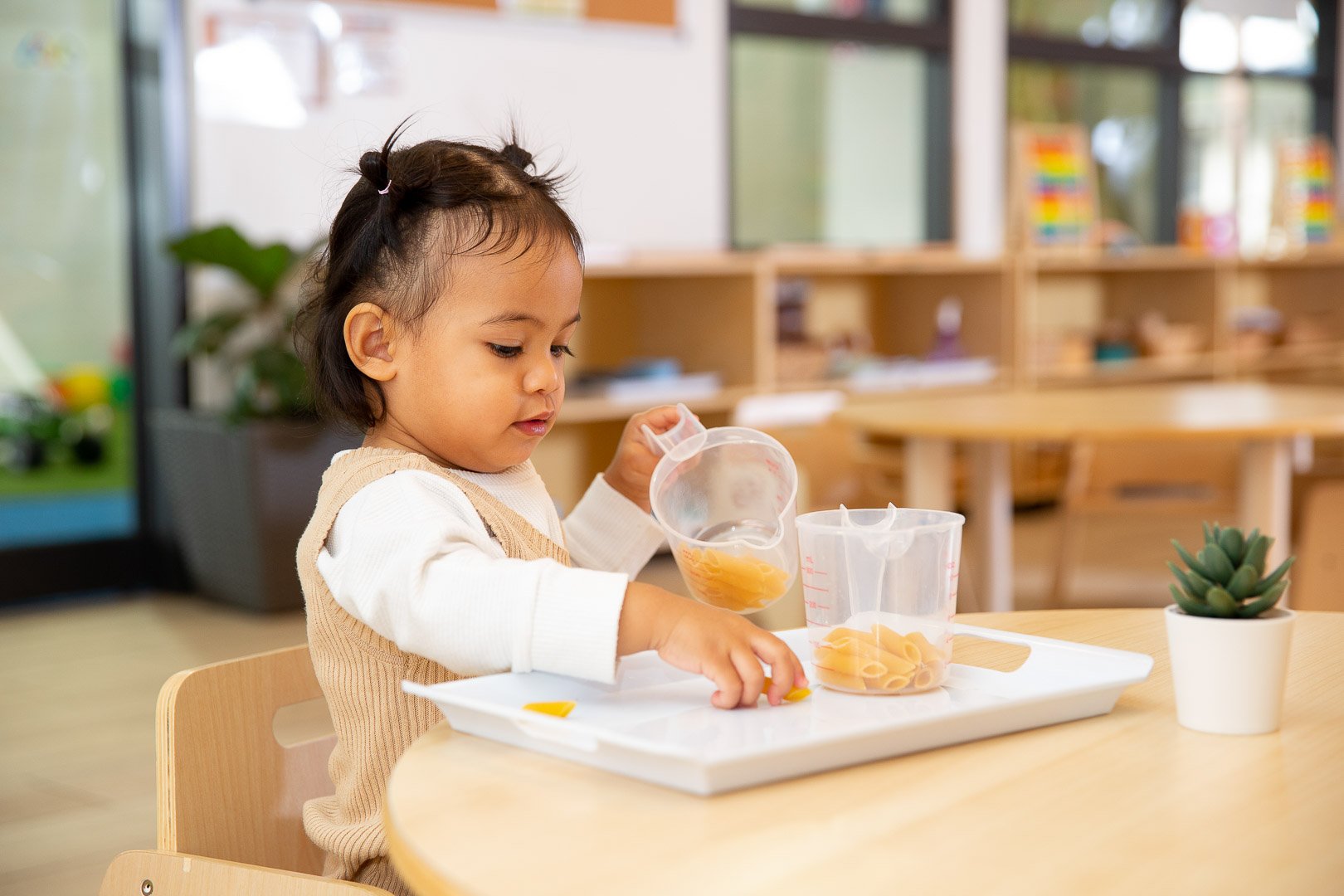
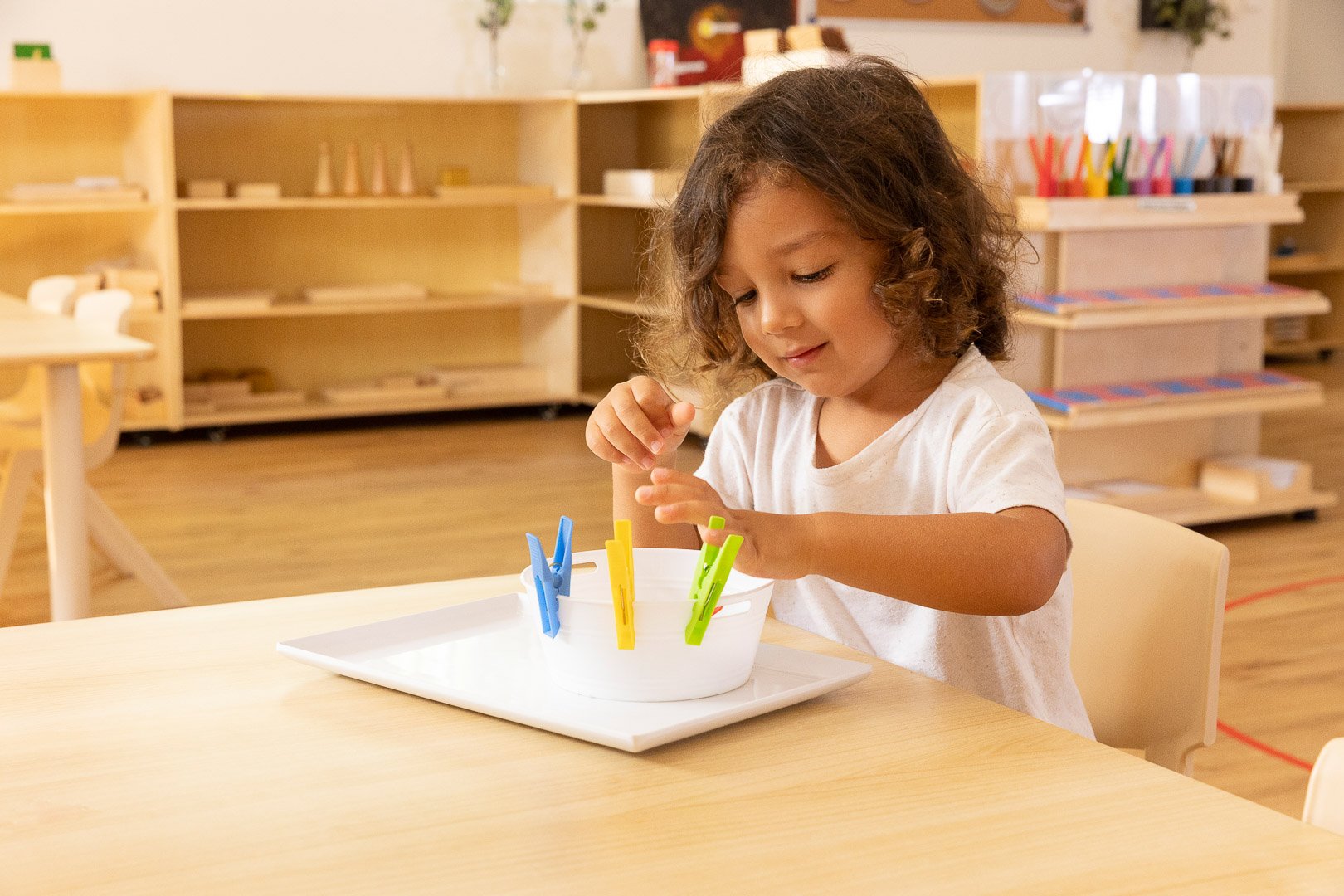
The Infant Program is designed to meet the developmental needs and interests of children aged 0-2. Children learn through movement and exploration.
2-3
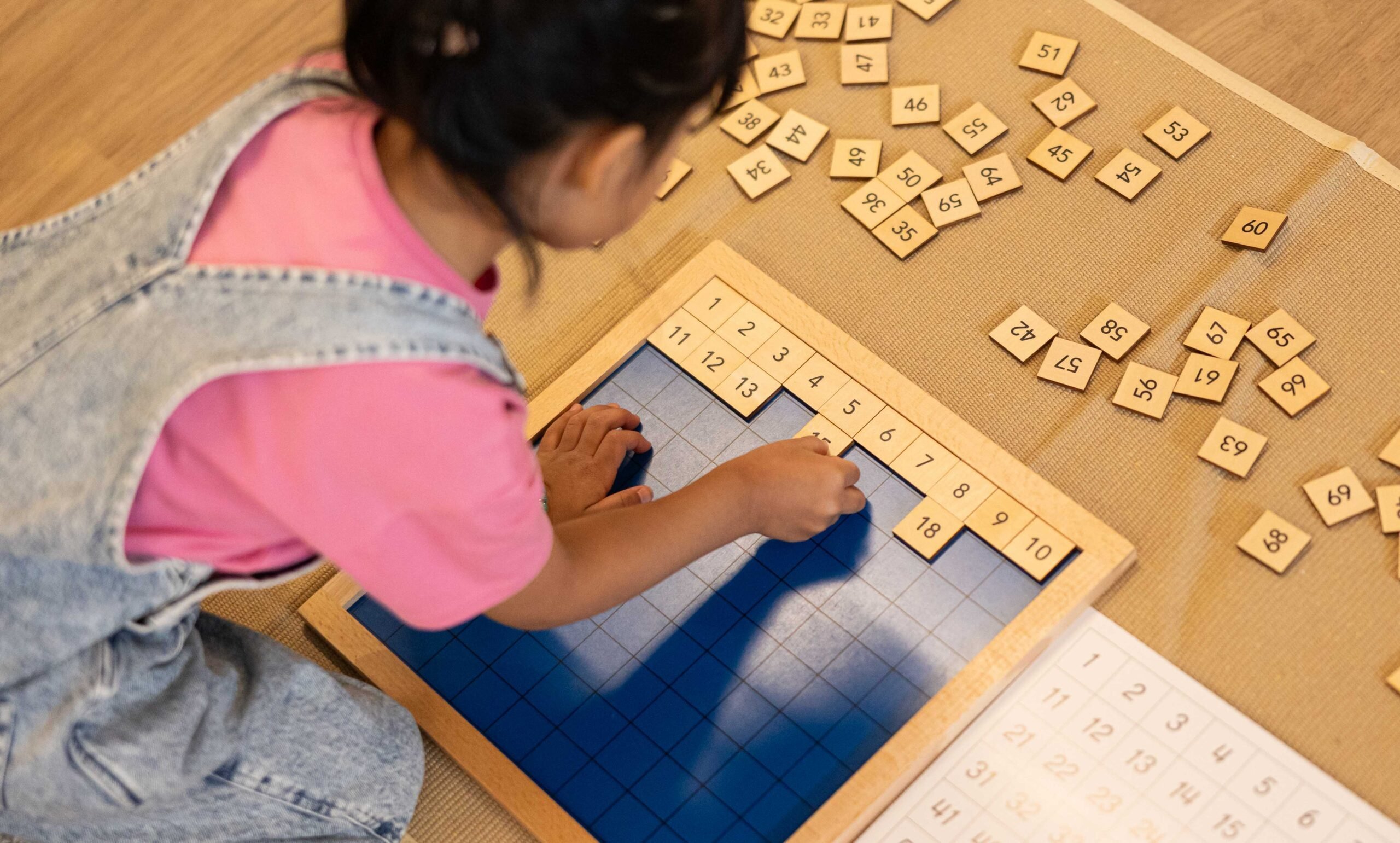
The Montessori Toddler Program is active, self-paced, and involves learning using all five senses. Children are introduced to the five areas of the Montessori Curriculum.
3-6
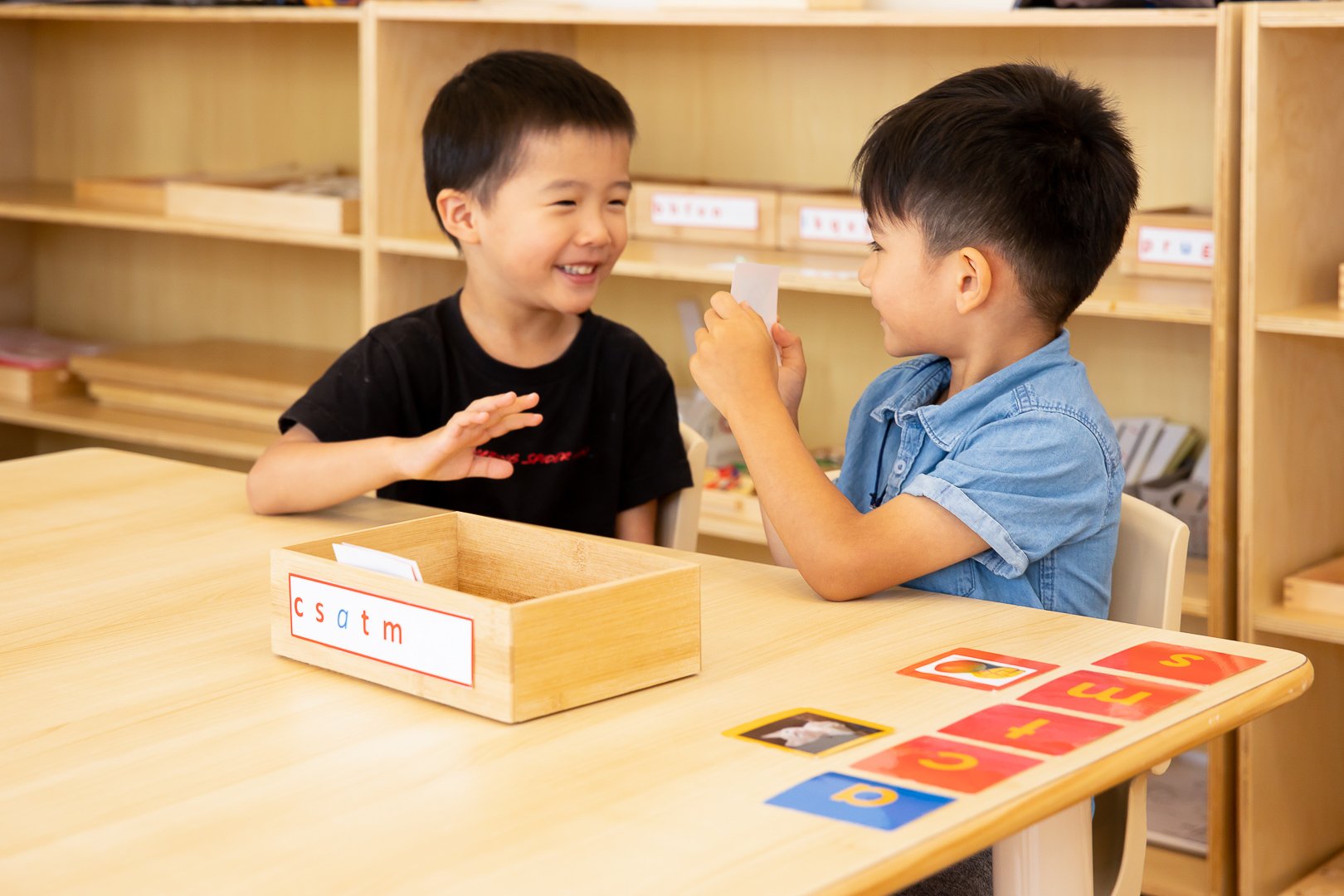
The Montessori Preschool Program is a structured academics and wellbeing program that prepares children for their transition to school.
4-6
Our School Readiness and Kinder Preparation Program combines school-styled workbooks with practical school readiness skills.
0-2
The Infant Program is designed to meet the developmental needs and interests of children aged 0-2. Children learn through movement and exploration.
2-3
The Montessori Toddler Program is active, self-paced, and involves learning using all five senses. Children are introduced to the five areas of the Montessori Curriculum.
3-6
The Montessori Preschool Program is a structured academics and wellbeing program that prepares children for their transition to school.
4-6
Our School Readiness and Kinder Preparation Program combines school-styled workbooks with practical school readiness skills.
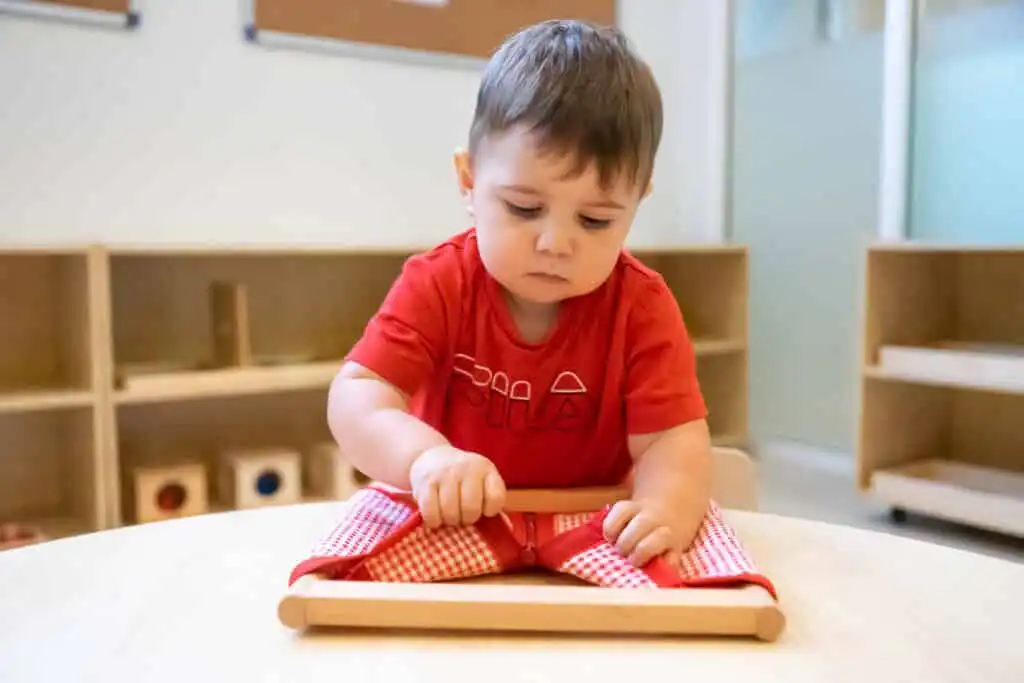
Dressing Frames introduce children to buttons, zippers, velcro and ribbon tying. They are used to develop hand-eye coordination, concentration and independence.
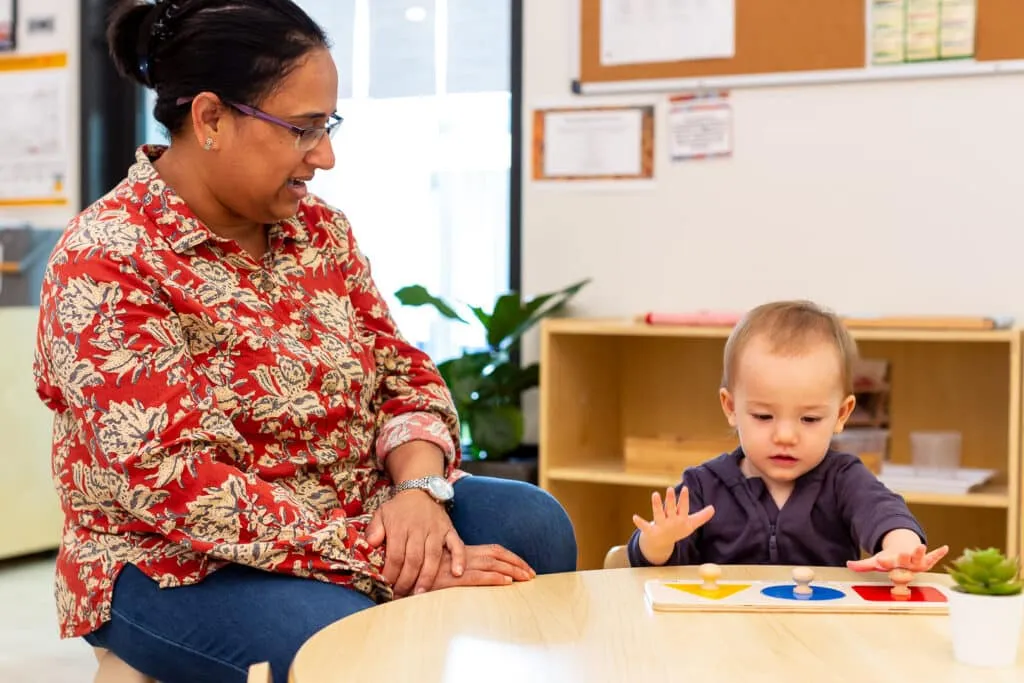
The Three Shapes Puzzle introduces the circle, triangle and square as well as the primary colours. It assists in the development of visual discrimination, the pincer grip, and fine motor skills.
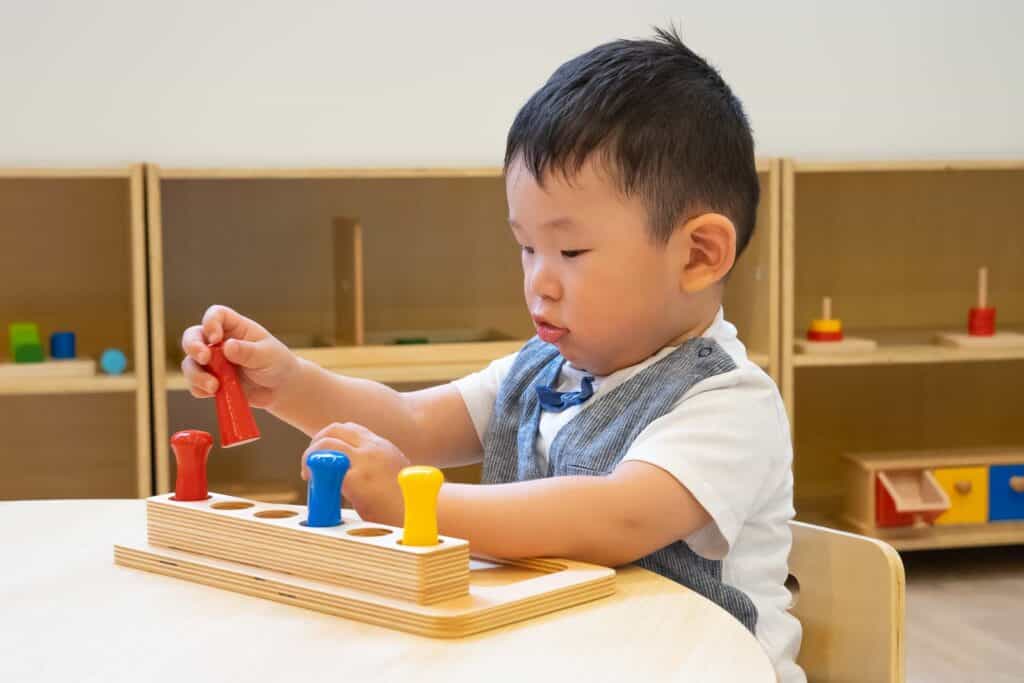
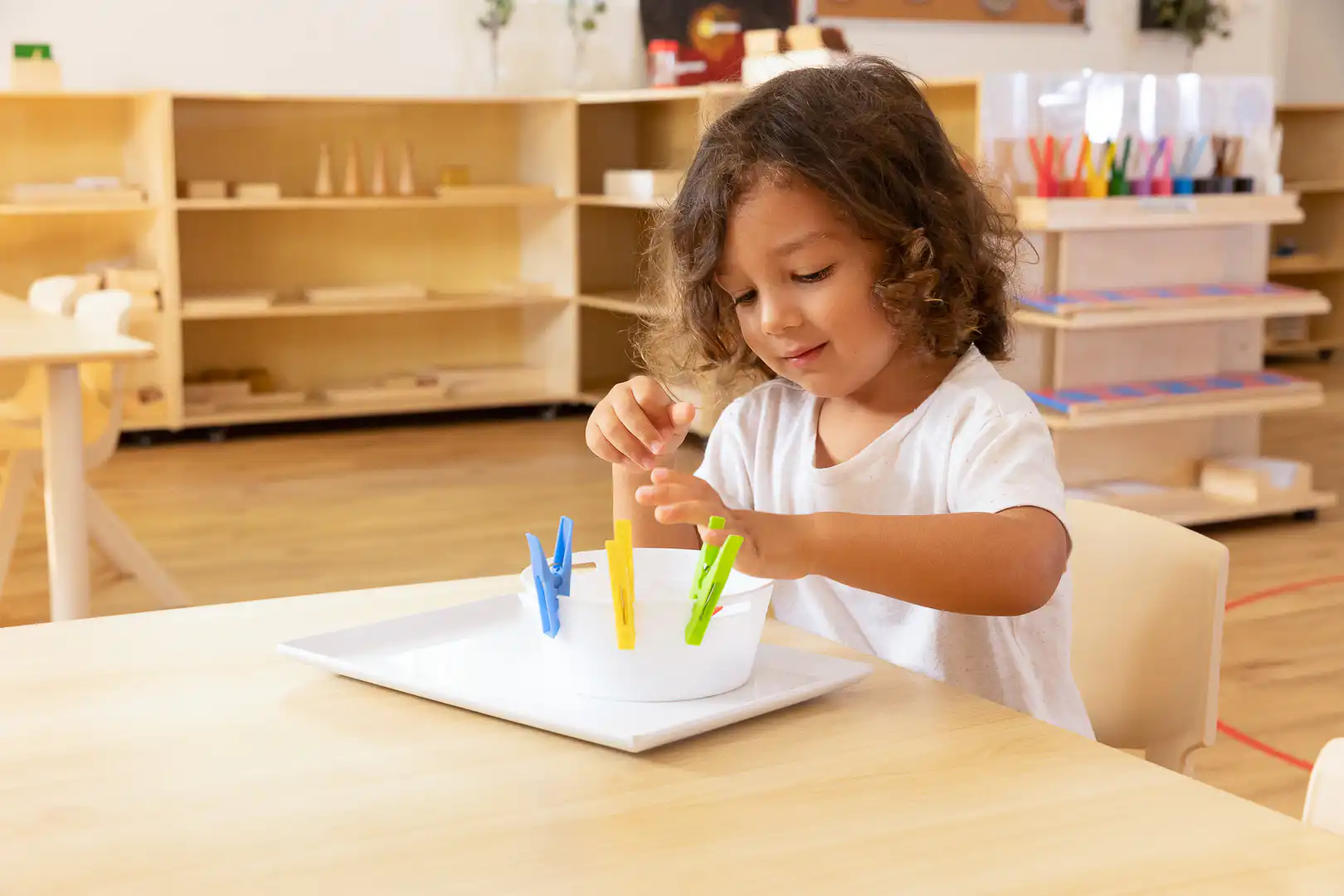
The Imbucare Peg Box is a tray with 6 pegs to develop hand-eye coordination. This material also teaches colour sorting.
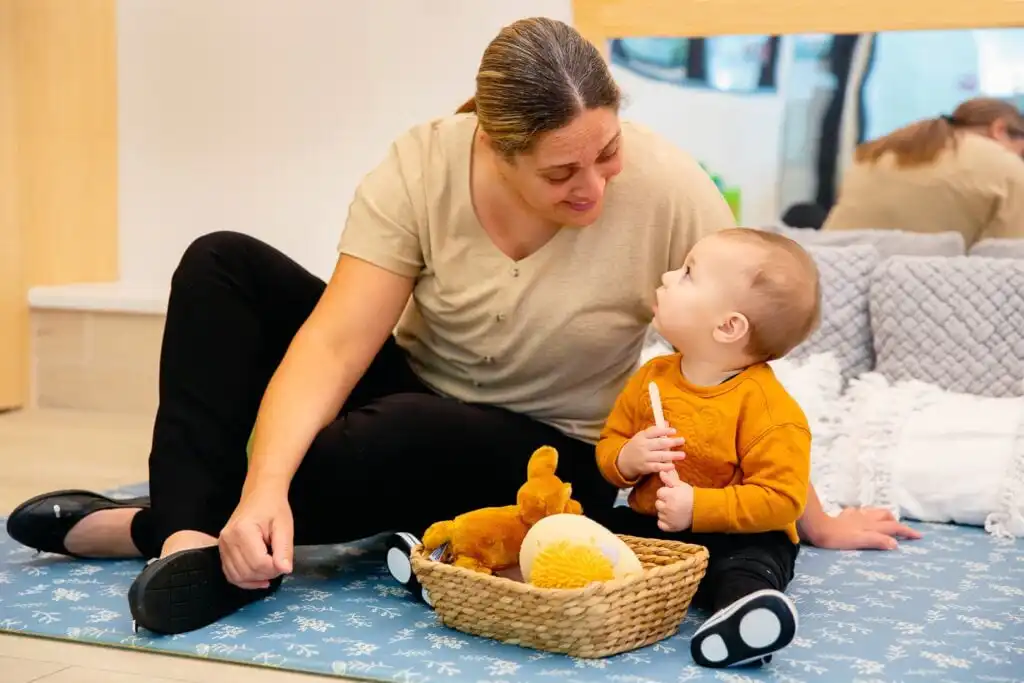
Treasure baskets introduce children to different objects and textures. They aid in the development of sensory perception, coordination, concentration and fine motor skills.
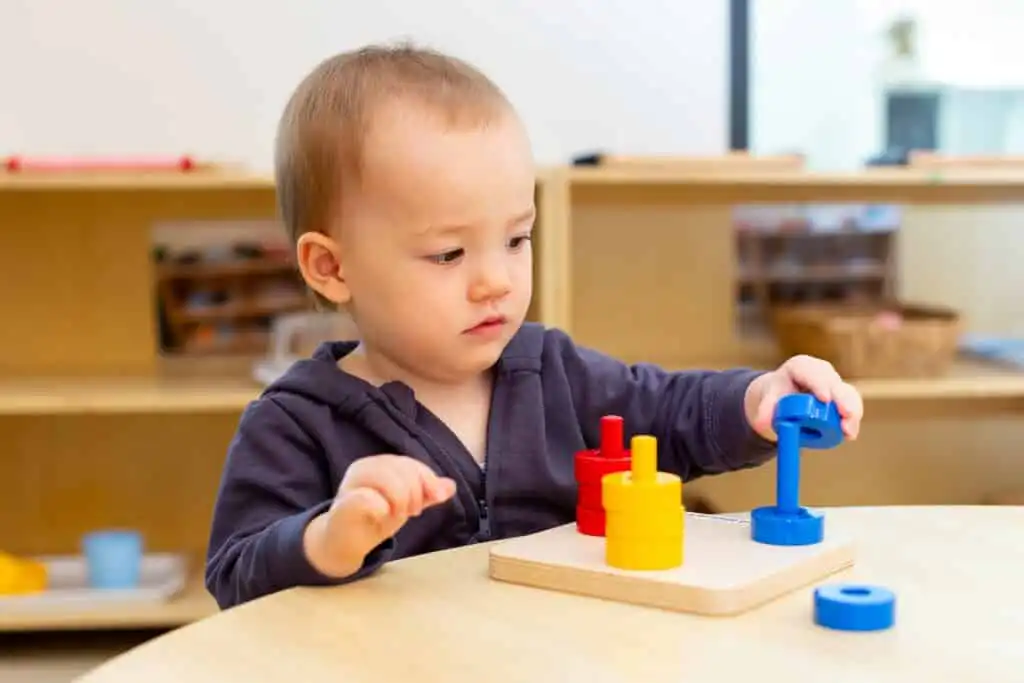
The Coloured Discs on a Dowel introduces infants to discs that vary in size and colour. This materials helps develop visual discrimination, a sense of order, and introduces simple counting.
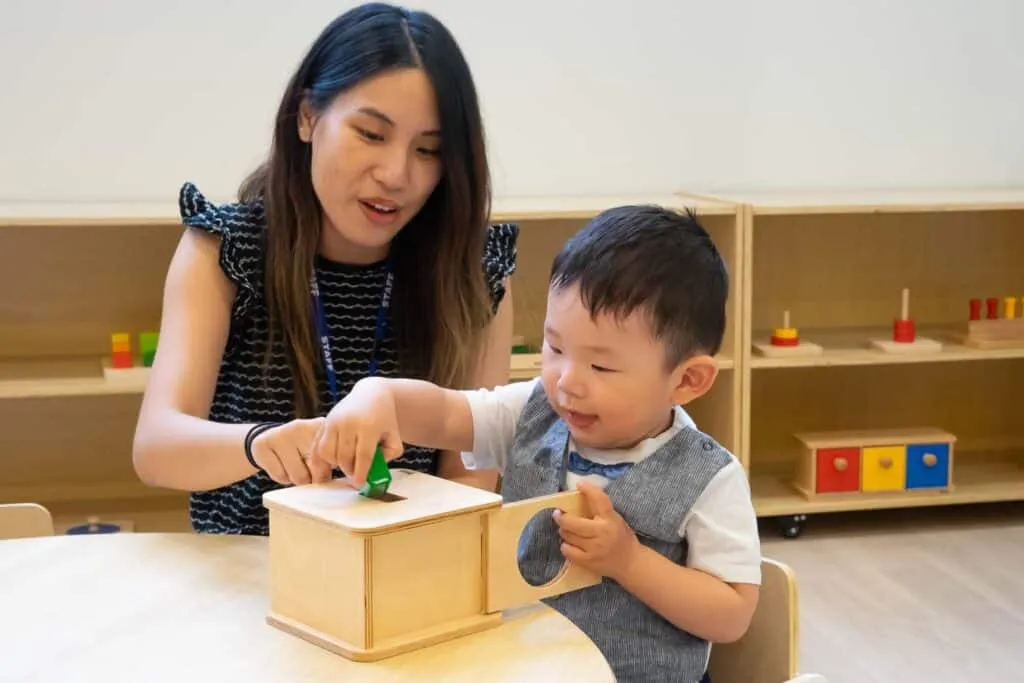
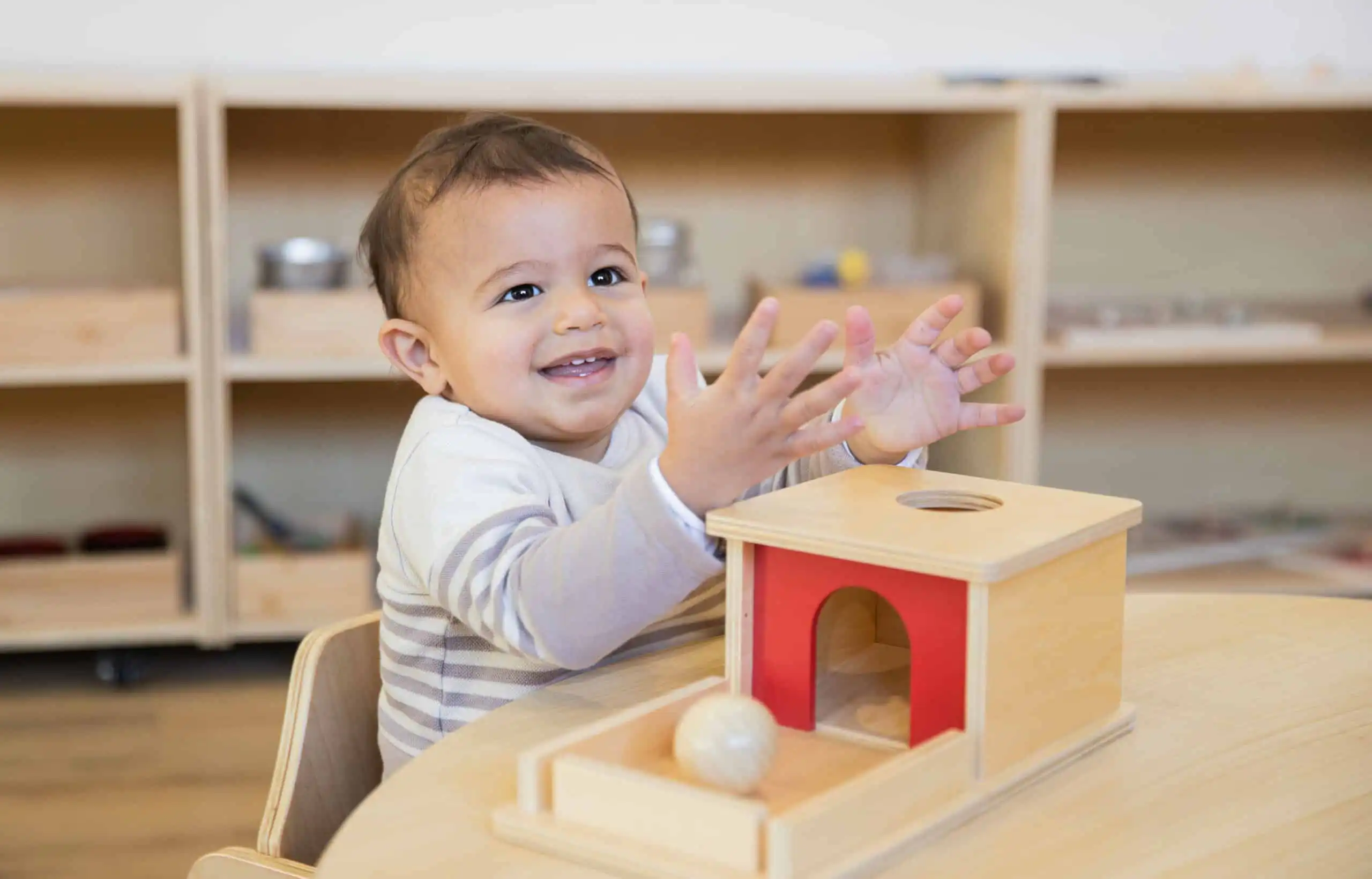
Imbucare Boxes help children recognise two shapes in the same size. It supports the development of visual discrimination, hand-eye coordination, and introduces the concept of object permanence.
Dressing Frames introduce children to buttons, zippers, velcro and ribbon tying. They are used to develop hand-eye coordination, concentration and independence.
The Three Shapes Puzzle introduces the circle, triangle and square as well as the primary colours. It assists in the development of visual discrimination, the pincer grip, and fine motor skills.
The Imbucare Peg Box is a tray with 6 pegs to develop hand-eye coordination. This material also teaches colour sorting.
Treasure baskets introduce children to different objects and textures. They aid in the development of sensory perception, coordination, concentration and fine motor skills.
The Coloured Discs on a Dowel introduces infants to discs that vary in size and colour. This materials helps develop visual discrimination, a sense of order, and introduces simple counting.
Imbucare Boxes help children recognise two shapes in the same size. It supports the development of visual discrimination, hand-eye coordination, and introduces the concept of object permanence.