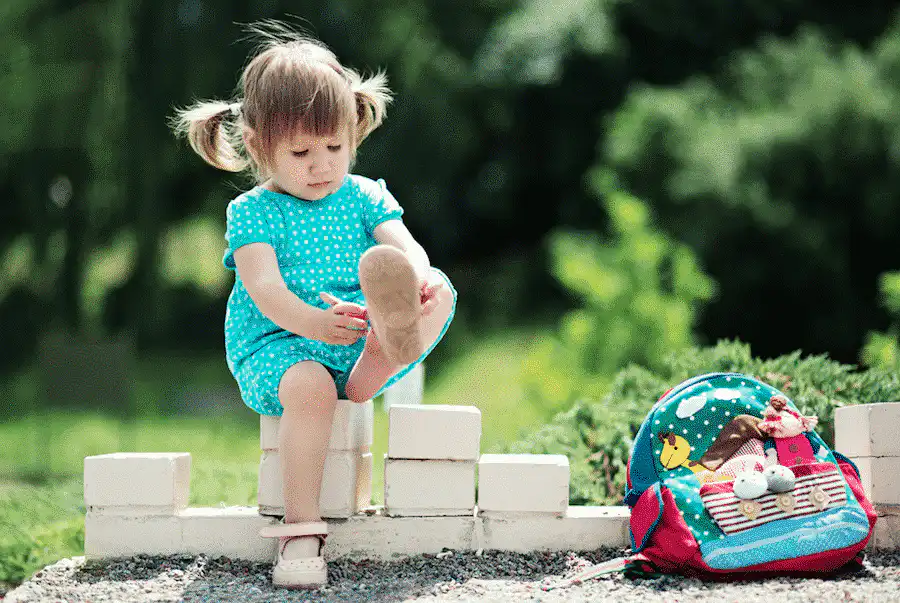
Why are my child’s shoes on the wrong feet?
This is a common question in any Montessori toddler or preschool classroom. It often comes at pick up time, when families express concern that their child’s teachers may have incorrectly put on their child’s shoes out of a lack of concern or care. In fact, this couldn’t be further from the truth.
The foundation of Montessori education is based upon one simple call that the child sends to the adult world: “Help me to do it myself.” It took Maria Montessori, a revolutionary educator, to hear this call, and develop it into education system focused on the natural development of the child.
The Meaning Behind a Child Wearing Shoes on the Wrong Feet
In the early years of development, children demonstrate an amazing propensity to “do it myself.” Through immense effort, the infant first masters the art of crawling, and then walking. The infant must take these first wobbly steps for themselves, which are also their first steps towards independence.
When you see a child wearing shoes on the wrong feet, you are witnessing:
- Self-Agency: The child took the initiative to dress without adult intervention.
- Problem-Solving: The cognitive effort of aligning feet with footwear.
- Persistence: The physical work required to pull on shoes and fasten straps.
Learning Independence Takes Time
For a child between the ages of two and six, mastering footwear is a massive milestone. It can take months of repetition to understand the curve of a sole or the orientation of a heel.
This journey is often filled with tantrums, frustration, and trying again. These moments of deep learning usually happen unobserved. When an adult steps in to “fix” the shoes, they inadvertently interrupt this learning cycle and deflate the child’s sense of pride in their accomplishment.
Why We Shouldn’t “Correct” the Mistake
As Dr. Maria Montessori famously stated: “Needless help is an actual hindrance to the development of natural force.”
By anticipating a child’s needs, whether it’s fixing their shoes, finishing their sentences, or cleaning up for them, we risk hindering their natural development. We essentially “infantilise” the child, establishing a pattern where the adult takes on the child’s responsibilities.
The Montessori Approach to Mistakes:
- Focus on Process, Not Outcome: It matters that the child tried, not that the shoe is perfectly placed.
- Encourage Self-Correction: Eventually, the child will feel the discomfort or notice the shape and fix it themselves.
- Empowerment: Success built on struggle creates a more confident learner.
The Montessori Academy Approach: Choosing Process Over Perfection
At Montessori Academy, once a child has mastered walking, they are welcomed into a setting where they are presented with “Practical Life” challenges: toilet training, preparing food, and learning to dress and undress.
Through repetition and practice, toddlers develop skills that are profoundly moving to witness. It is here that they master self-care and an awareness of others. Learning to put shoes on the correct feet is a central part of this self-sufficiency. Because we value the child’s effort, our educators will not “correct” a child’s shoes if they have successfully put them on themselves. We celebrate the effort of the task rather than the perfection of the result.
Walking the Montessori Walk
To support your child’s independence, we must provide them with the tools, time, and patience they need to fail and eventually succeed.
The next time you see your child wearing shoes on the wrong feet, take a moment to celebrate. You aren’t looking at a “wrong” outcome; you are looking at a capable, independent child who is learning to navigate the world on their own terms.